
 AUS
AUS
 NZ
NZ
 UK
UK
 CA
CA
 USA
USA
 IND
IND



_06_15_2026_01_12_06_745109.jpg)

Highlights
HyperPulse brings commercial 5G non-terrestrial IoT connectivity to remote sites
Mining use cases include asset tracking, equipment monitoring and sensing
Rollout begins mid-December with wider regional expansion planned
Myriota is launching HyperPulse, a commercial five gee non-terrestrial IoT service built for remote connectivity. Mining use cases include asset tracking, equipment monitoring and environmental sensing, supported by field-ready developer tools.
Remote operations live or die by dependable data. Mines need visibility across fleets, infrastructure and environmental conditions, yet many sites operate beyond reliable terrestrial coverage. Myriota, an Australia-based space technology company, is launching a commercial five gee non-terrestrial network service called HyperPulse, designed to help organisations build and scale satellite-enabled internet of things solutions across remote and challenging environments. The proposition for miners is straightforward: better asset visibility and better decisions, without waiting for a tower to exist.
What is a five gee non-terrestrial network in plain terms?
A non-terrestrial network is connectivity delivered via satellites rather than land-based towers. In practical terms, it provides a pathway for sensors and connected devices to send data from places where mobile coverage may be limited or unavailable.
Five gee non-terrestrial connectivity aims to do this in a standards-aligned way, so devices and chipsets increasingly support it without bespoke integrations. That matters for scale: miners prefer solutions that can be deployed across sites, contractors and regions without a fresh engineering effort every time.
What is HyperPulse and what is it designed to do?
HyperPulse is Myriota’s commercial platform aimed at scalable connectivity for internet of things deployments. The company is positioning it as a service that allows partners to build, deploy and expand IoT solutions anywhere, with performance that can be tuned to suit different use cases.
A key aspect of HyperPulse is an optimisation layer designed to adjust performance characteristics in response to demand or conditions. In operational settings, that type of adaptability can be important because not all devices need the same behaviour at the same time.
Why does this matter for mining operations?
Mining sites typically have a mix of connectivity needs:
-
high-priority safety and operational alerts
-
routine telemetry from equipment and infrastructure
-
location signals for fleets and containers
-
environmental sensing for water, air and weather conditions
A satellite IoT service can support consistent coverage across pits, haul roads, rail corridors and remote assets, which can reduce blind spots and improve responsiveness.
Which mining use cases stand out?
HyperPulse is positioned for applications where richer sensing and more frequent reporting are valuable, including:
-
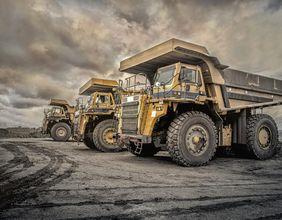
tracking and monitoring heavy equipment and mobile assets
-
monitoring containers, rail cars and trailers across long supply chains
-
remote metering and infrastructure status checks
-
environmental monitoring such as water quality and weather stations
For miners, those use cases map directly to availability, utilisation, compliance and productivity—core levers that matter even when commodity cycles change.
When and where is the service launching?
The company has stated a commercial availability date in mid-December, with initial rollout across multiple countries including Australia and several international markets. Further expansion across additional regions is expected in early 2026. For customers with assets spread across continents, a broad rollout plan can be as important as the underlying technology.
How is HyperPulse built and what makes it standards-aligned?
HyperPulse is described as designed, built and operated in Australia. It combines Myriota’s five gee non-terrestrial architecture with L-band satellite capacity leased from Viasat.
The service is also positioned as aligned with three gee pee pee five gee non-terrestrial standards, which is relevant because standards alignment typically helps:
-
interoperability with a growing ecosystem of devices
-
clearer long-term pathways for deployments
-
reduced lock-in to proprietary hardware choices
The company also notes device module certification activity, which matters because field reliability often depends on how well the network and hardware behave together under real conditions.
How does HyperPulse compare to Myriota’s UltraLite service?
Myriota is positioning UltraLite as focused on extreme energy efficiency, security and spectrum efficiency, while HyperPulse is positioned around:
-
lower latency
-
higher daily data allowances
-
suitability for richer sensing and more detailed reporting
In mining terms, that points to a sensible portfolio approach: use ultra-efficient options where devices must run for long periods on minimal power, and use higher-throughput options where reporting needs are heavier.
What extra tooling is being released for partners?
Connectivity alone rarely solves an operational problem. Myriota is also releasing enablement tools to help partners integrate and develop solutions for HyperPulse.
The HyperPulse Developer Kit is designed for rapid prototyping and field validation. Field-ready features such as weatherproofing, battery operation and sensor/interface options matter because mine trials often happen in harsh conditions where lab-style equipment simply does not survive.
What’s the broader takeaway for the sector?
HyperPulse is being positioned as an “IoT at scale” step for satellite-enabled connectivity. For miners, the potential advantage is not a single use case—it is standardised, repeatable deployment that can run across fleets, infrastructure and remote corridors with less friction. If the service delivers as intended, it could support better operational visibility, faster response loops and improved decision-making in environments where connectivity has historically been a constraint.
