
 AUS
AUS
 NZ
NZ
 UK
UK
 CA
CA
 USA
USA
 IND
IND







Highlights
Australian equities closed in positive territory with broad sector participation.
Financial and mining segments remained central to overall market activity.
ASX-linked indices reflected steady engagement across major listed companies.
Australian equities reflected broad participation across financial and mining sectors, with major ASX indices capturing activity among diversified listed companies.
The Australian equity market operates within a diversified financial ecosystem that spans banking, mining, healthcare, and industrial services. During the latest trading session, the local equities environment was shaped by participation across several benchmark indices, including the ASX 20, ASX 50, ASX 100, ASX 200, ASX 300, and the All Ordinaries. These indices collectively represent a wide range of listed entities that operate across domestic and international markets, reflecting activity within the broader ASX stock market. Financial services and resource-based businesses continued to form the backbone of index composition, supporting overall market engagement through diversified operations and established commercial footprints.
Financial and Resource Companies in Focus
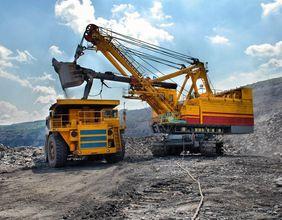
Within the financial and resources segment, several large-cap entities contributed to sector participation, with diversified miners and major lenders remaining prominent in daily trading discussions. Companies engaged in iron ore, base metals, and energy-related extraction formed a notable part of the session’s narrative, particularly within the context of ASX mining stocks. Market attention also extended to institutions involved in retail and commercial banking services, insurance, and wealth management, which together form a substantial portion of index representation.
In the resources space, diversified mining groups with global operations, including BHP Group Limited (ASX:BHP), remained part of broader sector conversations due to their exposure to commodity-linked activities and international supply chains. These businesses operate across multiple jurisdictions and contribute to export-linked revenue streams that are closely tied to Australia’s economic profile. Their inclusion within major benchmarks underlines the importance of the mining sector to the domestic equities framework.
Banking and Financial Services Participation
The banking and financial services sector continued to represent a significant share of overall market composition, with major institutions providing retail banking, business lending, and institutional financial services. These entities play a foundational role within Australian capital markets through deposit-taking activities, payment systems, and credit facilitation. Their operations extend across consumer finance, mortgage lending, and corporate advisory services, embedding them deeply within economic infrastructure.
Financial institutions listed on the ASX are also closely associated with income-focused investment strategies, placing them among widely followed ASX dividend stocks due to their established distribution histories and capital management frameworks. Their presence across multiple indices ensures that sector-level movements are reflected broadly within benchmark performance, reinforcing the interconnected nature of Australian equities.
Broader Market Context and Index Representation
Beyond financials and mining, other sectors such as healthcare, consumer services, and industrials also contributed to the overall trading environment. Healthcare companies involved in biotechnology, medical devices, and pharmaceutical development continued to maintain visibility due to their research-driven business models and export exposure. Industrial firms supporting logistics, construction, and infrastructure services further diversified index composition.
The ASX ordinaries stocks universe encompasses this wide-ranging mix of industries, offering a snapshot of corporate Australia’s operational breadth. Participation across these segments highlights the multi-sector nature of the Australian share market, where performance is influenced by domestic economic conditions, global trade dynamics, and sector-specific developments. The structure of major indices allows for balanced representation, ensuring that activity in one segment does not exist in isolation from others.
Role of the ASX in Capital Market Engagement
The ASX stock market functions as a central platform for capital formation, price discovery, and corporate visibility. Listed companies access funding through equity issuance while investors engage with a regulated marketplace that supports transparency and disclosure. Index-based classification further enhances accessibility by grouping companies according to size and liquidity characteristics, enabling structured engagement across different segments of the market.
Through indices such as the ASX 100 and the All Ordinaries, participants gain exposure to a cross-section of established and emerging enterprises. This framework supports ongoing engagement across domestic and international investor communities, reinforcing Australia’s position within global capital markets. The integration of mining, financial, and service-oriented businesses within these indices underscores the balanced nature of the national equities environment.
