
 AUS
AUS
 NZ
NZ
 UK
UK
 CA
CA
 USA
USA
 IND
IND




_06_15_2026_05_04_49_929943.jpg)

Highlights
A simple framework to assess Fortescue’s value drivers
Key financial health signals that shape market confidence
What market context can influence sentiment around the company
This article explains how Fortescue (ASX:FMG) is typically assessed using operational strength, cost position, cash and funding flexibility, and capital discipline, alongside broader market and sector context.
Fortescue Ltd (ASX:FMG) sits in the spotlight whenever commodity markets move, because it is a major Australian iron ore producer and a widely followed name within the ASX 200. Understanding “value” here is less about one number and more about a connected set of business drivers, financial strength signals, and expectations about demand, costs, and capital discipline over time.
What is Fortescue and why does it matter?
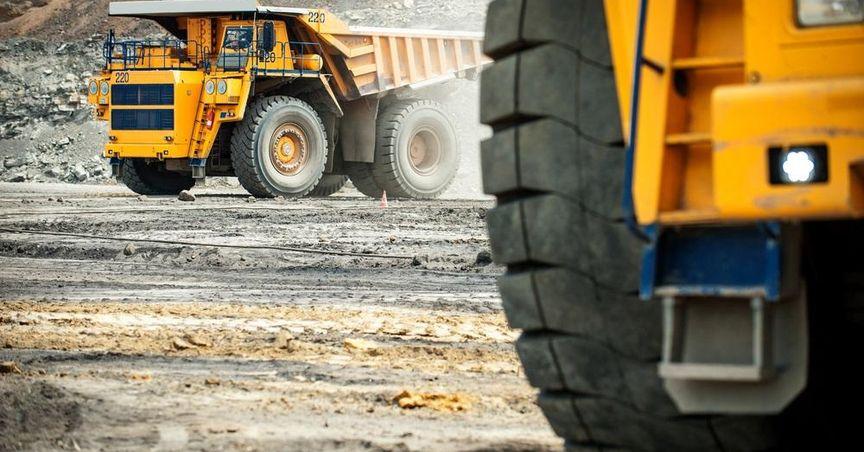
Fortescue Ltd (ASX:FMG) is an Australia-based iron ore producer with large-scale operations in Western Australia’s Pilbara region, supported by mining, processing, rail, and port logistics. In practical terms, that “integrated system” matters because it can shape unit costs, reliability of deliveries, and the ability to sustain volumes across commodity cycles.
Beyond iron ore, Fortescue has pursued broader exploration activity across multiple jurisdictions, looking at minerals linked to electrification and energy transition supply chains. This does not automatically translate to near-term earnings impact, but it can influence how the market frames optionality, longer-run portfolio direction, and investment intensity.
What does “value” mean for a large iron ore producer?
“Value” in a producer like Fortescue typically blends multiple viewpoints:
-
Asset quality and operating resilience: How competitive the operation is across various pricing environments.
-
Cash generation through the cycle: The ability to generate cash flow when conditions are supportive, and to protect liquidity when conditions are softer.
-
Capital discipline: Whether spending on sustaining operations, expansion, and new ventures appears aligned with returns and risk tolerance.
-
Balance sheet flexibility: The degree of financial cushion available if conditions tighten.
This is also where broader context matters. Coverage and discussion across the ASX stock market often shifts quickly when commodity sentiment changes, even when a company’s underlying operations are relatively steady.
Which business drivers tend to move sentiment?
What is driving demand?
For iron ore producers, demand expectations commonly hinge on steelmaking activity, infrastructure cycles, and industrial production trends in key customer regions. When macro conditions appear supportive, the market often becomes more willing to assign stronger value assumptions to future cash generation.
What is shaping costs and competitiveness?
Operational costs can be influenced by energy inputs, labour conditions, maintenance cycles, shipping conditions, and currency movements. Integrated producers often emphasise reliability and throughput, because disruptions can affect realised pricing and shipment cadence.
How does diversification change the story?
Where the company pursues exploration in minerals tied to electrification, market participants may treat this as:
-
Strategic option value (potential future pathways), and/or
-
Execution risk (timelines, approvals, technical hurdles, and capital intensity).
The key is whether the strategy appears coherent, paced, and funded without undermining core resilience.
What are the key “value lenses” investors commonly use?
What can revenue trend indicate?
Revenue is often treated as a top-level signal of scale and realised conditions, but it is not interpreted in isolation. For a commodity producer, revenue can move with pricing, volumes, and product mix. Analysts often focus on whether the direction of revenue appears consistent with operational execution and market conditions.
What does gross margin tell a reader?
Gross margin is typically viewed as a snapshot of core profitability before overheads and other costs. In a resources context, it can be read as a broad indicator of cost competitiveness and price realisation.
What is the role of profit in “value” thinking?
Profit remains a headline figure because it helps frame sustainable earnings power and confidence. However, for commodity-linked businesses, many readers treat profit as cyclical. The focus often shifts to the quality of earnings and how well profits translate to cash and balance sheet strength.
What signals matter most in financial health?
What does net debt suggest?
Net debt is commonly referenced as a straightforward gauge of leverage after cash is considered. In market narratives, a lower net debt position can imply more flexibility during uncertain periods, while higher leverage can amplify sensitivity to the cycle.
Why does debt-to-equity get attention?
Debt-to-equity is often used as a quick comparison tool across companies and time. The underlying question it tries to answer is whether the company’s funding mix leaves it comfortably placed if conditions tighten.
What does return on equity communicate?
Return on equity is often interpreted as a signal of how effectively shareholder capital is being used. In cyclical sectors, some investors look for evidence that strong periods are being managed prudently, rather than encouraging overly aggressive expansion.
For readers comparing broad market groupings, it can help to cross-check the context of large-cap peers and index groupings such as ASX 100, where many widely held companies sit and where sentiment shifts can broaden quickly.
How can market context shape perceived value?
How do commodity cycles affect expectations?
Commodity-linked valuation often moves with the cycle. When the market expects firmer demand and manageable supply, future cash flow assumptions can strengthen. When confidence fades, expectations can reset quickly, even if operations remain stable.
What role does income focus play?
In Australia, large producers are often discussed in the context of income strategies, especially when distributions have been strong in prior cycles. Readers tracking ASX dividend stocks sometimes watch big producers for signals of payout sustainability, cash buffers, and capital spending priorities—without relying on a single period’s outcome as a permanent baseline.
How does sector rotation show up?
Resources can move in and out of favour as investors rebalance between defensives, cyclicals, and growth exposures. This is one reason broad-basket references such as ASX ordinaries stocks are sometimes used as a backdrop when discussing whether moves are company-specific or market-wide.
What is a practical checklist to assess Fortescue’s value narrative?
A user-friendly way to frame Fortescue’s “value” story is to use a checklist approach:
-
Operations: Are shipments steady and disruption risk being managed?
-
Costs: Does the cost position appear resilient relative to peers?
-
Cash and funding: Is financial flexibility preserved for a tougher period?
-
Investment pace: Is capital spending aligned with resilience and returns?
-
Strategic direction: Is diversification measured and clearly explained?
Because Fortescue is deeply linked to Australia’s resources ecosystem, readers often compare it with other ASX mining stocks when trying to separate company-specific execution factors from broader sector sentiment.
What should a reader take from today’s discussion?
Fortescue’s “value” case is generally framed through its scale in iron ore, the resilience of its integrated operating system, and how it manages the trade-offs between cash generation, balance sheet strength, and longer-term strategic initiatives. The most useful takeaway is that value assessment typically becomes clearer when multiple signals line up—operations, costs, cash strength, and capital discipline—rather than relying on a single headline metric.
