
 AUS
AUS
 NZ
NZ
 UK
UK
 CA
CA
 USA
USA
 IND
IND





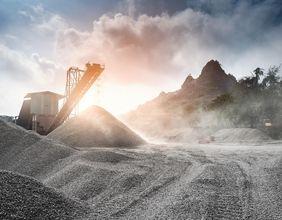

MRG Metals Limited (ASX:MRQ) has revealed notable Gallium Oxide mineralisation at its Garies Project located in South Africa’s Northern Cape Province. Metallurgical testing of drill core samples has identified Gallium Oxide (Ga2O3) levels reaching as high as 450 ppm, found alongside established Rare Earth and magnetite mineralisation. Announced on 2 July 2026, this discovery introduces Gallium as a potential by-product alongside the project’s primary Rare Earth focus, expanding the scope of MRG Metals’ exploration efforts. With Gallium commanding a 5N purity price of US$367.46 per kilogram as of 1 July 2026 according to Shanghai Metals Market data, this finding is expected to draw investor interest due to Gallium’s critical role in semiconductor, defence, and electric vehicle charging technologies. Additional metallurgical testing is planned to determine if Gallium-bearing pyrite can be selectively concentrated into a marketable product.<\/p> <\/div>
Key Points<\/h3>
- Company: MRG Metals Limited (ASX:MRQ)<\/li>
- Gallium Oxide (Ga2O3) detected at Garies Project, Northern Cape Province, South Africa, averaging 290 ppm across 85 magnetite vein drill samples, with a peak of 450 ppm<\/li>
- A bulk sample from drill core showed 347 ppm Ga2O3; two REO-rich concentrates processed at South Africa’s Light Deep Earth (LDE) laboratory assayed 880 ppm and 573 ppm Ga2O3 respectively<\/li>
- QEMScan microscopy confirmed Gallium is hosted within free pyrite grains, which make up about 5% of the magnetite vein and contain roughly 0.4% Gallium<\/li>
- 5N Gallium Oxide price stood at US$367.46/kg as of 1 July 2026 (Shanghai Metals Market data)<\/li>
- Further metallurgical testwork at LDE Laboratory is planned to evaluate selective concentration of Gallium-bearing pyrite<\/li>
- Investors should monitor forthcoming metallurgical results and any updates to the Rare Earth development program<\/li>
<\/ul>
<\/div>
Gallium Oxide Averages 290 ppm in 85 Magnetite Vein Drill Samples at Garies<\/h2>
MRG Metals’ latest update highlights Gallium Oxide assay results from drill samples at the Garies Project. Laboratory analysis of 85 samples from 19 drill holes intersecting mineralised magnetite veins yielded an average of 290 ppm Ga2O3, with a maximum of 450 ppm Ga2O3. The company regards these results as significant, marking the first systematic quantification of Gallium at the site.<\/p>
The drill data aligns with and extends findings from a bulk sample created from the same drill material, which contained 347 ppm Ga2O3. This confirms that Gallium is distributed throughout the mineralised material rather than confined to isolated high-grade zones. The high Gallium concentrations were observed alongside elevated total Rare Earth Oxide (TREO) values from the same drilling campaign, indicating a mineralogical association between Gallium and Rare Earth elements within the magnetite veins.<\/p>
REO Concentrates from South Africa’s LDE Laboratory Enrich Gallium to 880 ppm<\/h2>
Two Rare Earth Oxide-rich concentrates derived from the bulk sample at the Light Deep Earth (LDE) laboratory in South Africa were tested for Gallium content, yielding 880 ppm and 573 ppm Ga2O3 respectively. These values represent a clear enrichment compared to the 347 ppm Ga2O3 in the parent bulk sample. This suggests that some processing steps used for REO concentration also enhance Gallium levels, although the current REO-focused process is not optimised for Gallium recovery.<\/p>
The LDE laboratory will also conduct the next phase of metallurgical testing aimed at selectively concentrating Gallium-bearing pyrite. The company plans to explore alternative processing methods to achieve higher Gallium grades in a potential concentrate. Whether these methods can be economically integrated with or run alongside the existing REO processing flowsheet remains a key question for future research.<\/p>
QEMScan Microscopy Identifies Gallium Hosted in Pyrite Grains Within Magnetite Veins<\/h2>
To better understand Gallium’s mineralogical setting at Garies, MRG Metals employed QEMScan microscopy and electron microscope element mapping. These analyses revealed that Gallium is hosted by free pyrite grains, an accessory mineral within the magnetite veins. This finding is critical as it identifies the mineral phase containing Gallium and informs the most promising processing approach for its recovery.<\/p>
QEMScan results indicate pyrite comprises about 5% of the mineralised veins and contains approximately 0.4% Gallium. This concentration within a discrete sulphide mineral phase suggests physical separation techniques such as flotation could effectively concentrate Gallium. However, the company emphasizes that further metallurgical and technical studies are necessary before confirming economic recovery potential, and there is no guarantee that future testwork will yield a commercially viable process.<\/p>
Garies Magnetite Vein System Presents Dual Critical Mineral Opportunity<\/h2>
MRG Metals has primarily explored the Garies Project for Rare Earth mineralisation hosted in magnetite veins formed under high-temperature metamorphic conditions about one billion years ago. Drilling previously intersected REOs averaging 2.1% within magnetite veins up to five metres thick at the DrillTarg target, as reported in updates dated 17 March, 2 April, and 2 June 2026.<\/p>
The confirmation of Gallium associated with the same magnetite veins hosting Rare Earths introduces a dual critical mineral profile for the project. While Rare Earths remain the main focus, the Gallium discovery offers the potential for a by-product credit that could enhance the economics of future Rare Earth development at Garies, subject to further metallurgical validation. The company noted that no new material information has emerged beyond the previously disclosed data.<\/p>
MRG Chairman Andrew van der Zwan Comments on Gallium Discovery at Garies<\/h2>
MRG Metals Chairman Andrew van der Zwan described the identification of significant Gallium linked to Rare Earth mineralisation as "very exciting," highlighting it as "an additional avenue for technical evaluation at the Garies Project." He reaffirmed that the company’s primary focus remains on Rare Earth development, with the Gallium results supporting further metallurgical work to assess potential by-product recovery.<\/p>
Van der Zwan expressed anticipation for advancing Gallium-related studies within the ongoing metallurgical program. His remarks reflect a cautious stance: the company is not declaring a Gallium resource or projecting revenues from Gallium sales but signals that the mineral’s presence justifies systematic follow-up. This aligns with the company’s formal cautionary statement noting uncertainty regarding the commercial viability of Gallium recovery.<\/p>
Gallium’s Strategic Role in Semiconductors, EV Charging, 5G, and Defence Radar<\/h2>
Gallium has become a critical mineral in global technology supply chains. Gallium Nitride (GaN) and Gallium Arsenide (GaAs) semiconductors are essential in high-performance applications such as power electronics, electric vehicle fast chargers, 5G radio frequency components, and defence radar systems. These compound semiconductors outperform traditional silicon-based devices in efficiency, speed, and power density.<\/p>
Gallium is rarely mined directly; it is mainly produced as a by-product of aluminium and zinc refining. This supply structure concentrates production in a few countries, with China currently dominating global output. Chinese government export controls on Gallium have increased strategic interest among Western governments and technology firms in securing alternative sources. MRG Metals’ Gallium discovery at Garies thus occurs amid heightened geopolitical and industrial demand for non-Chinese critical minerals.<\/p>
Gallium Oxide Price at US$367.46/kg as MRG Advances Metallurgical Research<\/h2>
The commercial backdrop for MRG Metals’ Gallium discovery includes the current market price. According to Shanghai Metals Market data cited in the company update, the 5N Gallium Oxide price was US$367.46 per kilogram on 1 July 2026. This benchmark allows investors to gauge the potential value of Gallium mineralisation at Garies, although the company has not provided tonnage estimates, resource figures, or revenue projections related to Gallium at this stage.<\/p>
Gallium prices have fluctuated in recent years due to China’s export controls and growing demand from semiconductor and defence sectors. Investors will likely watch whether ongoing metallurgical work at the LDE laboratory can demonstrate recoverable Gallium concentrate grades that support economic by-product potential. The company has not disclosed recovery rates, concentrate grades, or economic models in this update.<\/p>
Next Metallurgical Phase to Focus on Selective Pyrite Concentration at LDE Laboratory<\/h2>
With pyrite identified as the Gallium host—comprising about 5% of the mineralised magnetite veins—MRG Metals has outlined the next step in its technical program. Further metallurgical testing at the LDE Laboratory in South Africa will target alternative processing methods aimed at selectively concentrating Gallium-bearing pyrite. The goal is to achieve higher Gallium grades in a potential concentrate compared to those obtained through current REO-focused processing.<\/p>
The company acknowledges that existing REO concentration processes, while effective for Rare Earth minerals, are not optimised for pyrite recovery and thus unlikely to be the best approach for Gallium concentration. Developing a processing flowsheet that can accommodate both Rare Earth and Gallium recovery—either combined or separate—will be a key challenge. The timeline and budget for this next metallurgical phase were not disclosed.<\/p>
Competent Person Sign-Off and Regulatory Framework for Garies Exploration Results<\/h2>
The exploration results presented in MRG Metals’ update were compiled and reviewed by Mr C. Rothnie, a member of the Australian Institute of Mining and Metallurgy (MAusIMM) and consultant to the company. The Competent Person statement confirms Mr Rothnie’s relevant experience for the mineralisation style and deposit type, fulfilling Australian regulatory requirements for exploration reporting.<\/p>
MRG Metals also included forward-looking statements and a formal cautionary note specific to Gallium recovery, highlighting the uncertainty of future testwork outcomes. These disclosures are standard for early-stage metallurgical research and provide context for the results’ technical maturity. For investors, the regulatory and technical rigor applied—including QEMScan analysis and bulk sample testing at an accredited South African laboratory—adds confidence in the data, even as the commercial viability of Gallium recovery remains under investigation.<\/p>
Gallium Oxide Averages 290 ppm in 85 Magnetite Vein Drill Samples at Garies<\/h2>
MRG Metals’ latest update highlights Gallium Oxide assay results from drill samples at the Garies Project. Laboratory analysis of 85 samples from 19 drill holes intersecting mineralised magnetite veins yielded an average of 290 ppm Ga2O3, with a maximum of 450 ppm Ga2O3. The company regards these results as significant, marking the first systematic quantification of Gallium at the site.<\/p>
The drill data aligns with and extends findings from a bulk sample created from the same drill material, which contained 347 ppm Ga2O3. This confirms that Gallium is distributed throughout the mineralised material rather than confined to isolated high-grade zones. The high Gallium concentrations were observed alongside elevated total Rare Earth Oxide (TREO) values from the same drilling campaign, indicating a mineralogical association between Gallium and Rare Earth elements within the magnetite veins.<\/p>
REO Concentrates from South Africa’s LDE Laboratory Enrich Gallium to 880 ppm<\/h2>
Two Rare Earth Oxide-rich concentrates derived from the bulk sample at the Light Deep Earth (LDE) laboratory in South Africa were tested for Gallium content, yielding 880 ppm and 573 ppm Ga2O3 respectively. These values represent a clear enrichment compared to the 347 ppm Ga2O3 in the parent bulk sample. This suggests that some processing steps used for REO concentration also enhance Gallium levels, although the current REO-focused process is not optimised for Gallium recovery.<\/p>
The LDE laboratory will also conduct the next phase of metallurgical testing aimed at selectively concentrating Gallium-bearing pyrite. The company plans to explore alternative processing methods to achieve higher Gallium grades in a potential concentrate. Whether these methods can be economically integrated with or run alongside the existing REO processing flowsheet remains a key question for future research.<\/p>
QEMScan Microscopy Identifies Gallium Hosted in Pyrite Grains Within Magnetite Veins<\/h2>
To better understand Gallium’s mineralogical setting at Garies, MRG Metals employed QEMScan microscopy and electron microscope element mapping. These analyses revealed that Gallium is hosted by free pyrite grains, an accessory mineral within the magnetite veins. This finding is critical as it identifies the mineral phase containing Gallium and informs the most promising processing approach for its recovery.<\/p>
QEMScan results indicate pyrite comprises about 5% of the mineralised veins and contains approximately 0.4% Gallium. This concentration within a discrete sulphide mineral phase suggests physical separation techniques such as flotation could effectively concentrate Gallium. However, the company emphasizes that further metallurgical and technical studies are necessary before confirming economic recovery potential, and there is no guarantee that future testwork will yield a commercially viable process.<\/p>
Garies Magnetite Vein System Presents Dual Critical Mineral Opportunity<\/h2>
MRG Metals has primarily explored the Garies Project for Rare Earth mineralisation hosted in magnetite veins formed under high-temperature metamorphic conditions about one billion years ago. Drilling previously intersected REOs averaging 2.1% within magnetite veins up to five metres thick at the DrillTarg target, as reported in updates dated 17 March, 2 April, and 2 June 2026.<\/p>
The confirmation of Gallium associated with the same magnetite veins hosting Rare Earths introduces a dual critical mineral profile for the project. While Rare Earths remain the main focus, the Gallium discovery offers the potential for a by-product credit that could enhance the economics of future Rare Earth development at Garies, subject to further metallurgical validation. The company noted that no new material information has emerged beyond the previously disclosed data.<\/p>
MRG Chairman Andrew van der Zwan Comments on Gallium Discovery at Garies<\/h2>
MRG Metals Chairman Andrew van der Zwan described the identification of significant Gallium linked to Rare Earth mineralisation as "very exciting," highlighting it as "an additional avenue for technical evaluation at the Garies Project." He reaffirmed that the company’s primary focus remains on Rare Earth development, with the Gallium results supporting further metallurgical work to assess potential by-product recovery.<\/p>
Van der Zwan expressed anticipation for advancing Gallium-related studies within the ongoing metallurgical program. His remarks reflect a cautious stance: the company is not declaring a Gallium resource or projecting revenues from Gallium sales but signals that the mineral’s presence justifies systematic follow-up. This aligns with the company’s formal cautionary statement noting uncertainty regarding the commercial viability of Gallium recovery.<\/p>
Gallium’s Strategic Role in Semiconductors, EV Charging, 5G, and Defence Radar<\/h2>
Gallium has become a critical mineral in global technology supply chains. Gallium Nitride (GaN) and Gallium Arsenide (GaAs) semiconductors are essential in high-performance applications such as power electronics, electric vehicle fast chargers, 5G radio frequency components, and defence radar systems. These compound semiconductors outperform traditional silicon-based devices in efficiency, speed, and power density.<\/p>
Gallium is rarely mined directly; it is mainly produced as a by-product of aluminium and zinc refining. This supply structure concentrates production in a few countries, with China currently dominating global output. Chinese government export controls on Gallium have increased strategic interest among Western governments and technology firms in securing alternative sources. MRG Metals’ Gallium discovery at Garies thus occurs amid heightened geopolitical and industrial demand for non-Chinese critical minerals.<\/p>
Gallium Oxide Price at US$367.46/kg as MRG Advances Metallurgical Research<\/h2>
The commercial backdrop for MRG Metals’ Gallium discovery includes the current market price. According to Shanghai Metals Market data cited in the company update, the 5N Gallium Oxide price was US$367.46 per kilogram on 1 July 2026. This benchmark allows investors to gauge the potential value of Gallium mineralisation at Garies, although the company has not provided tonnage estimates, resource figures, or revenue projections related to Gallium at this stage.<\/p>
Gallium prices have fluctuated in recent years due to China’s export controls and growing demand from semiconductor and defence sectors. Investors will likely watch whether ongoing metallurgical work at the LDE laboratory can demonstrate recoverable Gallium concentrate grades that support economic by-product potential. The company has not disclosed recovery rates, concentrate grades, or economic models in this update.<\/p>
Next Metallurgical Phase to Focus on Selective Pyrite Concentration at LDE Laboratory<\/h2>
With pyrite identified as the Gallium host—comprising about 5% of the mineralised magnetite veins—MRG Metals has outlined the next step in its technical program. Further metallurgical testing at the LDE Laboratory in South Africa will target alternative processing methods aimed at selectively concentrating Gallium-bearing pyrite. The goal is to achieve higher Gallium grades in a potential concentrate compared to those obtained through current REO-focused processing.<\/p>
The company acknowledges that existing REO concentration processes, while effective for Rare Earth minerals, are not optimised for pyrite recovery and thus unlikely to be the best approach for Gallium concentration. Developing a processing flowsheet that can accommodate both Rare Earth and Gallium recovery—either combined or separate—will be a key challenge. The timeline and budget for this next metallurgical phase were not disclosed.<\/p>
Competent Person Sign-Off and Regulatory Framework for Garies Exploration Results<\/h2>
The exploration results presented in MRG Metals’ update were compiled and reviewed by Mr C. Rothnie, a member of the Australian Institute of Mining and Metallurgy (MAusIMM) and consultant to the company. The Competent Person statement confirms Mr Rothnie’s relevant experience for the mineralisation style and deposit type, fulfilling Australian regulatory requirements for exploration reporting.<\/p>
MRG Metals also included forward-looking statements and a formal cautionary note specific to Gallium recovery, highlighting the uncertainty of future testwork outcomes. These disclosures are standard for early-stage metallurgical research and provide context for the results’ technical maturity. For investors, the regulatory and technical rigor applied—including QEMScan analysis and bulk sample testing at an accredited South African laboratory—adds confidence in the data, even as the commercial viability of Gallium recovery remains under investigation.<\/p>
