
 AUS
AUS
 NZ
NZ
 UK
UK
 CA
CA
 USA
USA
 IND
IND








Australian medical device technology company, Cortical Dynamics Ltd (Cortical or Company) has developed an industry disruptive brain function monitor that has the potential of delivering a significant advantage in brain monitoring and depth of anaesthesia markets.
As per industry research, currently there is no reliable objective measure of a patients’ consciousness during surgery. Cortical’s Brain Anaesthesia Response Monitor (BARM) System was developed to better detect the effect of anaesthetic agents on brain activity, aiding anaesthetists in keeping patients optimally anaesthetised. The BARM System improves on currently used electroencephalogram (EEG) technologies by incorporating the latest advances in understanding how the brain’s electrical activity is produced (EEG is a recording of the electrical activity of the brain (brain wave patterns) with the electrodes placed on the forehead).
The global market for surgical operations that including anesthesia is vast, with an estimated 312 million surgical procedures per annum; and while the market opportunity is plenty, Cortical’s BARM System is a fundamentally different, more accurate and reliable basis of measurement of brain electrical activity during anaesthesia.
A New Way of EEG Monitoring
BARM uses a fundamentally superior algorithm to current monitors in order to analyse an individual’s brain waves through EEG. The BARM System uniquely produces two measures:
- Composite Cortical State (CCS) – this measures the level of consciousness of the patient under anaesthetic; and
- Cortical Input (CI) – this measures analgesia (pain input received by the brain).
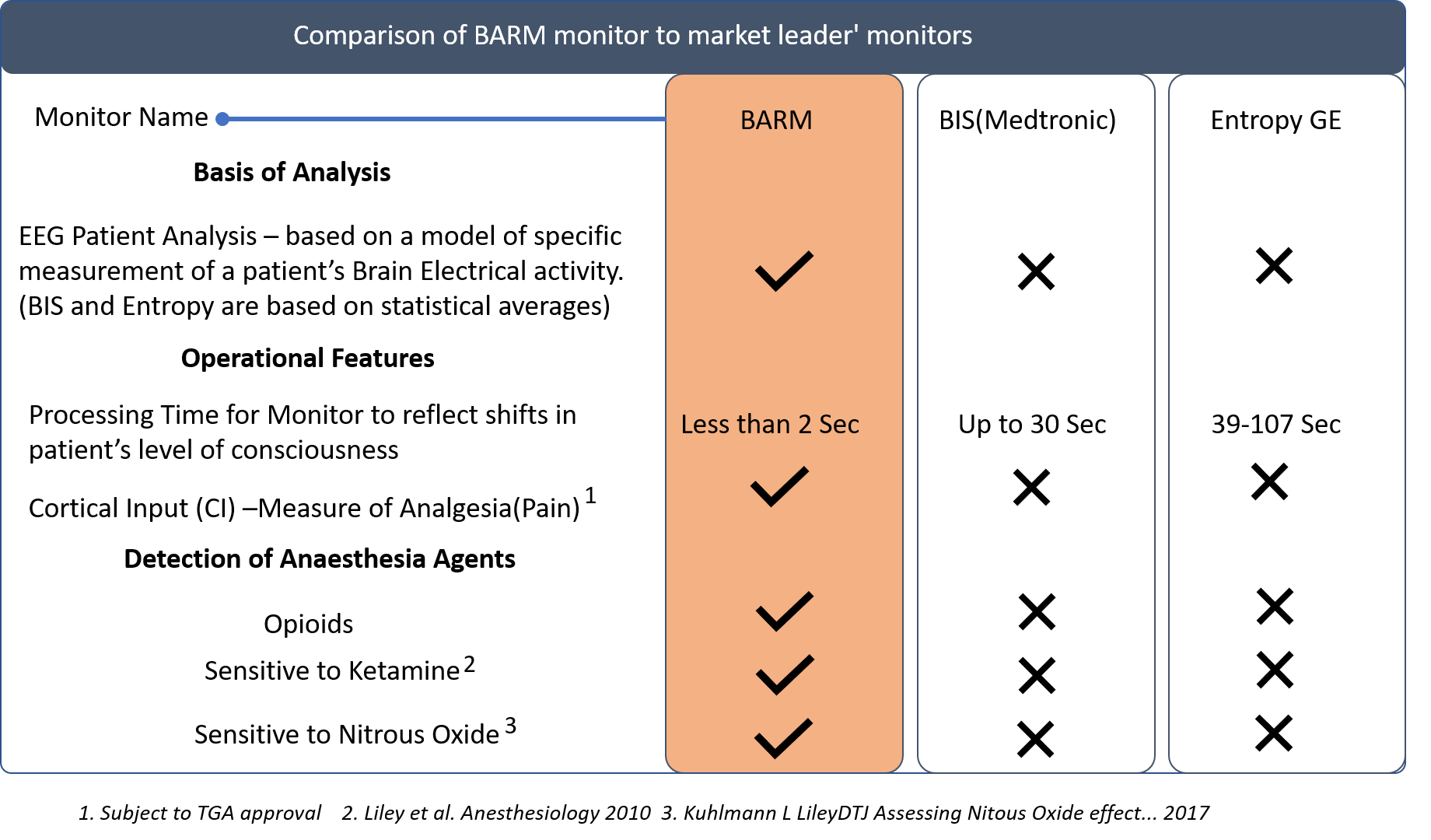
The BARM System is believed to be the only EEG based depth of anaesthesia monitor to measure both level of consciousness (hypnotic) and pain relief (analgesic) state. Thus, enabling the company to cater to two substantial patient monitoring market segments, (1) Anaesthesia Monitoring Devices and (2) Pain Management Devices. By 2020, the global market for anaesthesia monitoring devices is anticipated to reach over USD 1.6 billion and by 2022, Pain Management Devices are anticipated to reach an annual value of USD 8.6 billion. The depth of anaesthesia monitoring market consists of 3 core “players”, with BIS(Medtronic) & E-Entropy (GE) being its major competitors. The BARM system in comparison to the competitive technologies is fundamentally differentiated, and these differences are highlighted in the chart below.
Cortical Business Strategy
The primary objective of the company is to develop sales for the BARM System over the coming months in Australia and New Zealand, together with the key global markets of Europe and Asia.
Cortical has already secured two international distribution agreements, and the company is strategically building a strong relationship with key distributors to propel product sales and support. The company has engaged key opinion leaders to develop a cohort of early adopters, through pilot usage of the BARM system. Additionally, the company continues to conduct further formal clinical trials and publish the results to further substantiate the utility of the system.
BARM Composition and Revenue Generation Pathway
The BARM system is composed of three parts, which include a terminal, a data acquisition module (or DAM) and a disposable single use patient sensor.
- Display Panel PC display monitor, which enables the anaesthetist to view the patients’ Composite Cortical State (CCS) and Cortical Input (CI) indice trends
- DAM- Processes the EEG signals received from the patient and converts these EEG readings into the CCS and CI patients’ indices.
- Disposable Single Patient Use Sensor Is the median to transmit the Patients’ EEG readings to the DAM
Cortical Dynamics has two main revenue streams. (1) The initial one-off sale of the BARM System which includes the Display Panel PC and DAM; and (2) Recurring revenue for the sensors. Due to the stringent medical operation hygiene standards, these sensors cannot be re-used from patient to patient. Competitor reports demonstrate that the disposable array sales generate over 80 per cent of the product revenue.
Business Model: Sales Pathway

With a focus on the brain function monitoring and depth of anaesthesia patient monitoring systems market, Cortical’s initial sales pathway is selling the product through in-country medical device distributors to hospitals within targeted markets.
It is to be noted that many operating theatres use integrated patient monitoring systems, and Cortical has strategically developed the BARM System to supply the system as a module, for integration into global patient monitoring devices.
Cortical’s stage 2 of the revenue strategy helps to address this important segment of the market, wherein the company liaises with major manufacturers to integrate the BARM System technology into their systems. This strategy lends itself to a positive effect on the bulk of revenue generated from sensor sales.

Manufacturing of BARM System and Sensors
Manufacturing of the BARM System is undertaken by sourcing components from certified medical device manufacturers. The sensors, display panel PC, and DAM manufacturers are from the US, Taiwan and Australia, respectively. The DAM is designed to be interfaced with medical standard Panel PCs or laptops. Further, the BARM system has been developed as a module to enable to be integrated within patient monitoring systems sold by global manufacturers such as Philips and GE Healthcare.
Cortical Dynamics Distribution Network
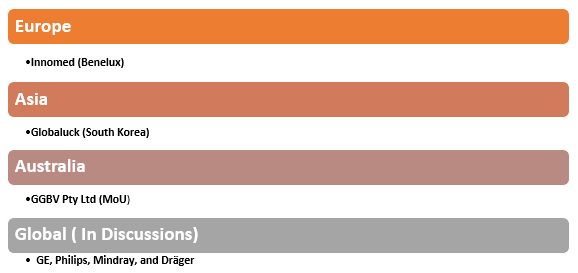
The Stage 1 market implementation involves using in-country distributors and the Stage 2 market implementation aims to integrate BARM into the patient monitoring systems of global patient monitoring manufacturers monitors. The distributors across various geographies are as mentioned below.
The Patent Coverage
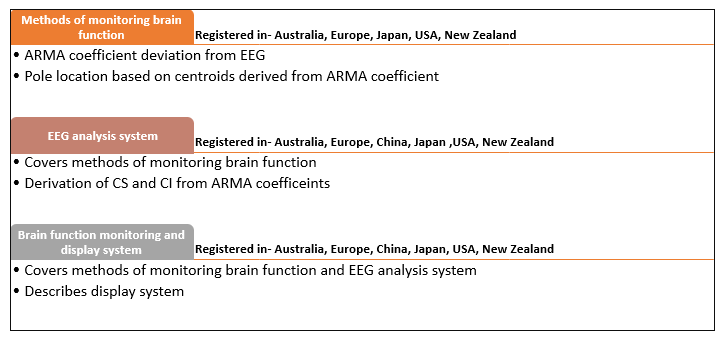
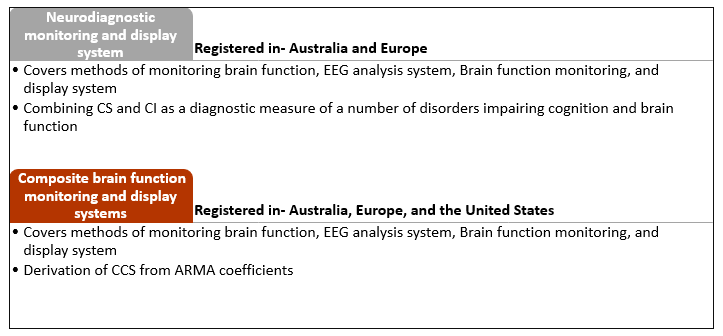
Cortical Dynamics’ technology is covered extensively through 22 registered patents, in Australia, Europe, Japan, China, USA and New Zealand. The global patent coverage provides the company with a competitive advantage out to 2033.
The key aspects covered in the registered patents of the company are detailed below:
With a well laid out revenue generation pathway, certified medical device component manufacturers in place, and backed by a robust business model, Cortical Dynamics’ business strategy is well-positioned to use this competitive advantage in delivering a significant brain monitoring and depth of anaesthesia technology to markets.
Please click Here for the offer document.
Disclaimer
This website is a service of Kalkine Media Pty. Ltd. A.C.N. 629 651 672. The website has been prepared for informational purposes only and is not intended to be used as a complete source of information on any particular company. The above article is sponsored but NOT a solicitation or recommendation to buy, sell or hold the stock of the company (or companies) under discussion. We are neither licensed nor qualified to provide investment advice through this platform.
