
 AUS
AUS
 NZ
NZ
 UK
UK
 CA
CA
 USA
USA
 IND
IND

Nickel
16825.88 USD/Mt 41.5 (0.25%) (Last updated - July 15, 2026 11:59 PM UTC )About
| Performance USD/oz | Change |
| 5 Day | 0% |
| 1 Month | 0% |
| 3 Months | 0% |
| 6 Months | 0% |
| 52 Week | 0% |
July 15, 2026 11:59 PM UTC
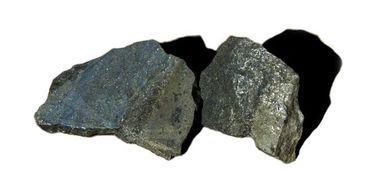
Data Powered by Stockdio. Data delayed by 5 minutes unless otherwise indicated.Nickel is the fifth most abundant element on the earth and is around a hundred times more concentrated beneath the earth’s crust. After iron, nickel is considered to be the second most abundant element in the earth’s inner core. Nickel is a silvery-white lustrous metal. The metal when powdered records significant chemical action but thanks to its high oxidation properties, it is soon coated with an oxide layer on the surface. Due to the high chemical reactivity of the metal, pure nickel is found in tiny quantities within the earth’s crust.
Among industry materials, nickel plays a stabilising and supportive role. It is usually alloyed with other metals to produce shinier, stronger and long-lasting products. Nickel is widely used as the protective layer for softer metals.
Applications
Due to its ability to withstand high temperatures, nickel is utilised in the manufacturing of superalloys. These superalloys exhibit impeccable strength and resistance to oxidation, heat and corrosion. According to the Nickel Institute, roughly two-thirds of the nickel supply is used to manufacture stainless steel while one-fifth is used for steel and non-iron alloys for military, industrial and aerospace uses. Furthermore, one-tenth of the global supply is utilised for plating while the remaining is used for coins, electronics and batteries.
Nickel is widely used as a catalyst for the hydrogenation of unsaturated hydrocarbons. A nickel catalyst can be used to produce soaps and margarine and to shorten hydrocarbon chains. Nickel is also used extensively in varying applications of chemical manufacturing, including as cathodes in rechargeable battery packs, pigments and metal surface treatments.
Coinage and history
The metal has been extensively used in coins due to its long-lasting and corrosion-resistant properties. Between 1857 and 1858, the United States government issued the first-ever nickel coin, Flying Eagle, which consisted of 12% nickel and 88% copper. While most of the coins used gold and silver in historic times, governments across the globe began to issue nickel coins and notes.
Here is some trivia for you –Switzerland produced the first-ever pure nickel coin in 1881.
Occurrence
Nickel is usually found within two deposit types, laterite and magmatic sulphide deposits. Lateritic rock formations are a result of the intensive weathering of surface nickel-rich rocks over the years. Nickel is also found in manganese nodules and at the surface of the sea floor, but these sources are yet to be extensively extracted for the metal. Some of the primary minerals containing nickel are limonite, garnierite and pentlandite.
During the mid-nineteenth century, Norway developed the first large-scale nickel smelting site, extracting nickel from pyrrhotite mineral. 1n 1883, large nickel deposits were discovered in the Sudbury Basin of Canada, which produces over 30% of the global nickel even today. It is believed that nickel formations in the Sudbury Basin are a result of meteoric activity in ancient times. In the early 1900s, additional nickel deposits were discovered in South Africa and the Russian Federation, strengthening nickel’s position in the metal industry. Nickel is widely mined in Indonesia, Russia, Australia, New Caledonia, Canada, Cuba and South Africa.
Magnetism
Nickel is among the four elements (iron, cobalt, germanium, and nickel) that exhibit ferromagnetism at room temperature. Permanent magnets based on nickel alloys such as Alnico have intermediate strength between iron-based permanent magnets and rare-earth elements-based magnets. Alnico is produced from the amalgamation of aluminum, nickel, and cobalt. Another nickel alloy, known as the Mu-metal is a soft magnetic alloy that contains over 80% nickel and 20% iron with little molybdenum. The alloy can be used to shield electronic equipment against low-frequency magnetic fields.
| Code | Company | Price | Chg | %Chg | High | Low | Volume | Market Cap | |
|---|---|---|---|---|---|---|---|---|---|
| Energy |
 AEE
AEE
|
Aura Energy Ltd | 0.105 | 0.005 | 5 | 0.105 | 0.099 | 5,252,921 | 101.944 M |
| Basic Materials | ALY | Alchemy Resources Ltd | 0.008 | 0 | 0.00 | 0.008 | 0.008 | 737 | 9.505 M |
| Basic Materials |
AMD
|
Arrow Minerals Ltd | 0.005 | 0.002 | 66.667 | 0.006 | 0.005 | 35,885,770 | 8.161 M |
| Basic Materials | AOA | Ausmon Resources Ltd | 0.001 | 0 | 0.00 | 0.001 | 0.001 | -- | 1.427 M |
| Basic Materials | AQD | Ausquest Ltd | 0.040 | 0 | 0.00 | 0.040 | 0.038 | 656,004 | 65.688 M |
| Basic Materials |
 ARL
ARL
|
Ardea Resources Ltd | 0.415 | 0.01 | 2.353 | 0.425 | 0.405 | 65,894 | 91.621 M |
| Basic Materials | ARV | Artemis Resources Ltd | 0.003 | 0 | 0.00 | 0.003 | 0.003 | 1,397,588 | 13.517 M |
| Basic Materials | ATM | Aneka Tambang (Persero) TBK (PT) | 0.900 | 0 | 0.00 | 0.900 | 0.900 | 1,333 | 4,325.537 M |
| Basic Materials | AUZ | Australian Mines Ltd | 0.022 | 0 | 0.00 | 0.023 | 0.021 | 8,485,622 | 47.489 M |
| Basic Materials |
AVL
|
Australian Vanadium Ltd | 0.140 | 0.005 | 3.448 | 0.145 | 0.140 | 173,001 | 56.345 M |
| Technology |
AXE
|
Archer Materials Ltd | 0.225 | 0.01 | 4.255 | 0.245 | 0.220 | 1,766,499 | 65.860 M |
| Basic Materials |
BHP
|
BHP Group Ltd | 57.540 | 1.6 | 2.705 | 57.770 | 57.000 | 9,890,995 | 300,472.009 M |
| Energy |
BOE
|
Boss Energy Ltd | 1.215 | 0.08 | 6.178 | 1.260 | 1.215 | 3,363,513 | 537.652 M |
| Basic Materials | BSX | Blackstone Minerals Ltd | 0.041 | 0 | 0.00 | 0.042 | 0.041 | 1,486,918 | 70.588 M |
| Basic Materials |
CHN
|
Chalice Mining Ltd | 1.065 | 0.085 | 7.391 | 1.125 | 1.060 | 3,234,025 | 448.687 M |
| Basic Materials | CLA | Celsius Resources Ltd | 0.007 | 0 | 0.00 | 0.007 | 0.006 | 2,103,176 | 26.055 M |
| Basic Materials | CNJ | Conico Ltd | 0.008 | 0 | 0.00 | 0.008 | 0.008 | 2,207 | 5.216 M |
| Basic Materials |
CTM
|
Centaurus Metals Ltd | 0.440 | 0.01 | 2.222 | 0.460 | 0.430 | 483,102 | 254.982 M |
| Basic Materials | CZN | Corazon Mining Ltd | 0.084 | 0 | 0.00 | 0.085 | 0.083 | 408,979 | 20.078 M |
| Basic Materials | ENT | Enterprise Metals Ltd | 0.004 | 0 | 0.00 | 0.004 | 0.004 | -- | 5.002 M |
| Basic Materials |
ESR
|
Estrella Resources Ltd | 0.027 | 0.001 | 3.571 | 0.027 | 0.027 | 19,000 | 62.511 M |
| Basic Materials |
FML
|
Focus Minerals Ltd | 1.515 | 0.12 | 7.339 | 1.600 | 1.510 | 203,061 | 468.523 M |
| Basic Materials |
G88
|
Golden Mile Resources Ltd | 0.007 | 0.001 | 12.5 | 0.007 | 0.007 | 212,120 | 5.968 M |
| Basic Materials |
GAL
|
Galileo Mining Ltd | 0.120 | 0.01 | 9.091 | 0.120 | 0.110 | 4,541 | 21.739 M |
| Basic Materials |
GBR
|
Great Boulder Resources Ltd | 0.065 | 0.003 | 4.412 | 0.068 | 0.065 | 2,776,852 | 132.066 M |
| Basic Materials |
GTE
|
Great Western Exploration Ltd | 0.011 | 0.001 | 10 | 0.011 | 0.010 | 1,330,733 | 8.554 M |
| Basic Materials | HLX | HELIX Resources Ltd | 0.041 | 0 | 0.00 | 0.041 | 0.041 | 96 | 7.890 M |
| Basic Materials |
IGO
|
IGO Ltd | 6.650 | 0.23 | 3.343 | 6.785 | 6.530 | 4,444,827 | 5,210.003 M |
| Basic Materials |
IPT
|
Impact Minerals Ltd | 0.039 | 0.001 | 2.5 | 0.040 | 0.039 | 94,288 | 20.576 M |
| Basic Materials | KOR | Korab Resources Ltd | 0.008 | 0 | 0.00 | 0.008 | 0.008 | -- | 2.936 M |
| Basic Materials | LEG | Legend Mining Ltd | 0.008 | 0 | 0.00 | 0.008 | 0.008 | 20,000 | 23.316 M |
| Basic Materials | LM8 | Lunnon Metals Ltd | 0.305 | 0 | 0.00 | 0.305 | 0.295 | 57,324 | 68.118 M |
| Basic Materials |
MEI
|
Meteoric Resources NL | 0.155 | 0.015 | 8.824 | 0.170 | 0.155 | 8,846,529 | 465.059 M |
| Basic Materials |
MLX
|
Metals X Ltd | 1.370 | 0.07 | 4.861 | 1.395 | 1.332 | 3,515,688 | 1,276.404 M |
| Basic Materials |
MRD
|
Mount Ridley Mines Ltd | 0.021 | 0.001 | 4.546 | 0.023 | 0.021 | 3,197,003 | 31.881 M |
| Basic Materials | MRR | Minrex Resources Ltd | 0.016 | 0 | 0.00 | 0.016 | 0.016 | 507,910 | 34.217 M |
| Basic Materials |
NIC
|
Nickel Industries Ltd | 0.850 | 0.025 | 2.857 | 0.870 | 0.845 | 5,075,925 | 3,712.356 M |
| Basic Materials | NME | NEX Metals Exploration Ltd | 0.011 | 0 | 0.00 | 0.011 | 0.011 | 1,000 | 3.760 M |
| Basic Materials |
NST
|
Northern Star Resources Ltd | 19.240 | 0.83 | 4.136 | 19.540 | 19.040 | 4,164,993 | 28,595.839 M |
| Basic Materials | ORN | Orion Minerals Ltd | 0.024 | 0 | 0.00 | 0.024 | 0.024 | 184,672 | 214.905 M |
| Basic Materials |
PGM
|
Platina Resources Ltd | 0.022 | 0.001 | 4.762 | 0.024 | 0.022 | 28,535 | 14.502 M |
| Basic Materials |
PNN
|
Power Minerals Ltd | 0.110 | 0.005 | 4.348 | 0.120 | 0.110 | 1,424,055 | 48.149 M |
| Basic Materials | RIE | Riedel Resources Ltd | 0.019 | 0 | 0.00 | 0.019 | 0.019 | -- | 4.982 M |
| Basic Materials |
RIO
|
RIO Tinto Ltd | 160.950 | 3.94 | 2.39 | 162.890 | 159.750 | 2,153,086 | 268,152.717 M |
| Basic Materials |
RNU
|
Renascor Resources Ltd | 0.054 | 0.002 | 3.571 | 0.058 | 0.054 | 1,913,623 | 142.589 M |
| Basic Materials |
RXL
|
ROX Resources Ltd | 0.380 | 0.02 | 5 | 0.395 | 0.370 | 3,479,208 | 556.067 M |
| Basic Materials |
S32
|
SOUTH32 Ltd | 3.900 | 0.14 | 3.465 | 3.970 | 3.880 | 13,805,474 | 17,589.215 M |
| Basic Materials | SBR | Sabre Resources Ltd | 0.007 | 0 | 0.00 | 0.007 | 0.007 | -- | 4.721 M |
| Basic Materials |
SFM
|
Santa Fe Minerals Ltd | 0.270 | 0.005 | 1.818 | 0.275 | 0.270 | 1,079 | 44.775 M |
| Basic Materials |
SFR
|
Sandfire Resources Ltd | 17.640 | 1.01 | 5.416 | 18.220 | 17.530 | 1,591,924 | 8,708.865 M |
| Basic Materials | SFX | Sheffield Resources Ltd | 0.044 | 0 | 0.00 | 0.045 | 0.044 | 17,790 | 17.403 M |
| Basic Materials |
SGQ
|
ST George Mining Ltd | 0.078 | 0.008 | 9.302 | 0.088 | 0.078 | 39,014,094 | 382.655 M |
| Basic Materials |
SMI
|
Santana Minerals Ltd | 0.425 | 0.01 | 2.299 | 0.435 | 0.420 | 1,881,194 | 453.450 M |
| Industrials |
SRL
|
Sunrise Energy Metals Ltd | 14.490 | 2.45 | 14.463 | 16.020 | 14.490 | 561,791 | 2,606.435 M |
| Basic Materials |
TLM
|
Talisman Mining Ltd | 0.066 | 0.006 | 8.333 | 0.066 | 0.066 | 40,189 | 13.559 M |
| Basic Materials |
VMC
|
Venus Metals Corporation Ltd | 0.250 | 0.005 | 2.041 | 0.255 | 0.250 | 17,000 | 50.538 M |
| Basic Materials | VMS | Venari Minerals NL | 0.085 | 0 | 0.00 | 0.085 | 0.085 | -- | 9.149 M |
| Basic Materials | VRX | VRX Silica Ltd | 0.036 | 0 | 0.00 | 0.038 | 0.035 | 492,140 | 30.620 M |
| Basic Materials |
WCN
|
White Cliff Minerals Ltd | 0.017 | 0.001 | 5.556 | 0.018 | 0.017 | 4,093,723 | 58.325 M |
Frequently Asked Questions
Nickel is an essential nutrient for the human body but may cause harm if consumed in excess. Most issues related to nickel are seen due to breathing infected air or drilling nickel-rich water causing infection. Nickel is classified as carcinogenic for humans and may cause respiratory cancer, including lung cancer, as it has been observed in epidemiological studies of sulfidic ore refinery workers.
Oral consumption of nickel is mostly removed by kidneys and passed off as urine or the gastrointestinal tract without absorption. Overall, nickel is not toxic for humans but a larger dose of it or chronic inhalation may have repercussions, including cancer.
The majority of nickel is inaccessible since it is contained within the earth’s iron nickel molten core. Nickel is also present amongst dissolved minerals in the sea. Nickel present in soil is estimated to be present between 0.2 ppm and 450 ppm. Nickel is present in plants and vegetables. Among food items, nickel is present in beans and tea.
Nickel is also released into the environment by power plants, which later on settles to the ground upon contact with raindrops. Nickel’s presence at high concentrations in sandy soil could damage plants, and in water, could harm algae growth. Usually, nickel does not accumulate in plants or animals.
Indonesia is the largest nickel-producing country in the world and it banned nickel ore export in January 2021. The Indonesian government had banned nickel ore exports in an effort to boost the domestic nickel downstream sector and increase mining investments in the country. Some government officials have confirmed that the initiative had actually shown a positive impact on the domestic nickel industry and had boosted exports of nickel-derived products along with bringing in major investments.
Nickel is obtained via extractive metallurgy by conventional roasting and the reduction process to obtain the final product with more than 75% Ni grade. A majority of sulfide ores are processed using froth flotation and pyrometallurgical processes to produce nickel matte. Nickel matte can be processed further by the leaching and electrowinning (SX-EW) beneficiation processes. Alternatively, nickel matte can also be processed using the Sherritt-Gordon process, which produces a concentrate of cobalt and nickel, which can be later refined using the solvent extraction method to obtain 99% purity nickel.
Related Articles READ MORE
GAL, WIN, NC1: ASX nickel stocks with good performance in 2022
- January 13, 2023 07:02 PM AEDT
- Team Kalkine Media

Upcoming Milestones for the ASX’s Dedicated Silver Giant Ready to Awaken
- February 26, 2025 11:00 AM AEDT
- Team Kalkine Media

ASX200 Gains Momentum Amidst Rising Commodity Prices and Market Insights
- November 14, 2023 06:28 PM AEDT
- Team Kalkine Media

Kalkine Media explores why inflation impacts gold prices
- January 27, 2023 02:54 AM AEDT
- Ipsita Sarkar

ASX-listed commodity stocks with robust performance in 2022
- January 09, 2023 04:32 AM AEDT
- Team Kalkine Media

Commodity markets bounced back in 2022. Will they carry momentum in new year?
- December 28, 2022 07:04 PM AEDT
- Team Kalkine Media