
 AUS
AUS
 NZ
NZ
 UK
UK
 CA
CA
 USA
USA
 IND
IND




Highlights
- Occidental Petroleum (NYSE:OXY) operates across oil, natural gas, chemicals, and carbon management.
- The company maintains a significant presence in the Permian Basin and international energy markets.
- Carbon capture projects complement traditional energy operations within a diversified business model.
The energy sector continues to play an essential role in global economic activity, with companies balancing hydrocarbon production alongside emerging lower-emission technologies. Occidental Petroleum (NYSE:OXY) is one of the largest independent energy producers in the United States and is a constituent of the S&P 500. Its operations span upstream exploration and production, chemical manufacturing, midstream infrastructure, and carbon management initiatives, giving the company exposure to multiple areas of the energy value chain.
Core Business Operations
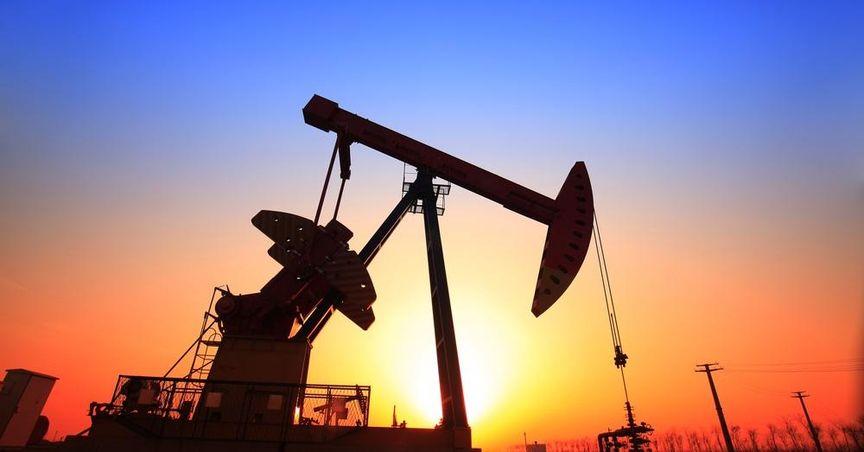
Occidental Petroleum focuses primarily on the exploration and production of crude oil and natural gas. Production assets are concentrated in the Permian Basin of Texas and New Mexico, one of North America's most productive hydrocarbon regions. Additional operations extend across the Rocky Mountains, the Gulf of Mexico, and selected international locations in the Middle East, North Africa, and Latin America.
Beyond production activities, the company owns transportation infrastructure that supports the movement of oil, natural gas, and related products from producing regions to processing and distribution facilities.
Position Within the Energy Industry
As part of the broader S&P 500, the company represents the Energy Stocks category. Energy producers remain closely connected to worldwide demand for transportation fuels, industrial feedstocks, electricity generation, and petrochemical products.
Industry participants continue expanding operational efficiency through improved drilling techniques, digital technologies, reservoir management, and infrastructure modernization. These developments have contributed to higher recovery rates and greater production efficiency across major producing basins.
Permian Basin Remains a Key Asset
The Permian Basin forms the foundation of the company's production portfolio. The region contains multiple hydrocarbon-bearing formations, enabling long-term development across thousands of drilling locations.
Existing pipeline systems, processing plants, storage facilities, and export infrastructure support efficient movement of produced volumes. Continuous optimization of drilling programs and well completions has enhanced operational performance throughout the basin.
The company's scale within this region places it among the largest operators active in North American unconventional oil and gas production.
Chemical Manufacturing Through OxyChem
Chemical manufacturing represents another important business segment. OxyChem produces chlor-alkali products, vinyl chloride monomer, polyvinyl chloride (PVC), caustic soda, chlorine, and other industrial chemicals.
These products serve construction, water treatment, healthcare, automotive manufacturing, consumer goods, and industrial applications. Demand across these industries provides business diversification beyond crude oil and natural gas production.
Integrated manufacturing facilities and established distribution networks support domestic and international customers across multiple industrial sectors.
Carbon Management Initiatives
Carbon management has become an increasingly visible part of the company's business activities. Direct air capture technology aims to remove carbon dioxide directly from the atmosphere before permanent underground storage or industrial utilization.
The company also develops carbon capture and sequestration infrastructure that supports industrial facilities seeking emissions management solutions.
These initiatives complement traditional energy operations while expanding participation in developing carbon management technologies.
International Presence
Operations outside the United States provide additional geographic diversification. Producing assets are located in countries including Oman, the United Arab Emirates, Algeria, and Qatar through various agreements and partnerships.
International production contributes meaningful volumes while broadening exposure across different geological formations and operating environments.
This diversified geographic footprint reduces dependence on any single producing region and supports long-term operational continuity.
Digital Technology and Operational Efficiency
Digital systems continue supporting drilling optimization, reservoir evaluation, equipment monitoring, and maintenance scheduling.
Automation, advanced analytics, artificial intelligence applications, and real-time operational monitoring have become increasingly integrated into field operations. These technologies improve equipment reliability, production planning, and resource utilization across large operating areas.
Digital transformation remains an important industry trend throughout the global energy sector.
Midstream Infrastructure
Transportation and processing infrastructure connects production fields with refining, export, and consumption markets.
Pipeline networks, gathering systems, compression facilities, and processing plants contribute to operational efficiency while supporting reliable movement of hydrocarbons.
Integrated infrastructure also strengthens coordination between production activities and downstream logistics.
Industry Environment
Global energy demand continues to reflect activity across transportation, manufacturing, petrochemicals, aviation, and electricity generation.
Energy producers adapt operations according to changing consumption patterns, technological advancements, environmental requirements, and infrastructure development.
Alongside conventional oil and natural gas operations, companies increasingly participate in emissions reduction technologies, carbon storage, and lower-carbon industrial processes.
These developments illustrate how established energy companies continue expanding operational capabilities while maintaining core hydrocarbon production activities.
Business Diversification
The combination of upstream production, chemical manufacturing, transportation infrastructure, and carbon management creates a diversified operating structure.
This multi-segment model allows participation across several parts of the energy value chain rather than relying exclusively on oil production.
Continued development across conventional energy assets and carbon management technologies reflects the evolving structure of large integrated energy businesses operating within the S&P 500.
