
 AUS
AUS
 NZ
NZ
 UK
UK
 CA
CA
 USA
USA
 IND
IND




For decades, the engagement ring has been marketed not just as a symbol of eternal love, but as a store of value—a tangible asset that could ostensibly be passed down or liquidated if necessary. However, as we move further into 2025, financial literacy is reshaping how modern couples approach this significant purchase.
For the astute investor reading Kalkine Media, the question isn't just about the cut or clarity; it’s about the ROI (Return on Investment) and Opportunity Cost. Is sinking five figures into a mined diamond truly a smart financial move, or is the definition of "value" shifting?
Here, we analyze the changing economics of bridal jewelry and how brands like MollyJewelryUS are catering to a new generation of financially savvy consumers.
The Depreciation Reality Check
From a purely financial standpoint, a traditional diamond engagement ring is a depreciating asset, much like a luxury car. The moment it leaves the showroom, it loses a significant portion of its retail value—often between 20% to 50%.
Unlike gold bullion or blue-chip stocks, diamond jewelry lacks liquidity. The "investment" narrative was largely a marketing triumph of the 20th century rather than a financial reality. For young investors looking to maximize their portfolio, tying up capital in a non-performing asset with high depreciation is becoming less appealing.
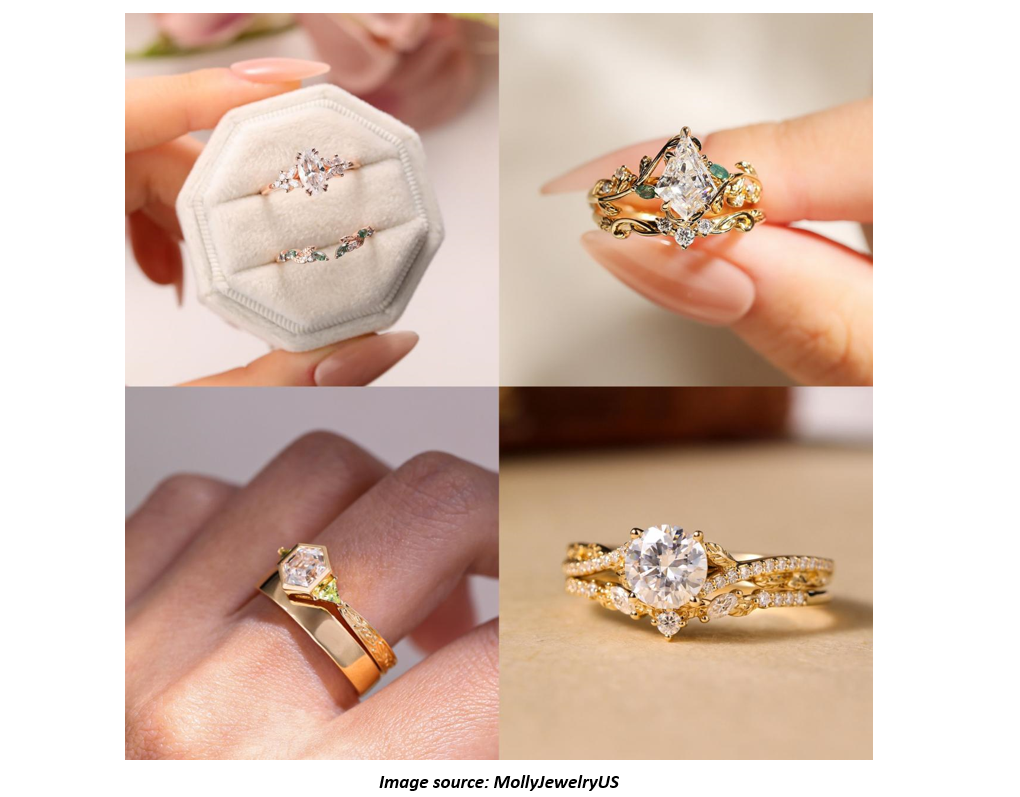
The Rise of "Smart Luxury" and Moissanite
This financial awakening has paved the way for the Moissanite revolution. Originally discovered in a meteor crater, modern Moissanite is lab-grown, offering a refractive index (brilliance) that actually exceeds that of a diamond, and a hardness (9.25 on the Mohs scale) that makes it suitable for daily wear forever.
But the real allure is the price arbitrage. A top-tier Moissanite ring often costs 1/10th of the price of a comparable diamond.
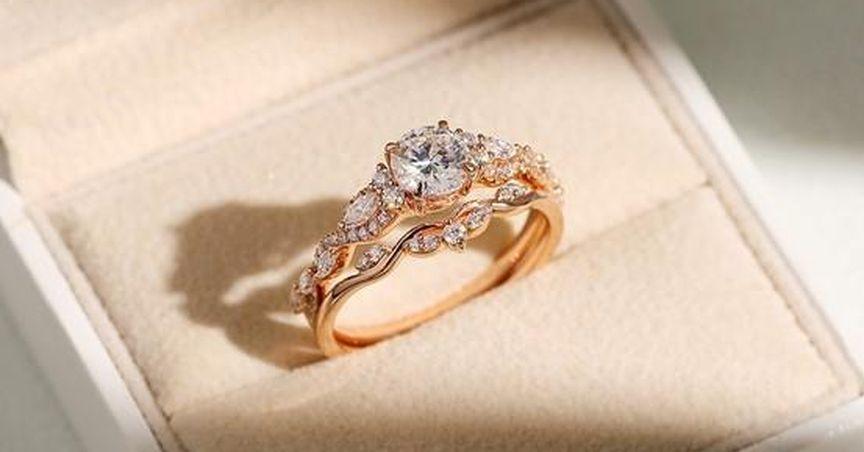
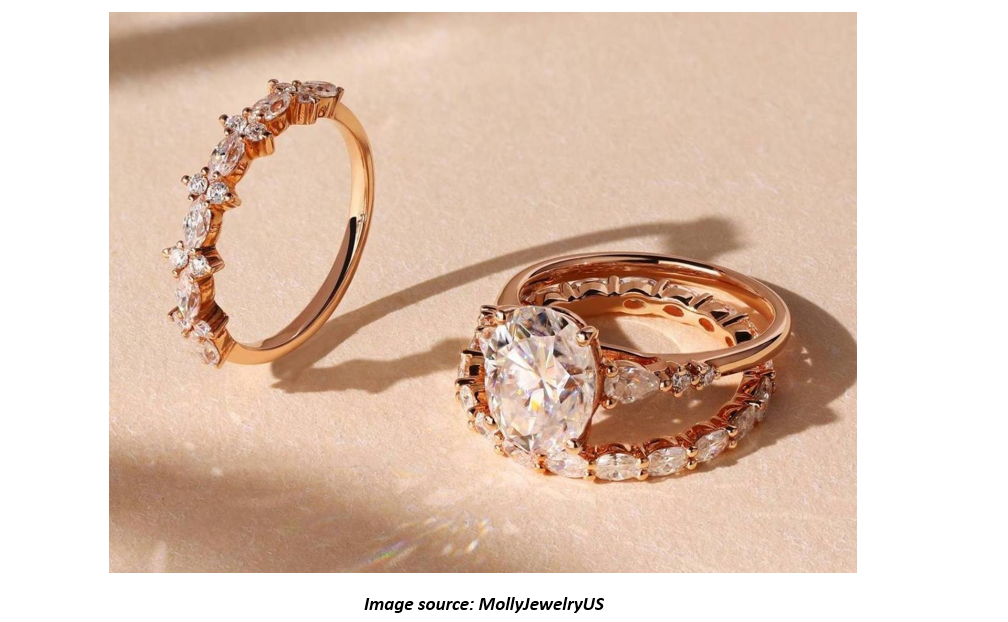
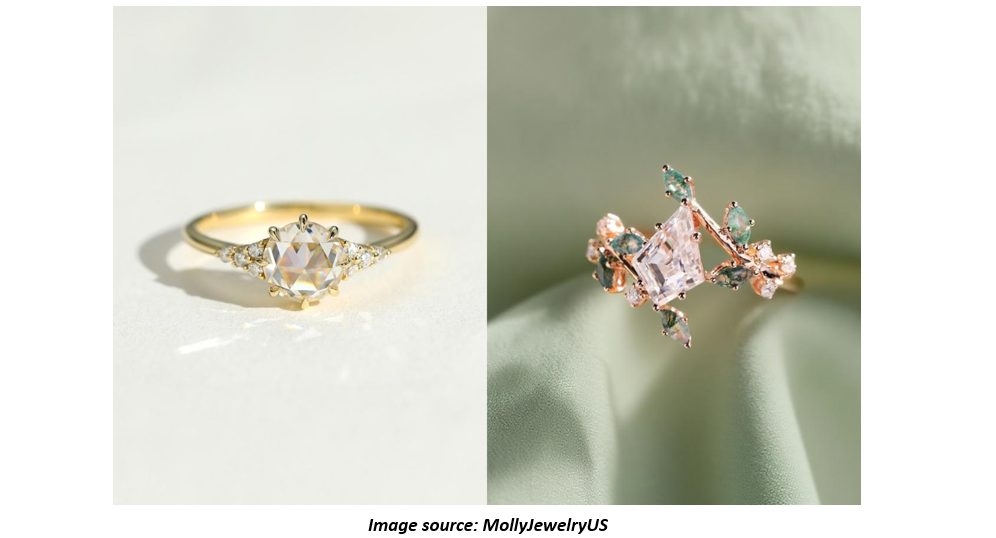
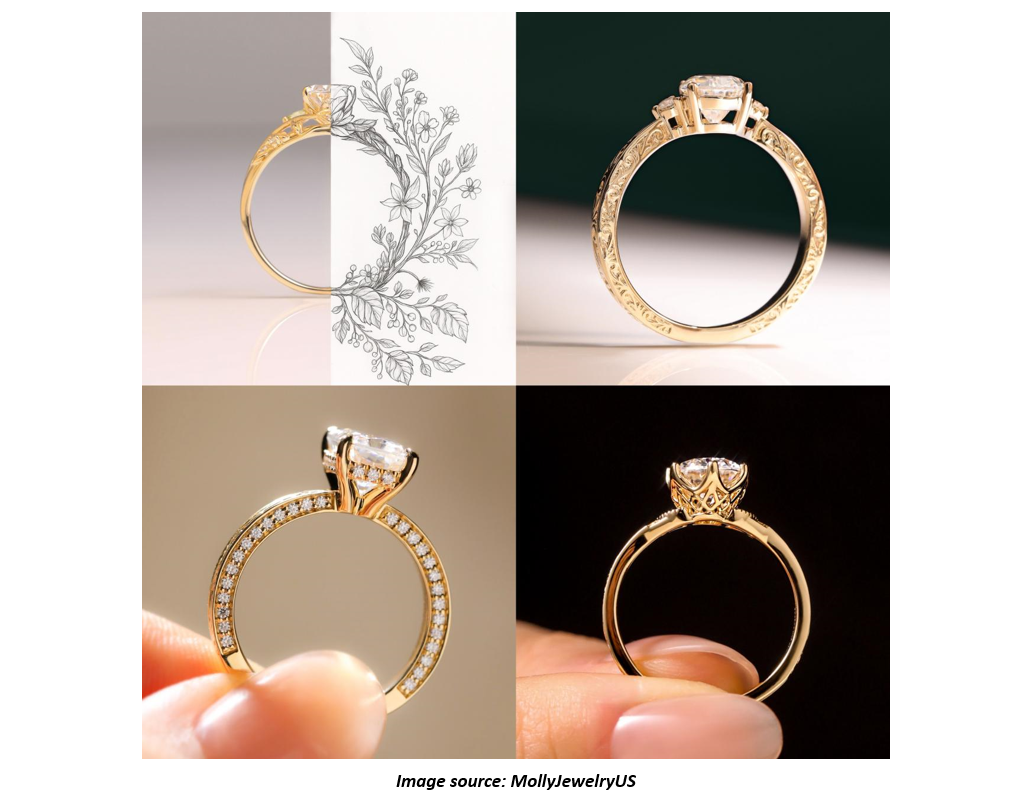
This is where brands like MollyJewelryUS have found their niche. They aren't just selling jewelry; they are offering a "value pivot." By specializing in high-quality Moissanite and distinctive, artisanal cuts—such as the vintage-inspired rose cut or the geometric kite cut—they allow consumers to decouple the symbolism of the ring from the expense of the stone.
Calculated Opportunity Cost: Where Does the Money Go?
Let’s look at the math, a language Kalkine readers speak fluently.
- Scenario A: You purchase a traditional 2-carat mined diamond ring for $15,000.
- Scenario B: You purchase a comparable bespoke Moissanite ring from MollyJewelryUS for $1,500 (even lower).
The difference is $13,500.
If that saved capital is diverted into a diversified index fund (historically returning ~7-10% annually), over a 30-year period, that initial savings could compound to over $100,000.
In this light, the "smart investment" isn't the ring itself—it’s the capital preservation strategy of choosing a cost-effective alternative without sacrificing the aesthetic luxury.
The ESG Factor (Environmental, Social, and Governance)
Modern valuation isn't just monetary; it’s ethical. Investors today are heavily focused on ESG criteria. Mined diamonds have a complicated history regarding human rights and environmental impact.
Lab-grown gems and Moissanite offered by MollyJewelryUS align with the Ethical Investing trend. They have a minimal carbon footprint and zero ethical conflict in their sourcing. For the socially conscious consumer, this adds an intangible "value premium" to the purchase.
The Verdict: Redefining Investment
Is an engagement ring a smart investment?
- If you view it as a financial asset to flip later:
- If you view it as an emotional asset that shouldn't derail your financial goals: Yes, provided you buy smart.
The trend is clear: The "3-months' salary" rule is dead. The new rule is Smart Allocation.
By opting for alternatives that offer identical durability and beauty—such as the collections found at MollyJewelryUS—couples are essentially performing a "short" on traditional diamond marketing and going "long" on their future financial freedom.
In the modern economy, that is the ultimate luxury.
The article has been provided and sponsored by MollyJewelryUS.
