
 AUS
AUS
 NZ
NZ
 UK
UK
 CA
CA
 USA
USA
 IND
IND






The benefits and applications IoT or Internet of things in the present times is not hidden anymore. IoT can be explained as the connection of smart things that are enabled by data analytics and artificial intelligence. The evolution of IoT is making the lives more reliable and cost-effective. In the present times, IoT exists in the early stage and has enormous potential to grow in the future with the rapid development in wireless connectivity, artificial intelligence along with the concept of things getting miniaturised.
Recent developments in IoT allowing technologies like 5G, edge computing and low powered artificial intelligence have increased Australia’s need to adopt IoT platforms to remain globally competitive.
As per the reports published by ACOLA or Australian Council of Learned Academy, in the next decade, IoT capabilities will gradually become rooted in services and products. The capture of exponentially rising volumes of granular data will facilitate in analysing patterns, changed objects and the surrounding environment. The data will be beneficial in optimising services and products that produce data and will propel future innovation and research. Through IoT development, there would be advances in data analytics and artificial intelligence to expand the interaction between machine to machine and human to machine as well as edge computing.
How can Australia capitalise on this IoT opportunity?
As per ACOLA’s report, to take advantage of IoT opportunities, Australia must focus on niche areas of strength or comparative advantage. For example, advanced manufacturing and health sector. These sectors have started understanding and looking at ways to make use of IoT to boost productivity and lower costs.
Australia should also think about using its unique geographic diversity, climate as well as the distributed population as a testbed for future applications.
In this direction, the Australian national, state and territory governments are progressing multiple initiatives that will help support Australia’s transition towards a digital economy in handling technologies preparing the workforce. Most of them lay the foundation for supporting the effective implementation of the IoT and other budding digital technologies like AI and blockchain.
Actions would need to be taken that meets the specific needs of IoT and emerging technologies in general so that the adoption of IoT is smooth, cost-effective and supports responsible and ethical use, particularly in data privacy & cybersecurity.
Australian Government IoT Code
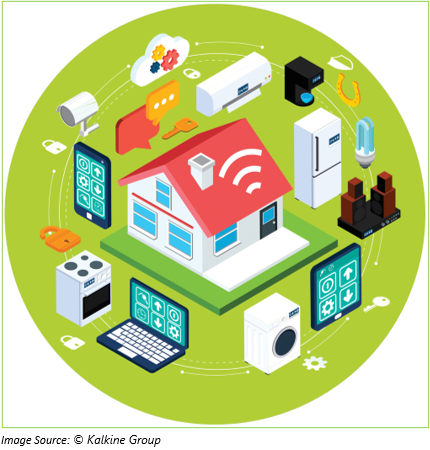
The Internet of Things comprises of everyday smart devices like smart TVs and home assistants that connect to the internet. IoT is of significant benefit for the Aussies. It improves convenience, comfort, and efficiency. Most of these devices are developed with functionality as a priority, & security features are frequently absent or an afterthought.
As per the estimates of the Australian Government, by 2030, there would be over 21 billion IoT devices linked to the internet globally with the top estimates forecasting of more than 64 billion devices. However, it would be important that these IoT devices in home and office premises have cybersecurity provisions to prevent possible threats and malicious cyber activity.
On that front, the Australian Government introduced the Code of Practice. The Code of Practice aims to secure IoT for consumers and is the first step of the Government in the direction of improving the security of IoT devices in Australia.
DID YOU WATCH: What is Internet of Things (IoT) and how are we incorporating it with our smart devices?

Source: Shutterstock
What is this Code of Practice?
Code of Practice is a set of measures recommended by the Australian Government for the industry as the minimum standard for IoT devices. It was developed by the Department of Home Affairs in partnership with the Australian Signals Directorate’s Australian Cyber Security Centre & follows countrywide engagement with industry & the people living in Australia.
The Code of Practice could help them in raising understanding of security safeguards related to IoT devices, build customer faith in IoT technology plus allow Australia to derive the benefits of greater IoT acceptance.
Code of Practice comprises of 13 principles. These are:
- There should be no duplicated default or feeble passwords.
- Execute a vulnerability disclosure policy.
- Keep software securely updated.
- Securely store credentials.
- Ensure that personal data is protected.
- Reduce exposed attack surfaces.
- Safeguard communication security.
- Ensure software integrity.
- Make systems resistant to outages.
- Monitor system telemetry data.
- Make it easy for customers to remove personal data.
- Make installation as well as installation of devices easy.
- Validate input data.
A Glance at ASX-listed companies with exposure to IoT technology
Some of the leading IoT companies listed on the Australian Stock Exchange are:
- Connected IO Limited (ASX:CIO)
- Connexion Telematics Limited (ASX:CXZ)
- IoT Group Limited (ASX:IOT)
- Quantify Technology Holdings Limited (ASX:QFY)
- SkyFii Limited (ASX:SKF)
- Traffic Technologies Limited (ASX:TTI)
- XPED Limited (ASX:XPE)
- Volpara Health Limited (ASX:VHT)
INTERESTING READ: How Will Smartphones Look Like In 2030?
