
 AUS
AUS
 NZ
NZ
 UK
UK
 CA
CA
 USA
USA
 IND
IND





Highlights
- Glenstar Minerals has received BLM approval to initiate a drill program at Wildhorse.
- The company has contracted Midnight Sun Drilling Inc. to execute the exploration campaign.
- Glenstar has identified two primary drill zones: Coca Cola and Rattlesnake.
- Trenching results confirmed mineralization trends and expanded geological understanding.
- The Wildhorse Project spans 89 claims covering approximately 1,780 acres in Nevada.
Glenstar Minerals Inc. (CSE:GSTR, OTCQB: GSTRF, FRA: VO20), a mineral exploration company focused on polymetallic minerals, has entered a new phase of exploration at its Wildhorse Project in Mineral County, Nevada, following the receipt of regulatory clearance for an extensive drilling program.
This milestone marks a transition from preliminary surface work to targeted subsurface testing, with permits now in place for up to 13 drill sites approved by the Bureau of Land Management. The approval also includes the construction of approximately 2,200 feet of additional access roads to support drilling logistics and improve access to key target areas.
To execute the program, Glenstar has engaged Midnight Sun Drilling Inc., a drilling contractor with operations across the Yukon, Alaska, and Nevada. The contractor previously worked with Glenstar on its Green Monster Project, where earlier exploration confirmed anomalous nickel, copper, cobalt, and zinc mineralization.
Pending Assay Results
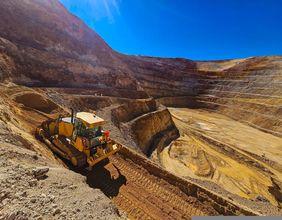
The company completed a trenching program at the Wildhorse Project in late February. While assay results from this program remain pending from ALS Chemex, preliminary visual examination of exposed bedrock has reinforced earlier geological interpretations. The observations align with prior surface sampling data, suggesting consistent mineralization patterns across the project area.
Glenstar indicated that assay results are expected shortly, which may provide further clarity on mineral grades and distribution across the property.
Coca Cola Zone Focus
The drill plan includes six holes targeting the Coca Cola Zone, where earlier sampling returned copper values of 1.6%, 5.3%, 2.3%, and 5.1%, alongside an average silver content of 21.6 ppm. Additional geochemical indicators include anomalous bismuth averaging 156 ppm and tungsten averaging 72.5 ppm across sampled areas.
- Geological observations at this zone highlighted a complex structure featuring narrow porphyritic dikes with feldspar phenocrysts embedded in a fine-grained matrix.
- Trenching activities also revealed a wider alteration zone than initially anticipated, along with continuous mineralization trends across exposed bedrock.
- The drilling strategy will follow a mineralized trend extending approximately 500 feet, linking earlier sampling zones with newly trenched areas.
- Each drill hole is planned to reach depths of up to 500 feet, with orientations to be finalized based on structural interpretation.
Rattlesnake Zone Targeting
In addition to the Coca Cola Zone, Glenstar plans to drill seven holes at the Rattlesnake Zone, located roughly 1,600 feet to the northeast.
- These holes will be drilled vertically, with depths ranging between 300 and 500 feet.
- The drilling approach at Rattlesnake is designed to follow previously identified north-south mineralization trends.
- This zone complements the Coca Cola Zone, forming part of a broader exploration framework aimed at understanding the continuity and scale of the mineralized system.
Emerging Geological Model
Data compiled from earlier rock sampling and recent trenching have contributed to an evolving geological model for the Wildhorse Project. The central portion of the property appears to host complex porphyritic intrusions within a skarn-altered environment.
High-grade copper and silver mineralization, accompanied by elevated tungsten, bismuth, and antimony values, is concentrated near the center of the system. In contrast, zinc and lead mineralization appear more prominent in areas further from the core.
Trenching results also revealed a shift in structural interpretation. What was previously considered a north-south mineralization trend is now intersected by an east-west trending zone of altered and fractured rock. This updated understanding has directly influenced drill hole placement for the initial phase of the program.
Property Scale Potential
The Wildhorse Project spans 89 mineral claims covering approximately 1,780 acres in Mineral County, Nevada. Historical records, including archived data from a 1975 field examination, indicate long-standing exploration interest in the area. Evidence of historical workings suggests activity dating back to the late 1800s and early 1900s.
Preliminary geological assessments identified east-dipping mineralized zones across the property. Initial sampling revealed quartz veinlets containing over 1 gram per ton gold, 1% copper, and 6,100 ppm antimony, along with occurrences of bismuth and tungsten. These findings support the interpretation of a polymetallic system linked to an intrusive source.
System Scale Exploration Strategy
The combined data from both Coca Cola and Rattlesnake Zones suggests that the center of the mineralized system may lie between these two areas, with potential extension under cover to the east and west. Current interpretations indicate a possible strike length exceeding one kilometre across the system.
The ongoing drill program is structured to evaluate the extent and continuity of mineralization across both zones. It also aims to define the scale of the skarn system and assess the potential presence of an underlying porphyry system. By integrating drilling results with geological observations and geochemical data, Glenstar continues to refine its understanding of the Wildhorse Project and its broader mineralization framework.
Shares of GSTR last traded at CAD 0.30 on April 06, 2026.
