
 AUS
AUS
 NZ
NZ
 UK
UK
 CA
CA
 USA
USA
 IND
IND






Highlights
- Chilean court ruling demands major environmental remediation costs.
- Long-term production strategy remains intact with growth initiatives.
- Rising global copper demand aligns with company’s expansion roadmap.
Lundin Mining (TSX:LUN) operates within this framework, managing a diversified portfolio of assets that produce copper, zinc, nickel, and gold.
The mining sector plays a central role in supplying essential raw materials required for industrial production, infrastructure development, and energy transition. Companies engaged in the extraction of copper, gold, and other metals often navigate complex market conditions shaped by commodity prices, environmental regulations, and geopolitical factors. The global focus on electrification and renewable energy has amplified the importance of copper as a strategic resource, driving expansion initiatives across various mining firms. The importance of Chile in global mining cannot be understated, with the country accounting for a significant portion of worldwide copper production. A legal development in the region has now placed renewed attention on Lundin Mining, reshaping perspectives about costs, responsibilities, and long-term operational planning TSX Composite Index.
Legal ruling consequences and impact on operating
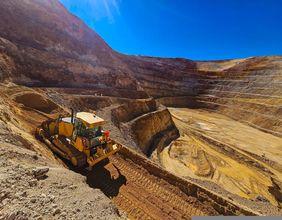
A recent decision in Chile requires the subsidiary Ojos del Salado to undertake extensive remediation efforts following the well-documented sinkhole incident at Alcaparrosa. The obligations include backfilling of impacted areas, strengthening of water infrastructure, and the implementation of measures to safeguard surrounding communities. Mining operations at Alcaparrosa remain suspended, though the broader asset base of the company is still producing according to guidance.
The ruling has introduced additional expenses that extend beyond traditional operating costs. Expenditures on remediation projects do not directly contribute to output but serve to maintain social license and environmental compliance. For a mining group listed on the TSX Composite Index, reputational factors can significantly influence perception, especially as investors track sustainability commitments across resource companies.
Lundin Mining has maintained stable output at unaffected mines, such as Candelaria in Chile and operations in Brazil and Europe. These assets remain the foundation for cash flow generation and future expansions. While remediation work in Chile will weigh on near-term budgets, operational resilience at other sites continues to provide balance.
Share movement aligned with broader sector optimism
During the past year, shares of Lundin Mining (TSX:LUN) advanced considerably, reflecting confidence in its asset base and long-term production plans. Notably, growth occurred even while the Alcaparrosa mine remained on pause. Gains in market value are consistent with the broader strength seen in mining stocks within the S&P TSX Composite Index, where commodity-linked companies have benefited from rising copper prices and expectations of higher demand.
The company’s reported results show that net income improved while revenue growth remained modest. This indicates a focus on operational efficiency, disciplined cost management, and strong contribution from mines that are unaffected by the Chilean legal outcome. Despite remediation responsibilities, the broader growth profile remains anchored by multiple projects designed to increase copper and gold output.
Such dynamics illustrate the sector’s complexity, where legal obligations, environmental expectations, and commodity cycles intersect. For mining companies, maintaining credibility while advancing production is an ongoing balance.
Growth initiatives shaping copper and gold production profile
Lundin Mining (TSX:LUN) continues to highlight organic growth initiatives across its global portfolio. Expansion programs at existing mines aim to extend lifespans and increase throughput, while larger projects such as Vicuña in South America could add material production volumes once developed. These initiatives align with structural global demand trends for copper, particularly as electrification accelerates.
Enhancements to processing facilities, exploration campaigns, and efficiency improvements are all designed to strengthen production profiles. In parallel, the company’s geographic diversification reduces reliance on any single jurisdiction. This allows for greater resilience in the face of localized legal or regulatory issues, such as those currently unfolding in Chile.
As seen within the S&P composite index, mining companies that sustain long-term growth plans while addressing environmental responsibilities often maintain stronger valuations compared to peers with limited expansion strategies.
Environmental compliance and reputation management in Chile
Environmental compliance has become central to mining operations worldwide. Following the Alcaparrosa sinkhole, regulators and communities in Chile have required stronger measures to protect natural resources, particularly water systems. The legal ruling reinforces the expectation that mining companies must manage not only ore extraction but also long-term sustainability.
For Lundin Mining (TSX:LUN), fulfilling these obligations may increase expenditure but also provides an opportunity to demonstrate commitment to responsible mining practices. Aligning remediation with local community needs helps sustain operational stability in Chile, a country critical to global copper supply chains.
Integration of sustainability considerations into production strategies reflects broader sector trends. Companies included in the S&P 500 TSX Composite Index are increasingly evaluated on non-financial metrics such as environmental, social, and governance practices.
Market valuation and narratives
Current narratives describe Lundin Mining as trading modestly below fair value based on forward revenue expectations and growth initiatives. The valuation reflects a balance between anticipated remediation costs in Chile and optimism surrounding organic expansion projects.
While the ruling at Alcaparrosa raises obligations, the remainder of the portfolio continues to provide consistent output. The Candelaria mine remains a cornerstone operation, contributing substantially to copper production. Brazil and European mines further enhance geographic balance.
Lundin Mining (TSX:LUN) is positioned within a sector that is seeing heightened attention due to electrification trends, energy transition policies, and infrastructure programs requiring copper and gold. These themes shape the broader environment in which valuations are being assessed.
Role of copper demand in shaping production expansion
The long-term importance of copper lies in its use across electrical wiring, renewable energy installations, and transportation systems. Projections indicate that copper demand will continue to expand in line with global electrification. Producers with expansion projects, such as Lundin Mining (TSX:LUN), are therefore central to supply chains supporting this transition.
The ability to increase output while managing environmental and legal responsibilities will remain critical. Mining companies that demonstrate both production growth and sustainability commitments may benefit from greater recognition within the s&p tsx composite index.
Broader of commodity cycles and mining economics
The valuation of mining companies is closely tied to commodity cycles, with copper and gold prices driving revenue potential. When prices rise, expansion projects often become more economically attractive, allowing companies to accelerate development timelines. Conversely, when prices decline, cost discipline becomes paramount.
Lundin Mining (TSX:LUN) has navigated cycles by maintaining a balanced portfolio across multiple metals and jurisdictions. This strategy allows the group to mitigate volatility in any one commodity. With copper remaining central to global energy transition goals, the outlook for producers remains tied to infrastructure demand and renewable adoption.
