
 AUS
AUS
 NZ
NZ
 UK
UK
 CA
CA
 USA
USA
 IND
IND




Highlights
- Equinor operates oil, gas, offshore wind, and low-carbon energy assets across multiple regions.
- Strong first-quarter production volumes reflected activity across the company’s international portfolio.
- Operations span Norway, Europe, the Americas, Africa, and selected emerging energy markets.
Equinor combines oil, gas, offshore wind, and low-carbon projects while maintaining a significant international presence alongside the S&P 500 Index .a
Equinor ASA is a multinational energy company operating within the global energy sector, with activities spanning oil and gas production, transportation, refining, marketing, renewable energy, and low-carbon technologies. As a large international energy producer listed on the New York Stock Exchange, the company is frequently viewed alongside major constituents associated with the S&P 500 Index and the broader group of Energy Stocks.
Global Energy Operations
The company traces its origins to the development of Norway’s offshore petroleum resources and has grown into one of the largest energy producers in Europe. Activities include exploration, field development, production, transportation, processing, and marketing of crude oil and natural gas.
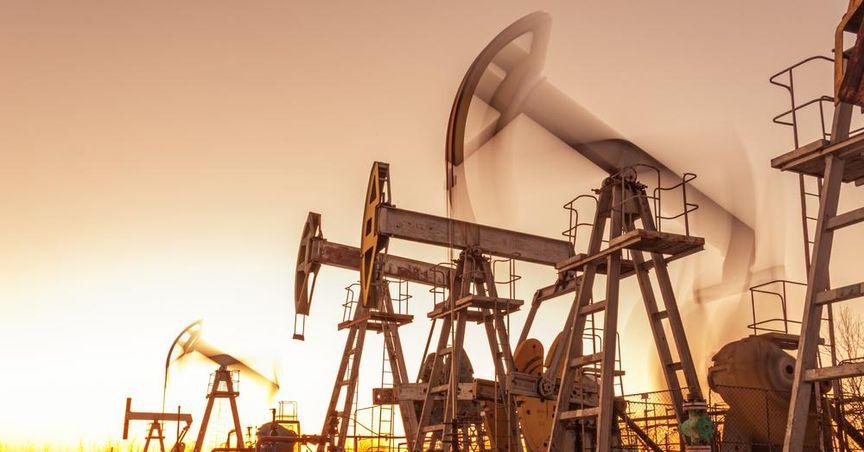
Production assets are concentrated on the Norwegian Continental Shelf, where several large offshore fields contribute significant volumes. International operations include assets in North America, South America, Africa, and selected regions of Asia. The diversified asset base supports production from both mature and developing fields.
Natural gas remains a major component of operations, with substantial exports delivered to European markets through extensive pipeline infrastructure. This position has reinforced the company’s role in regional energy supply chains.
Position Within the Energy Industry
The global energy industry continues to balance conventional hydrocarbon production with expanding renewable energy development. Within this environment, Equinor (NYSE:EQNR) maintains activities across both segments.
Compared with many companies tracked alongside the S&P 500 Index , the business combines large-scale offshore oil and gas expertise with growing renewable energy capabilities. This combination reflects broader industry trends involving energy diversification and infrastructure development.
The company participates in upstream production, midstream transportation, and selected downstream activities, creating exposure to multiple parts of the energy value chain.
Production Performance and Recent Developments
During the first quarter of 2026, production exceeded 2.3 million barrels of oil equivalent per day, representing one of the strongest quarterly production periods in company history. Increased output was supported by high operational availability and contributions from several producing assets.
Recent operational developments have included project startups, field expansions, and efficiency initiatives across offshore facilities. Investments in maintenance and infrastructure upgrades have also supported production continuity.
Publicly available company disclosures indicated adjusted operating income of approximately $9.8 billion and net income of roughly $3.1 billion during the first quarter. These figures reflected commodity market conditions and operational performance during the reporting period.
In addition, management updated cash-flow assumptions during 2026 based on commodity pricing scenarios involving Brent crude oil and European natural gas markets.
Offshore Wind and Renewable Energy Activities
Beyond traditional energy production, the company has expanded participation in offshore wind development. Renewable projects are located across Europe, North America, and other selected regions.
Key projects include fixed-bottom and floating offshore wind installations. Floating wind technology has become a notable area of activity due to extensive offshore engineering experience developed through decades of petroleum operations.
Renewable activities complement broader low-carbon initiatives that include carbon capture and storage, hydrogen-related projects, and industrial decarbonization efforts.
As global energy systems continue evolving, renewable generation assets remain an increasingly visible component of corporate operations.
North American Presence
The United States represents an important market for the company. Operations include offshore oil and gas assets in the Gulf of America, renewable energy developments, trading activities, and partnerships across several energy segments.
Equinor ASA (NYSE:EQNR) has also participated in major offshore wind projects along the U.S. East Coast. These developments are designed to support electricity generation from renewable sources while expanding domestic energy infrastructure.
North American operations provide geographic diversification and access to one of the world's largest energy markets.
Technology and Low-Carbon Initiatives
Technology development remains an important component of operational activities. Digital tools, automation systems, advanced subsurface imaging, and remote monitoring technologies are used throughout exploration and production operations.
Carbon capture and storage projects represent another area of focus. These initiatives are designed to capture carbon dioxide emissions and store them in geological formations beneath the seabed.
Hydrogen development projects are also under evaluation and development in several regions. Such projects may support industrial users seeking lower-emission energy alternatives.
These activities align with broader trends affecting international Energy Stocks and companies operating across the global energy landscape.
Capital Markets Day and Industry Context
Market attention during June 2026 has focused on the company’s scheduled Capital Markets Day. Industry observers have highlighted expectations for updates regarding operational priorities, capital allocation frameworks, production activities, renewable projects, and shareholder distribution programs.
The event follows a period of elevated production levels and continued activity across oil, gas, and renewable energy portfolios. Developments announced during the event may provide additional information regarding ongoing projects and corporate objectives.
Within the broader energy sector, performance is often evaluated alongside major benchmarks such as the S&P 500 Index , reflecting the importance of large energy producers in global equity markets.
