
 AUS
AUS
 NZ
NZ
 UK
UK
 CA
CA
 USA
USA
 IND
IND

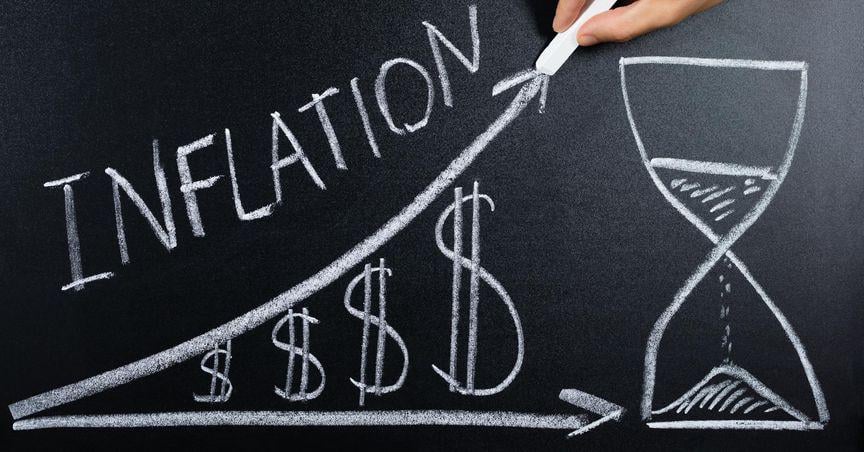





Highlights:
- Inflation is a crucial part of the economy, and well-controlled inflation signals a healthy economic condition.
- The high demand and lower supply can bump up the inflation rate.
- The central bank generally raises interest rates to control soaring costs.
The global market has been disrupted this year due to the multi-decade high inflation and strict measures by the Federal Reserve to slow down demand to bring down the inflation, which remained high anyhow.
All three indices marked their places in the bear market territory this year, offsetting robust gains they attained last year when the economy was bouncing back from the COVID-19-led pandemic hit.
The overall US inflation touched its four-decade highest level in June when it soared at an annual rate of 9.1 per cent. Despite the restrictive measures by the Federal Reserve, the core inflation surged at its highest pace in September since 1982, when it rose 6.6 per cent.
Some might be thinking that the policymakers are raising the interest rates to curb inflation. But to understand that point, it is important to understand what inflation is and its types.
What are inflation and its types?
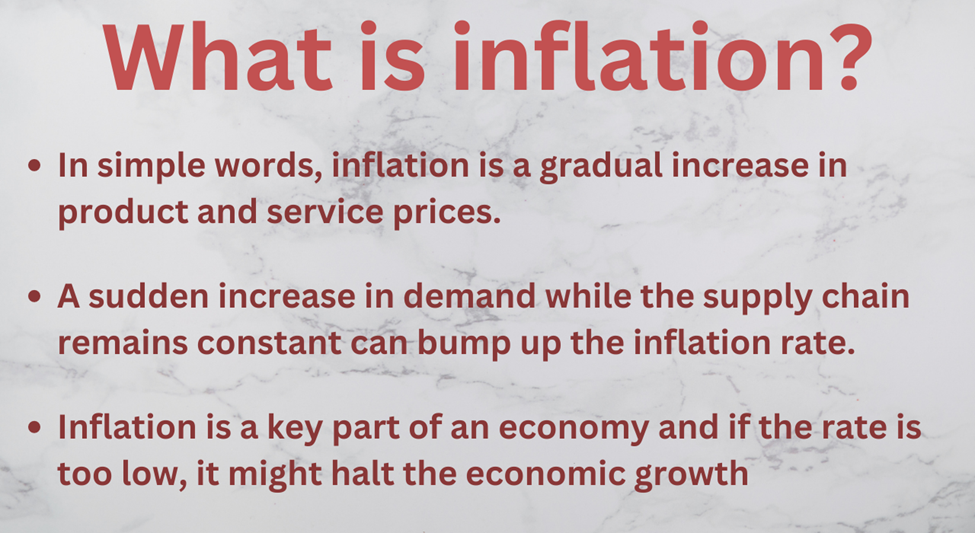
In simple words, inflation refers to the restrained increase in the price of goods and services. So, the cost of living and inflation moves in tandem, meaning when inflation moves higher, the cost of living also becomes expensive, and vice-versa.
To understand the concept of inflation, let's discuss the types or what primarily causes inflation. The two main reasons behind inflation are demand & supply and a jump in production costs.
At times when the income of people rises in an economy, they tend to spend more on products as well as services. During the period, the demand automatically increases compared to the supply, causing a jump in product and service prices.
In addition, geopolitical turmoil, the latest being the Russia-Ukraine war or the COVID-19 pandemic, has disrupted the global supply chain, whereas the demand remains stable, contributing to the still-high inflation.
The oil and food prices contributed the most to June's CPI, with Russia being one of the leading crude oil providers.
Another reason is the surge in production cost, which could happen due to increases in raw materials prices, labor shortages, transportation costs, etc.
This leads to a jump in production costs and a plunge in the supply while the demand remains stable. So naturally, it bumps up the products and services prices.
 Source: ©Kalkine Media®; © Canva Creative Studio via Canva.com
Inflation's impact on the stock market:
From the points mentioned above, it is clear that demand and supply play a major role in causing inflation. So, to cool down the demand, the global central banks raise the interest rates to curb inflation while encouraging consumers to make more savings.
Through the hike in the policy rates, the central bank intends to control the excessive liquidity in the economy, which might bring down soaring costs or inflation.
To control inflation, the central bank also uses open market operations and related things, like purchasing or selling government bonds, to control the money supply in the economy.
During these periods of higher interest rates, the investors generally shift their focus from stocks to real-world assets like precious metals, etc. In addition, the higher prices in the market also force investors to spend cautiously.
On the other hand, due to higher rates, the loan gets expensive, and the cost of capital for the corporations rises, thus resulting in a decrease in their projected cash flows. This causes a slump in the equity valuations of the firms.
Besides, inflation triggers more volatility in the market, and many investors stay on the sideline amid these times while considering the uncertainties in the financial market.
The value stocks' performance tends to be directly proportional to inflation, while the growth stocks generally experience the most hit during these times, as higher inflation and rising interest rates subside the risk-bet appetite of the investors.
Bottom line:
Although the recent market scenario shows that inflation and higher rates have dampened the spirits in global markets, inflation is a crucial part of the economy. Historically, the rise in inflation represented a growth in the economy.
Well-controlled inflation is generally considered good for economic health. While higher inflation hurts purchasing power and causes a jump in policy rates, simultaneously weighing on the economy, too-low inflation can hinder economic growth.
