
 AUS
AUS
 NZ
NZ
 UK
UK
 CA
CA
 USA
USA
 IND
IND



_07_03_2026_03_50_21_133108.jpg)

The world watched on Tuesday, April 20, as former Minneapolis police officer Derek Chauvin was convicted of murder and manslaughter in the George Floyd case.
The 12-member jury, comprising six white and six black or multiracial people, found Chauvin guilty of all charges, including second-degree unintentional murder, second-degree manslaughter and third-degree murder.
The judgment comes nearly a year after the then-police officer was caught on camera kneeling on 46-year-old George Floyd’s neck till he passed out and died. Video clips, which later went viral and triggered massive outrage, showed Chauvin pinning a handcuffed Floyd to the ground with his knee as the black man repeatedly screamed that he was unable to breathe.
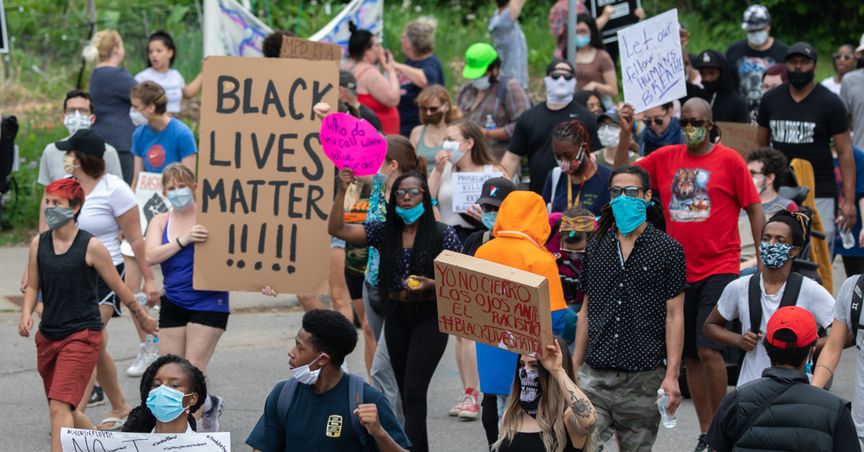
In the Black Live Matters era, George Floyd’s killing has become one of the most consequential cases that sheds light on racism and police brutality. While Tuesday’s verdict was celebrated across the globe, many have paused to call for a continued fight against such violence and racial abuse. Here are three lessons to learn from this case.
Accept That The Problem Is Real
While the world has progressed and developed in many fields, issues like racism and discrimination still exist. People of colour have been and continue to face prejudices, all from racial profiling to violence that quickly snowball into fatal incidents. Even in the 11 months since Mr Floyd’s murder in May 2020, there have been several cases violence targeting blacks and other people of colour in the US alone.
Instead of denying and debating over its presence, we need to accept this as a real problem. Only then, we will be able to find solutions to end it.
Focusing On Educational System To Deconstruct Racial Narratives
To deconstruct racial narratives, governments and families need to come together to focus on improving the educational system, especially for the younger generations as early learning shapes a child's overall personality.
In 2018, the United Nations Educational, Scientific and Cultural Organization (UNESCO) had pointed that the role of education is important to stop the proliferation of racial narratives.
Racial and ethnic stereotypes affect societies, and this tendency will continue if the education system does not promote ethnic and cultural diversity.

Source: Pixabay
Sometimes, Raising Your Voice Is Important
The brutal killing of George Floyd triggered a massive uproar worldwide. Despite the pandemic, people across races and nations took to the streets to raise their voice against the brutality and racial discrimination. Twitter even decided to hide former President Donald Trump's questionable post on the protests.
Chauvin’s trial and conviction shows that public outcry can play an important role in bringing an offender to justice. Constructive activism can be used as a catalyst that leads us towards a society where people don't remain a part of the problem, but act as agents of change.
