
 AUS
AUS
 NZ
NZ
 UK
UK
 CA
CA
 USA
USA
 IND
IND







Summary
- The brokers and dealers transact in the OTC market without computer networks and phone.
- Generally, small companies. which fail to fulfil the listing requirements of a stock exchange, trade over the counter.
- In the exchange-traded market, securities, commodities, derivatives, and others are purchased and sold between brokers and traders in a regulated manner.
Over the counter (OTC) is the decentralised market in which the participants trade currencies, instruments, stocks directly without having any intermediary.
The brokers and dealers transact in this unorganised market without computer networks and phone. The OTC trading is also known by the name off-exchange trading because of the absence of a formal exchange.
Which companies trade over the counter?
Generally, small companies, which fail to fulfil the listing requirements of a stock exchange, trade over the counter. The OTC trade takes place between two firms or financial institutions, and financial instruments such as bonds, derivatives, and currencies are mainly traded OTC.
Trading is conducted electronically in over the counter markets since these do not have physical locations. Therefore, these markets are different from the auction market system.

Source: ©Miflippo | Megapixl.com
READ MORE: Five exciting ASX stocks you might not want to miss
Dealers are the main players in the OTC market. They quote buy and sell prices for securities, currencies, and other financial instruments. Since trade is carried out in this market without others being aware, these are considered less transparent than exchanges. These are also subject to fewer regulations. For the same reason, the liquidity in the market comes at a premium.
What are risks of OTC markets?
Even as the OTC markets trade on a smooth basis during normal times, there is a risk called a counter-party risk which is associated with them.
Counter party risk means that a party in the transaction will default before completing the trade or will not make the current and future payments required of them by the contract.
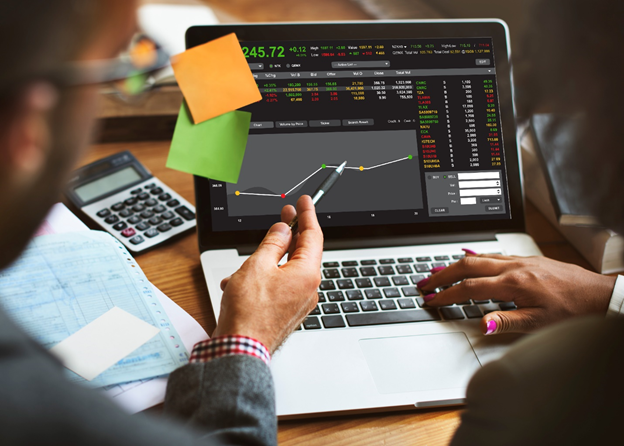
Source: © Rawpixelimages | Megapixl.com
The market also lacked adequate transparency. Also, lack of liquidity makes it difficult to sell in future.
What are exchanges?
On the other hand, the exchange is a centralised and regulated market. In the exchange-traded market, securities, commodities, derivatives, and others are purchased and sold between brokers and traders. The prices of financial assets such as shares, bonds, notes etc. are decided by the market demand and supply forces. An exchange has a physical location. It may also be an electronic platform such as a website.

Source: © Herrbullermann | Megapixl.com
READ MORE: Which stock has paid the highest dividend in 2021?
Key differences between OTC and exchange
- While buyers and sellers transact with each other in an unregulated way over a computer network or phone in the OTC market, exchange refers to a trade exchange where securities, commodities, derivatives, and others are purchased and sold in a regulated manner.
- Dealers quote the buying and selling price of financial instruments in an OTC market; the prices are determined by the demand and supply forces in an exchange.
- Small companies that could not fulfil listing prerequisites of an exchange trade their securities OTC. However, big businesses generally list and trade their stocks via an exchange.
- While OTC has no physical location and transactions are done over a computer network or phone calls, an exchange is physically present and uses the open outcry method.
- Trading is carried out 24X7 in OTC. But the exchange has fixed trading hours only.
- While the OTC market is not as transparent as an exchange, participants have complete information about the securities being traded on an exchange.
- The contracts are customised as per requirement on an OTC; exchange has only standardised products.
- OTC generally lacks a mechanism to arrest extreme highs or lows in security prices due to short term imbalance between demand and supply. Exchanges manage the volatility via a trading halt in a particular stock.
