
 AUS
AUS
 NZ
NZ
 UK
UK
 CA
CA
 USA
USA
 IND
IND





_07_03_2026_03_50_21_133108.jpg)

Summary
- The stop-loss order is an automated system that allows stocks to be either bought or sold when they reach the trigger price.
- This system allows investors to have a less emotional investment in stocks and prevent experiencing high losses.
- There are many advantages of the stop-loss order, but every investor should be aware of all the risks this mechanism may bring.
Shareholders experience a lot of emotional stress because of the industry environment and because of working long hours. To prevent huge losses of capital gain, there are specific mechanisms that could help investors with this problem.
One of them is a stop-loss order – in many cases, this strategy has helped investors to keep their money in place due to the mechanism of the stop-loss order.
Must watch: Investors’ Corner: Tips and Guidance Straight from the Masters
What is the stop-loss order?
The stop-loss order is a mechanism that determines when an individual stock will get either sold or purchased, depending on the amount of growth or loss it may bring. That amount is also known as the ‘trigger price’.
Shareholders often use the stop-loss order because it helps them to consider some essential things, as investors can occasionally miss some key information due to being busy with other items or similar.
Investors might use the stop-loss mechanism if they are scared about a high drop in the stock value, so they will set a limit of their own choice and the order will then proceed with the action, appropriately.
Another mechanism that is similar to the stop-loss order is a stop-limit order. That order will be performed when a certain price is reached, then following with a limited order (two options: buy or sell) and will be finalised as a limit price.
Interesting read: What should investors do with their dividend, re-invest or seek better alternatives?
When are stop-loss orders applied?
Stop-loss orders are also famous for being a kind of an insurance policy, preventing from unnecessary risks due to not having enough time for checking the most recent marketplace news, or stock price movements due to market forces.
This order is also handy in case investors get too attached to a particular share. For example, due to sentimental value, investors may hold on to a share despite the fact it lost a lot of money in value, or it has hit the target price. Shareholders may believe the price will go back to its original high value, so implementing the stop-loss order might be a good idea in order to prevent the loss and to fall to human psychological traps. By doing so, there are no emotions that can affect the mechanism; therefore, there is only a slight risk that could occur.
Did you read: Are these 3 ASX Stocks Popular among Investors for FY2021? JB Hi-Fi, Harvey Norman, Nick Scali
Probably the widest use of the stop-loss order is when they are used for locking profits. The order is then named ‘trailing stop’ and is set as a percentage. Investors choose a specific ratio that is below the market price and that is considered based on the investors’ money management criteria. The trailing stop allows profits to move while promising capital increase for the investor if the trade continues to gain momentum.
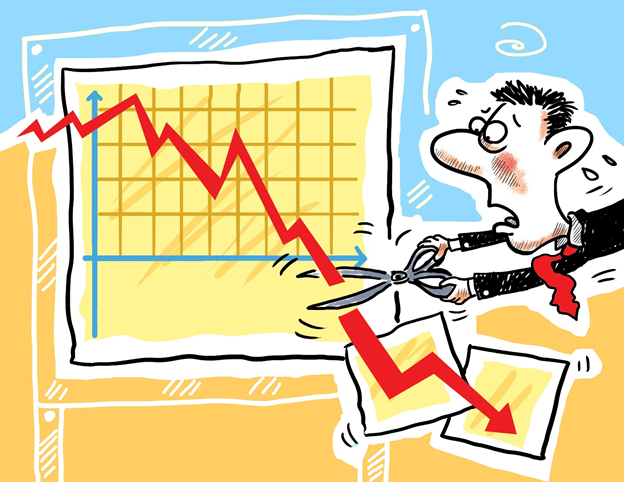
Image Source: © Kalkine Group 2020
So, when the share gets down below the trigger price of the stop-loss order, it becomes available for either buying or selling at the best current price on the market. Even though the stock will probably get sold for less money than its actual worth, it is still better than a huge loss because the drop was not overseen.
Do watch: How to Measure Market Risks?
How is the stop-loss order placed?
Most online brokers offer the service for the stop-loss order. For that reason, every investor should be aware of the shares beta, as some stocks are known to more volatile than others.
If this feature is not considered correctly, the sale could be made because of the automated system. On the contrary, every stop-loss order should reflect the shareholder’s strategy.
In case you missed: Fed’s new strategy for inflation and labour market
What are the advantages?
- Cost-free
Using the stop-loss order is entirely free, as online brokers charge the average price for their services even when this strategy is wished to be implemented. Brokers get paid once the stock is sold so for them, there is not a lot of difference. Some experts may even call the stop-loss order a free protection policy.
- Emotion-immune
As previously mentioned, the order prevents investors from being emotionally invested in their stocks, even if the business they invested in keeps losing profit and its worth. Stocks are probably not going to get back to the level magically as they were at before if the decrease is too great, so the stop-loss order might be a smart strategy for investors that are also attached to their portfolio.
- More leisure times
As the stop-loss order buys or sells stocks almost automatically, investors can take a break from staring at stock charts and infographics. Hired brokers will simply put this mechanism into their system, and it will be completely automated, less stress included.
What are the disadvantages?
- Getting triggered by a temporary fluctuation
If investors do not set their goals properly, the stop-loss order will sell the stock even if there is a freak change in stock price. Some stocks with high beta tend to fluctuate wildly, so shareholders should calculate all possible risks and decide what should the set price or percentage be. Investors that set a low bar for the fluctuation are more likely to lose more money due to brokerage fees because their stocks got sold too quickly or “whipsawed”.
- Different expectations
There are no rules or minimum percentages that need to be established for the stop-loss order. They are completely up to the investors and what they expect from the particular stock, based on the investors’ money/risk management criteria. If the stop-loss order is implemented, investors should obtain more discipline prior to setting up the automated mechanism.
- The market order might differ to the stop order
When the stock prices reach the stop order, it will immediately become available for buying or selling. In other words, it will turn to the market order and it is highly possible that it will be sold as less than its real worth. That situation usually happens in a fast-paced market where stock worth can change quickly.
