
 AUS
AUS
 NZ
NZ
 UK
UK
 CA
CA
 USA
USA
 IND
IND


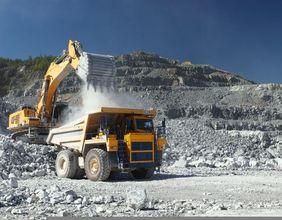




When evaluating a stock for long-term growth potential, examining financial metrics is crucial. One key indicator is Return on Capital Employed (ROCE), which measures how efficiently a company generates pre-tax profits from its capital. A growing ROCE, alongside an expanding base of capital employed, often signifies a strong business model with ample opportunities for profitable reinvestment.
ROCE Explained
ROCE is calculated using the following formula:
ROCE=Earnings Before Interest and Tax (EBIT)Total Assets−Current Liabilities\text{ROCE} = \frac{\text{Earnings Before Interest and Tax (EBIT)}}{\text{Total Assets} - \text{Current Liabilities}}ROCE=Total Assets−Current LiabilitiesEarnings Before Interest and Tax (EBIT)
For K92 Mining (TSX:KNT), the ROCE is computed as follows:
ROCE=US$51 millionUS$469 million−US$47 million=0.12 or 12%\text{ROCE} = \frac{US\$51 \text{ million}}{US\$469 \text{ million} - US\$47 \text{ million}} = 0.12 \text{ or } 12\%ROCE=US$469 million−US$47 millionUS$51 million=0.12 or 12%
This ROCE of 12% is satisfactory in absolute terms. However, when compared to the Metals and Mining industry average of 3.2%, it stands out as notably higher, suggesting a relatively effective use of capital.
Analyzing ROCE Trends
Examining the trend of ROCE is also important. K92 Mining’s ROCE has decreased from 34% five years ago, despite a significant 380% increase in the capital employed. This drop is partly due to the company’s recent capital raising activities. An increase in capital employed, without a corresponding immediate increase in earnings, can lead to a lower ROCE in the short term.
The recent capital raise was conducted before the latest earnings announcement, which likely influenced the increase in capital employed. It is plausible that the new funds have not yet generated a full year of earnings, affecting the current ROCE. Additionally, the company’s latest EBIT figure is within 10% of the previous year’s amount, suggesting that the decline in ROCE might largely be attributed to the recent capital raising rather than a fundamental deterioration in operational performance.
The significant capital injection has yet to show its full effect on earnings. In the interim, it is important to consider the impact of these funds and monitor how they influence future ROCE. The short-term decrease in ROCE should be evaluated in the context of long-term performance and capital efficiency. The extent to which the recent capital raise will contribute to future earnings remains to be seen, and it will be important to track these developments closely.
