
 AUS
AUS
 NZ
NZ
 UK
UK
 CA
CA
 USA
USA
 IND
IND





Highlights
- Materials sector issuer with a strong market focus on copper and associated mining assets
- Recent trading has reflected softer sentiment across materials names on the Toronto market, alongside project specific attention
- A multi phase equity based free funds model has appeared well below the recent share quotation, largely shaped by a weak recent free funds starting point
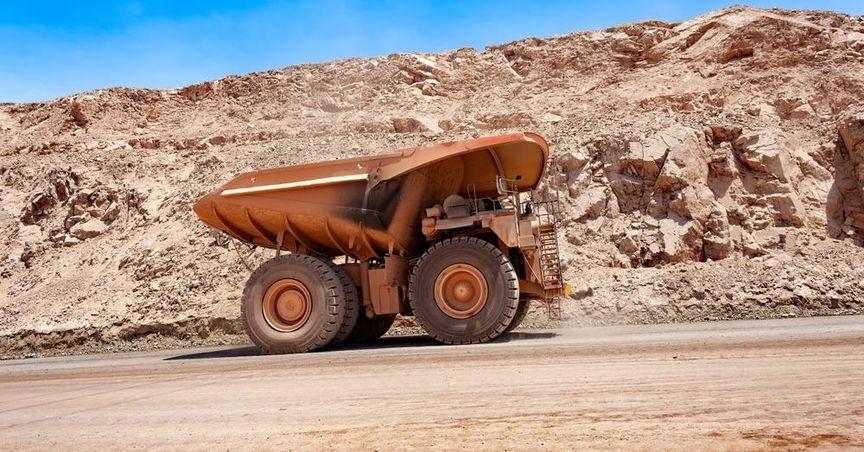
Ivanhoe Mines operates in the materials sector, with activities centred on mineral exploration, development, and mining, including copper linked assets that tend to draw attention when industrial metals narratives shift.
Ivanhoe Mines Ltd (TSX:IVN) is part of the materials sector on the Toronto market, and its share can shift alongside changing market appetite for cyclical resources. At the same time, trading can react to company specific milestones such as construction progress, commissioning updates, ramp ups, and day to day operating performance across its asset base, with broader Canadian market context often referenced through the s&p tsx composite index.
Market discussion around Ivanhoe Mines commonly clusters around copper related demand themes, mine development timelines, and the practical realities of building and operating large scale projects. For materials sector issuers, sentiment can change quickly when commodity narratives, operating updates, or cross sector risk appetite shifts, even when the underlying asset quality discussion remains broadly consistent.
Recent Trading And Sentiment Drivers
Recent trading has been marked by a noticeable slide over a short window, following a period where longer horizon performance has looked firmer. The move has occurred alongside ongoing attention on copper exposure and mining project progress, while also reflecting the broader tone across materials names listed in Canada. This type of swing can occur when commodity linked equities face shifting macro narratives, changes in expectations for industrial activity, or abrupt repricing of growth assumptions applied to development stage assets.
Copper focused issuers can also be influenced by discussion around supply constraints, project execution, and the pace at which major mines can deliver consistent output. In parallel, the tone across the Canadian equity landscape can affect sector flows. For reference terms commonly used in Canada market commentary, these index phrases are often cited in sector context: TSX Composite Index.
Short window weakness does not automatically map to changes in mine quality or long horizon resource relevance. It more often signals how quickly market participants can reweight execution certainty, commodity tone, and financing assumptions for capital intensive assets. That dynamic is especially pronounced when a company is in heavy build or ramp phases and reported free funds generation is not yet consistently supportive.
Valuation Screen Signals And Limits
A common screening approach assigns a simple score across several valuation checks, then labels the result as attractive or not. In this case, the score has been low, indicating the company screens as undervalued on only a small portion of those checks. Screening outputs like this can be useful as a quick snapshot, but the score alone rarely captures the full nuance of a mining issuer that is building, expanding, or optimising large assets.
For materials companies, the main limitation of broad screening is that near term financial statements can be dominated by development spending, ramp up inefficiencies, and timing differences in capital allocation. That can suppress standard valuation ratios and complicate comparisons with mature producers. Screening can also struggle to incorporate the operational reality that a mine can shift meaningfully once throughput stabilises, recoveries improve, or expansion phases move from build to steady operation.
A deeper read therefore usually separates what is purely mechanical in the screen from what is structural in the business model. Mechanical effects include elevated development spending, temporary cost pressure during ramp phases, and timing of major equipment, underground development, or processing upgrades. Structural factors include orebody quality, long life potential, jurisdictional setting, infrastructure, logistics, and the company’s ability to operate safely and consistently at scale.
Multi Phase Free Funds Model
The source material refers to a multi phase free funds to equity framework that is sometimes presented in discounted form. The starting point is a recent stretch of negative free funds generation, meaning operations have required net outflows rather than producing distributable funds. In mining, this pattern commonly aligns with development programs, expansion work, and ramp activity, where capital demands can remain elevated until sites reach steadier operating conditions and performance becomes more consistent. This type of valuation framing is often discussed alongside broader market context, including the s&p composite index.
From that negative base, the model described assumes free funds generation improves over time and eventually turns positive as projects progress and operating contributions strengthen. The method then brings those projected flows back to a present day equivalent using a required return assumption. When the starting point is deeply negative, the model can produce outputs that appear far below the share quotation, because early outflows weigh heavily on the present value.
In the referenced output, the model indicated an implied per share figure far below the recent share quotation, which in turn created a narrative that the share looks stretched relative to that specific framework. That gap is not unusual when a model is highly sensitive to near term outflows, long ramp timelines, or conservative assumptions about how quickly operating contributions scale.
This is where the method’s usefulness depends on context. For a company with major build activity, a discounted free funds approach can be dominated by assumptions about ramp timing, sustaining capital intensity, and operating stability. A modest change in any of those can shift the result materially. As a result, the model output is best read as a scenario bound estimate rather than a definitive statement of worth.
Project Execution And Metal Exposure
For a copper oriented miner, the most influential drivers generally relate to whether assets can move from development and optimisation toward stable operations, and whether planned expansions deliver reliable throughput and recoveries. Execution matters because long life orebodies can still disappoint if mine plans, metallurgy, or infrastructure constraints prevent consistent output. Conversely, solid execution can gradually narrow the gap between narrative and reported operating results.
Commodity exposure adds another layer. Copper linked revenue streams are shaped by global industrial demand, supply disruptions, inventory cycles, and policy driven electrification narratives. While those themes can support long horizon interest in the metal, materials equities can still be volatile as market participants react to short term macro indicators, changes in commodity curves, or sudden shifts in risk appetite.
Company specific communications also matter, particularly operational updates on grades, recoveries, unit costs, and commissioning progress. For a firm like Ivanhoe Mines (TSX:IVN), perceptions can hinge on how clearly the company demonstrates repeatable performance and how effectively it communicates constraints and solutions as projects mature.
Within that context, references to often appear in sector coverage as a proxy for copper heavy development exposure on the Canadian market, rather than as a pure steady state producer profile. That framing can help explain why traditional valuation checks, especially those built for mature cash generative producers, can appear harsh during periods of heavy capital deployment.
Balance Sheet And Funding Mechanics
Mining projects tend to be capital intensive, and funding structure can influence both resilience and market perception. When development and expansion are ongoing, the balance sheet often reflects a mix of equity, project financing, and operating contributions. If operations are still ramping, the burden on funding sources can remain elevated, and near term financial metrics can look weaker than the underlying asset narrative.
A clear way to interpret this, without relying on single point ratios, is to focus on funding runway and flexibility: the capacity to continue project work, maintain operational readiness, and handle cost variability without forcing disruptive measures. Liquidity buffers, debt maturity profiles, covenant headroom, and the cadence of capital deployment all shape how comfortably a company can execute.
Another useful lens is the alignment between spending and productive capability. Spending that is tightly linked to throughput gains, recovery improvements, or cost reductions tends to be viewed more favourably than spending that merely maintains a stalled development profile. Mining markets often reward visibility into what each major work program is expected to deliver operationally.
For the market’s focus on copper projects and associated development programs is closely tied to this balance sheet and funding conversation, because it influences how quickly operational performance can translate into more stable financial outputs.
Peer Comparisons And Sector Benchmarks
Peer comparison can help, but it must be carefully framed. Comparing a development heavy company to mature producers can distort conclusions, because mature peers may have lower capital intensity, established cost structures, and more predictable output. A more appropriate peer set often includes miners at similar stages of ramp, expansion, or multi asset buildout.
Within the Canadian context, sector discussions frequently anchor around broad index framing, which is why terms like TSX Composite Index and related phrasing show up in market commentary. However, index level movements can mask wide variation within materials. Copper linked developers can diverge from gold producers, diversified miners, or steel related names, even when all sit under a broad materials umbrella.
Qualitative benchmarks can sometimes be more informative than purely quantitative ones during build phases. Examples include commissioning track record, schedule discipline, unit cost progression during ramp, safety performance, and clarity of technical reporting. Those factors can shape how the market applies valuation frameworks, including whether it leans on conservative discounted scenarios or grants more credit for execution (TSX:IVN).
In addition, jurisdiction and infrastructure differences can matter as much as orebody quality. Transport, power access, permitting cadence, and workforce stability can all affect the gap between plan and delivered performance. For a company with large scale assets, these realities are often central to how valuation debates evolve.
