
 AUS
AUS
 NZ
NZ
 UK
UK
 CA
CA
 USA
USA
 IND
IND




Highlights
- G Mining Ventures operates in the Canadian-listed gold mining sector, with a business model centred on building and running producing gold assets.
- Recent reporting has shown a sharp improvement in per-share earnings alongside stronger operating performance and expanding margins.
- The company’s scale and visibility within Canadian equity markets links it to broader index movements such as the TSX Composite Index and the TSX Smallcap Index.
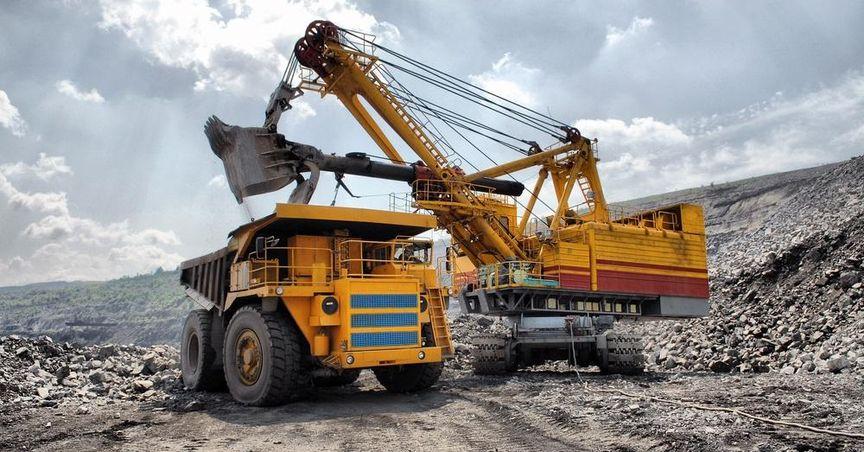
G Mining Ventures sits within the gold mining sector, a segment shaped by ore quality, processing efficiency, permitting frameworks, and the ability to move projects from development into steady production.
G Mining Ventures (TSX:GMIN) operates within Canada’s gold mining sector, where companies are commonly assessed on operational consistency, disciplined execution, efficient deployment of resources, and the ability to maintain stable performance through shifting commodity conditions. Against this backdrop, G Mining Ventures has drawn added attention after reporting stronger operating results, improved earnings strength, and better overall execution across key business activities. Broader Canadian market context is often tracked through benchmarks such as the TSX Composite Index and the TSX Smallcap Index, which reflect wider equity trends that can influence sentiment toward resource-focused listings.
What Does The Company Do?
G Mining Ventures is associated with the development and operation of gold projects, with a focus on advancing assets toward reliable production and maintaining operational performance once producing. In the gold mining industry, value creation typically comes from a combination of reserve quality, processing recovery, disciplined cost control, and consistent throughput at the mill. Companies in this space also tend to be assessed on project delivery timelines, execution against build plans, and the ability to operate safely while meeting environmental standards.
For Canadian-listed resource names, the broader market context often matters as well. Moves in sector sentiment can influence how mining equities trade, especially when the broader market is trending. Index-linked trading activity can also play a role, with investors commonly tracking benchmark indicators such as the s&p tsx composite index when evaluating how resource-heavy listings are behaving relative to the wider market.
From a business standpoint, gold mining firms typically aim to convert reserves into saleable ounces at a stable cost base while sustaining production through reinvestment and exploration. Execution quality becomes visible through operating metrics, margin progression, and how effectively revenue translates into earnings.
Which Sector Forces Matter?
Gold mining (TSX:GMIN) is influenced by a blend of global and local factors. Global bullion demand, central bank activity, jewellery consumption, and investment flows into bullion-linked products can all affect the pricing backdrop that supports producer revenues. At the same time, the day-to-day outcomes for any producer are shaped by operational decisions at the mine and plant level.
Cost inputs such as energy, labour availability, consumables, and logistics can tighten or ease over time. Remote or developing jurisdictions can add transport complexity, while mature mining regions can bring deeper supply chains and a more established service ecosystem. The sector also involves ongoing obligations around environmental management and community engagement, which can affect operating plans and long-term site access.
Canadian-listed miners often sit within a market structure where resource equities are well represented. As a result, broader benchmarks like the S and P tsx index can provide a useful lens for context when the overall market is shifting. Sector rotations can lift or soften sentiment toward gold equities, even when company-specific operations remain steady.
Within this landscape, operational consistency tends to be rewarded. When a miner demonstrates strong throughput and improved margins, attention can increase because those results may reflect underlying execution rather than one-off factors.
How Have Earnings Changed Recently?
Earnings per share is often treated as a shorthand indicator for how effectively revenue and operating efficiency convert into shareholder earnings. In the case of G Mining Ventures, reported results have shown a dramatic year-over-year shift in earnings per share, moving from a relatively modest level to a substantially higher figure in a short span.
In the gold mining sector, such a change can occur when a project transitions into higher-output production, when costs improve meaningfully, or when realised revenues increase faster than operating expenses. It can also reflect stronger operational stability, fewer disruptions, or improved recovery performance in processing. While commodity-linked businesses can experience swings due to external pricing, a sharp step up in per-share earnings often draws attention because it may signal stronger operational foundations.
For context, equity markets tend to compare miners not only against sector peers but also against broader market measures, including the s&p composite index. When a company posts results that stand out, it can shift how the company is discussed within market coverage, especially in a resource-heavy exchange like the TSX.
G Mining Ventures (TSX:GMIN) has been highlighted because the scale of the year-over-year earnings shift has been notable in relation to the company’s recent history.
What Is Driving Revenue Momentum?
Revenue momentum in gold mining typically reflects a combination of production volumes, realised sales terms, and the timing of deliveries. It can also be influenced by operational factors such as ore grades, throughput levels, maintenance scheduling, and the ability to avoid unplanned downtime.
G Mining Ventures (TSX:GMIN) has reported higher revenues alongside improved operating performance. In practical terms, revenue increases in this sector usually indicate that the business is delivering more saleable product, selling at favourable terms, or both. Stable mining rates and consistent processing performance are often behind sustained revenue improvement, especially when a producer is moving beyond early-stage ramp-up and into steadier operating rhythms.
Revenue strength can also support reinvestment into sustaining capital and exploration, which are routine requirements in the industry. Mining assets demand continuous work to maintain equipment, manage tailings, and improve efficiency. A company showing improving revenue trends can sometimes indicate that operations are meeting or exceeding production plans.
Because gold mining is often assessed on consistency, revenue growth paired with improving margins tends to draw attention. This is particularly true when the improvement appears to be operationally driven rather than purely dependent on external pricing.
How Have Margins Shifted Lately?
EBIT margin movement is a key indicator of operating leverage and cost control. In gold mining, margins can widen when operating costs fall per ounce, when processing recoveries improve, or when output rises without a proportional increase in fixed costs. It can also reflect a better balance between mining and processing schedules, improved maintenance planning, or the benefits of scale.
G Mining Ventures has reported a significant improvement in EBIT margin year over year, with margin expansion described as substantial. In operational terms, this can occur when the plant runs more efficiently, when ore blending improves, or when the company reduces unit costs across mining, hauling, and processing.
Margin expansion can also be supported by disciplined procurement and contracting, especially in times when supply chains are tight. When costs such as fuel, reagents, and equipment parts stabilise, miners that manage their inputs efficiently can translate more revenue into operating earnings.
In Canadian markets, margin strength is often watched closely because it can indicate whether a miner is building operational resilience. This is especially relevant for companies that aim to maintain performance through different commodity cycles.
G Mining Ventures (TSX:GMIN) has been noted for the combination of revenue growth and margin improvement, a pairing that typically signals improving operational quality.
How Does Affect Alignment?
A company is governed and how management decisions are perceived by the market. When company decision-makers and related parties have a meaningful equity stake, that stake can be interpreted as a sign that their financial outcomes are closely tied to shareholder outcomes. In large-cap or rapidly growing companies, the percentage stake may be smaller even when the absolute value of the stake is large.
G Mining Ventures has been described as having a substantial equity stake held by key associated parties, indicating meaningful participation in the company’s equity. In practical terms, this can influence how external market participants interpret strategic decisions around project development, operational planning, and long-term capital allocation.
Corporate governance practices in Canadian-listed mining companies also involve board oversight, disclosure requirements, and exchange regulations. Transparency around and governance matters because mining projects often require long planning horizons, permitting work, and sustained operational focus. When governance structures appear stable and aligned, market attention can increase.
That said, is only one piece of the broader picture. Operational performance, safety, environmental management, and financial reporting remain central in how gold mining companies are evaluated over time.
Where Does The Stock Fit?
Canadian equities operate within a benchmark-driven environment where many participants track index performance and sector composition. Resource equities are prominent within the Canadian market structure, and gold producers can be influenced by broader commodity sentiment, exchange rate movements, and macroeconomic developments.
G Mining Ventures is frequently discussed within the context of Canadian equity markets, where index performance can provide a backdrop for how mining shares are trading. Many market participants monitor the TSX Composite Index for broad directional context, while smaller-company benchmarks such as the TSX Smallcap Index can provide a lens into how growth-oriented names are behaving.
These index references are not direct determinants of business performance, but they can influence trading activity, sector sentiment, and how frequently a company appears in market coverage. A company that begins to stand out through earnings strength and margin expansion may see increased attention simply because it is performing differently from peers within the same market segment.
In that environment, G Mining Ventures has been positioned as a gold mining name that has posted particularly strong recent operating results relative to its prior year baseline.
What Metrics Draw Market Focus?
G Mining Ventures has drawn attention because its reported metrics show strong improvement across several of these areas. A sharp improvement in per-share earnings combined with revenue growth and margin expansion can indicate that the business has entered a stronger operating phase.
Mining outcomes are never defined by a single metric. Still, when multiple operating indicators improve at the same time, the company tends to become more visible in sector discussions, particularly on exchanges where resource equities are a core component of market activity.
G Mining Ventures (TSX:GMIN) has been associated with this pattern, with results that have highlighted a materially stronger operating performance compared with the prior year period.
