
 AUS
AUS
 NZ
NZ
 UK
UK
 CA
CA
 USA
USA
 IND
IND

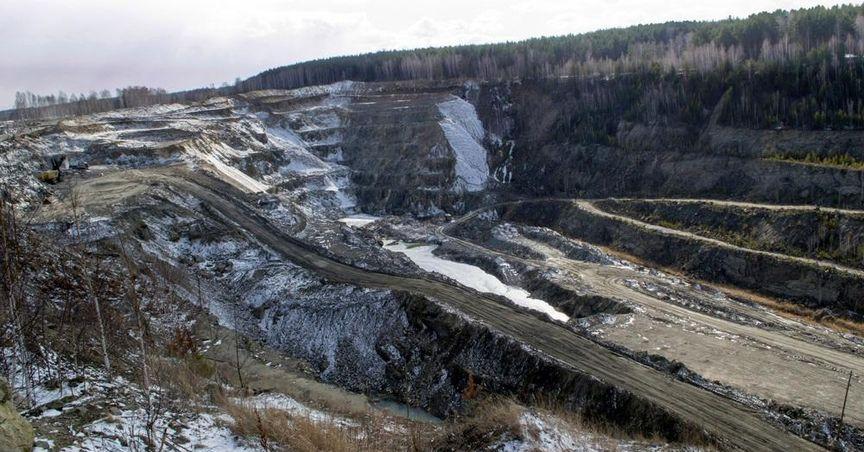




In the mining sector, Applied Graphite Technologies Corporation has announced promising preliminary results from its ongoing geophysical survey at the Queens Mine Complex located in Sri Lanka. This complex lies within a prominent vein graphite district known for its historical mining activities and visible vein graphite outcrops.
Notable Anomalies Detected
Initial findings from the first line of the geophysical survey have identified three significant anomalies.
- First Anomaly: Positioned between the 165 to 185 meter sections, this anomaly demonstrated a chargeability of approximately 400 millivolts per volt (mV/V).
- Second Anomaly: Located between the 12 to 30 meter sections, this area registered a chargeability of 350 mV/V.
- Third Anomaly: Found between 100 to 125 meters, this anomaly extends beyond the 60-meter detection limit.
All three anomalies show depth extensions greater than 60 meters, and plans are in place to increase the electrode spacing to explore depths exceeding 300 meters.
The combination of high chargeability and low resistivity indicates a robust signal for graphite exploration, suggesting that these anomalies may correspond to mineralized zones or swarms of veins, similar to those observed at the nearby Kahatagaha graphite mine.
Extended Survey and 3D Mapping
To enhance the definition of the identified anomalies, the survey profile will be extended to the north-northeast (NNE). Additionally, 3D plotting techniques will be utilized to map the vertical orientation of graphite veins, leveraging graphite's high conductivity, which allows geophysical methods to trace these features at greater depths.
Applied Graphite (TSXV: AGT)’s CEO, Don Baxter, expressed satisfaction with the initial survey results, noting the introduction of new methods for detecting graphite veins in Sri Lanka. He emphasized the importance of combining data from a previous LIDAR survey conducted across the entire Queens Mine Complex area. This baseline data supports the development of geological models and enhances understanding of the target area's characteristics.
As further lines of the survey are conducted with adequate electrode spacing to reach depths of at least 300 meters, there is optimism regarding the insights that will be gained about the Queens Mine Complex's substantial potential.
The initial findings from the Queens Mine geophysical survey signify a promising step forward for Applied Graphite Technologies as it continues to explore the mineral wealth of Sri Lanka. The integration of advanced surveying methods and comprehensive data collection aims to deepen understanding of this priority target area.
