
 AUS
AUS
 NZ
NZ
 UK
UK
 CA
CA
 USA
USA
 IND
IND


_02_06_2025_07_05_23_538703.jpg)



Highlights
- CN delivered higher quarterly and full-year sales and backed by disciplined operations across its rail network
- A dividend lift and a refreshed share cancellation plan extended the capital allocation focus beyond the latest reporting period
- Attention remains on volumes, pricing actions, service reliability, cost control, and balance sheet obligations
Canadian National Railway operates in the industrials sector through freight rail transportation, moving commodities and manufactured goods across Canada and into key cross-border corridors.
Canadian National Railway Co (TSX:CNR), a freight rail operator, is closely linked to North American supply chains, with results shaped by customer demand across resource and consumer freight, along with steady network flow and dependable service, and it is widely tracked among large Canadian listings such as the TSX 60.
Where does rail sector fit?
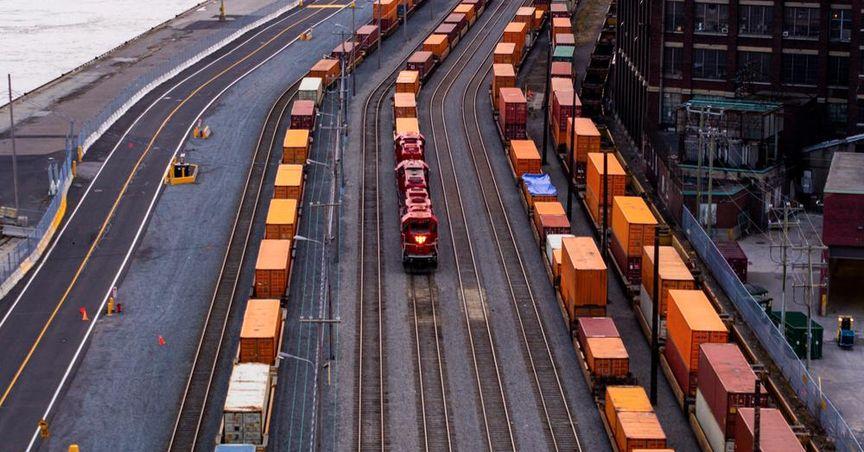
Freight rail sits at the centre of large-scale logistics, especially where heavy volumes and long-distance moves favour efficiency. CN’s network links ports, inland terminals, and industrial regions, positioning the company as a backbone carrier for bulk shipments and intermodal containers. This role often supports steady demand patterns, shaped by seasonal shipping cycles and broader economic activity rather than rapid expansion spurts.
Within Canadian equity benchmarks, rail transportation is commonly discussed alongside diversified industrial names and major transport operators. For broader market context, references often include the TSX Composite Index, which groups many of the country’s largest listed companies, including transport leaders that reflect macro trade and production conditions.
What did recent results show?
CN reported stronger sales and earnings for the latest quarter and for the full year, indicating resilience in core freight categories even as growth remained measured. The update aligned with a narrative of incremental improvement: stronger execution, steady demand in select lanes, and a focus on operating discipline rather than transformative expansion.
Management paired those operating results with a dividend lift and authorisation for a sizable share cancellation program extending through late winter of the following year. The combination frames the near-term discussion around per-share support mechanics alongside network performance drivers, without shifting attention away from service metrics and commercial execution.
How did costs shape margins?
Earnings expanding faster than sales signals that operating efficiency played a meaningful role. In rail operations (TSX:CNR), small changes in fuel usage, crew deployment, locomotive productivity, and dwell time can influence cost per mile and overall margin performance. CN’s ability to keep trains moving, reduce congestion, and manage terminal flow can support stronger operating leverage when volumes are stable.
Cost discipline also intersects with network reliability. When service is predictable, assets cycle faster, locomotives spend less time idling, and crew plans become more efficient. These dynamics can improve operating ratios and strengthen earnings quality. For market framing, commentators may compare transport performance with broad benchmarks like the s&p tsx composite index, especially during periods when industrial activity diverges across sectors.
Why boost dividend at CN?
A dividend lift can signal confidence in the durability of underlying operations and the ability to fund shareholder distributions through business cycles. For a rail operator, that confidence often rests on the embedded nature of the network, the stickiness of customer relationships, and the long-term relevance of rail in moving bulk and intermodal freight.
The dividend action also fits a pattern often seen among mature infrastructure-style businesses: prioritising shareholder distributions while continuing targeted spending on track, terminals, safety systems, and rolling stock. This approach aims to support network reliability while maintaining a consistent distribution profile, particularly valued in sectors where growth tends to be steady rather than dramatic.
What does buyback plan mean?
A share cancellation plan reduces shares outstanding over time, which can mechanically support per-share measures when earnings are stable or improving. CN’s refreshed authorisation extends this pattern, keeping the focus on per-share optics as a complement to operational execution. While the plan is large in scale, its real-world impact depends on pacing, market conditions, and competing demands on corporate funds.
The structure of such programs often allows flexible timing, enabling management to adjust activity based on internal priorities and external conditions. The discussion tends to sit alongside broader index references such as the TSX 60, which highlights large, liquid Canadian listings where shareholder distribution strategies are frequently in focus.
How can share count shift?
Share count can change through cancellations under authorisations, employee equity programs, and other corporate actions. When cancellations exceed issuance tied to compensation plans, net share count can trend lower, supporting per-share reporting. The extent of that shift depends on how actively cancellations are executed and how compensation-related issuance is managed (TSX:CNR).
For long-duration operators like railways, the share count discussion usually remains secondary to network execution. However, when combined with a dividend lift, a cancellation program can reinforce a capital allocation stance that emphasises shareholder distributions as a steady feature of the corporate profile. Market observers sometimes reference broad labels such as the S and P tsx index when discussing how large issuers balance operating spending with shareholder distributions.
Which factors drive rail volumes?
Volumes depend on a mix of commodity flows and manufactured goods demand, shaped by harvest cycles, energy markets, construction activity, and consumer shipments moving through intermodal networks. CN’s geographic footprint allows participation across several lanes, but each freight segment can behave differently depending on macro conditions and customer-specific dynamics.
Pricing actions also matter, particularly where rail competes with trucking or alternative routes. Contract renewals, fuel surcharge frameworks, and service commitments influence realised yields. Network reliability supports commercial positioning, since consistent transit times and fewer disruptions can strengthen customer retention and lane stability. In broader market commentary, terms like s&p composite index may appear as shorthand for the benchmark environment in which these operating updates are interpreted.
What governance points stand out?
CN (TSX:CNR) has faced ongoing attention around governance themes, including board oversight, executive decision-making frameworks, and accountability for operational performance. Governance discussion often intensifies when large capital allocation actions, such as dividend lifts and share cancellations, run alongside elevated leverage and the need to fund network upkeep.
Balance sheet obligations remain part of the narrative, especially where debt levels are described as higher than some peers or higher than prior periods. At the same time, railways typically carry long-lived assets and predictable demand characteristics that can support structured financing. Equity market framing may also reference cross-market benchmarks like the s&p 500 tsx composite index in discussions about how large North American companies balance leverage, spending, and shareholder distributions.
