
 AUS
AUS
 NZ
NZ
 UK
UK
 CA
CA
 USA
USA
 IND
IND

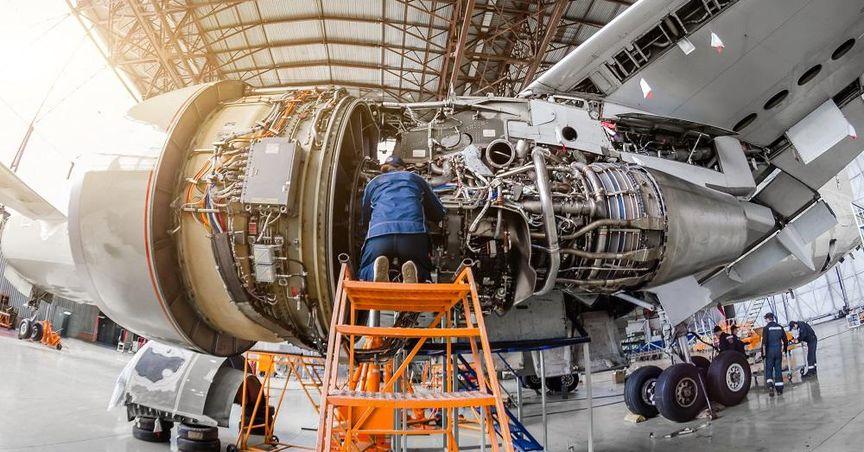





Highlights
- Aerospace and defence electronics supplier with operations spanning circuits and cockpit-focused product lines
- Recent trading action moved above key moving-average measures during a recent session
- Business footprint includes Canada, the United States, Asia, and Europe, with substantial activity tied to the United States
Firan Technology Group operates in the aerospace and defence electronics sector, supplying electronic products and subsystems used in demanding flight and mission environments. The sector is defined by long programme timelines.
Firan Technology Group Corporation (TSX:FTG) fits within the Industrials sector because it manufactures specialized aerospace and defence electronic products and subsystems, where strict qualification standards, disciplined documentation, and close coordination with original equipment manufacturers and airframe platforms are routine requirements; in this environment, production consistency, traceability, and reliability expectations shape how manufacturing, testing, and delivery processes are planned and executed.
Within this sector setting, is commonly associated with component and subsystem work that supports avionics and cockpit interfaces. The operating environment places emphasis on materials control, process validation, and quality systems that align with regulated end markets. These characteristics shape how product lines are developed, how production is scheduled, and how customers evaluate supplier performance over multi-year platform cycles.
What business lines stand out?
The company reports two operating segments: FTG Circuits and FTG Aerospace. The circuits segment manufactures printed circuit boards for the global marketplace. Printed circuit boards are foundational building blocks for electronic assemblies across aerospace and defence applications, where durability and performance expectations tend to be higher than many general industrial use cases.
The aerospace segment designs and manufactures illuminated cockpit panels, keyboards, bezels, subassemblies, and assemblies. These cockpit-oriented products typically support avionics product manufacturers and airframe manufacturers, where human-machine interface clarity and durability are central requirements. For (TSX:FTG), the two-segment structure links foundational circuit capability with higher-level cockpit interface products, creating a profile that spans both core electronics fabrication and specialized aerospace assemblies.
Where does the company operate?
Operations extend across Canada, the United States, Asia, and Europe, reflecting a multi-region footprint that can support customer programmes with varied production and delivery needs. A broad geographic presence can align with customer expectations for program support, supply continuity, and proximity to production or integration sites, depending on platform requirements and contractual structures.
A meaningful portion of sales is generated from the United States, reflecting the scale of aerospace and defence manufacturing activity there. This sales concentration ties business activity to programme demand in that market and to customer procurement rhythms. For (TSX:FTG), the geographic mix also underscores the importance of cross-border logistics, compliance routines, and coordination across multiple operating jurisdictions.
What happened during trading recently?
During a recent session, shares moved above a moving-average level, a market event that some market participants track as a technical development. The move coincided with an upward trading day in which the shares reached an intraday high and finished near the upper end of the session range, alongside active turnover compared with typical quieter periods.
In plain terms, the session reflected stronger demand than earlier trading periods, with the moving-average crossover serving as a visible reference point for market watchers. For such a move is generally described as a technical marker rather than a business announcement, since it is derived from recent trading history and does not by itself change operations, product lines, or customer relationships.
How do moving averages work?
A moving average is a rolling calculation that smooths day-to-day fluctuations by blending recent trading values over a defined window. Market observers use moving averages to contextualize trend direction and volatility, and to compare current trading levels with a smoothed baseline that reduces short-term noise.
When trading moves above a moving-average line, it can indicate that recent momentum has shifted relative to the prior window. Even so, a moving average is a descriptive tool rather than a statement of operational performance. For (TSX:FTG), the moving-average crossover sits alongside other context such as programme activity, production execution, customer demand patterns, and broader aerospace and defence electronics conditions.
What does balance sheet show?
The company’s reported liquidity measures point to a profile where near-term assets exceed near-term obligations, and the balance sheet includes leverage as part of its capital structure. Liquidity ratios are commonly used to describe the ability to meet near-term commitments using assets expected to convert within a short period, such as receivables and inventory.
Leverage indicators describe how financing is structured between obligations and equity. Interpreting those figures often requires attention to the operating context, including working-capital needs associated with production cycles, customer payment timing, and inventory requirements tied to programme schedules. For these balance-sheet characteristics sit within an industry where long lead times and qualification demands can influence inventory planning and production staging.
How did brokers discuss shares?
A brokerage firm referenced in public commentary adjusted its view by raising the stated valuation level for the company and keeping an outperform-style label. Separately, overall coverage referenced a favourable consensus label from the limited set of firms mentioned in the commentary, indicating generally supportive sentiment within that narrow coverage group.
Such broker commentary represents third-party viewpoints and can reflect interpretations of company updates, sector developments, or comparative positioning. It is distinct from operational disclosures and does not replace primary information about products, customers, and execution. In the case of (TSX:FTG), the commentary aligns with the broader narrative that the company participates in aerospace and defence electronics supply chains through circuits manufacturing and cockpit-interface assemblies.
What products serve aviation demand?
The circuits segment focuses on printed circuit boards that form a core part of avionics assemblies and other electronic subsystems within the Industrials sector. In aerospace and defence settings, board specifications typically require strict controls over materials, manufacturing processes, and reliability checks. These requirements can shape production pacing, inspection workflows, and the documentation that accompanies each unit through qualification and ongoing manufacturing.
The aerospace segment focuses on cockpit hardware such as illuminated panels, keyboards, and bezels, as well as subassemblies and assemblies for avionics manufacturers and airframe manufacturers. These products connect directly to pilot interfaces and cockpit ergonomics, where readability, durability, and consistent illumination matter. Across both segments, the product set positions the firm within practical, build-to-spec manufacturing that supports platforms requiring stable supply and repeatable quality.
