
 AUS
AUS
 NZ
NZ
 UK
UK
 CA
CA
 USA
USA
 IND
IND





Highlights
- Aerospace and drone services company expanding training and technology capabilities
- Recent contract activity highlighting involvement in defence-related training programs
- Operational developments shaping visibility within the S&P TSX Index landscape
Volatus Aerospace reflects aerospace sector activity within the S&P TSX Index, with drone technology, training contracts, and regulatory developments shaping its operational and market presence.
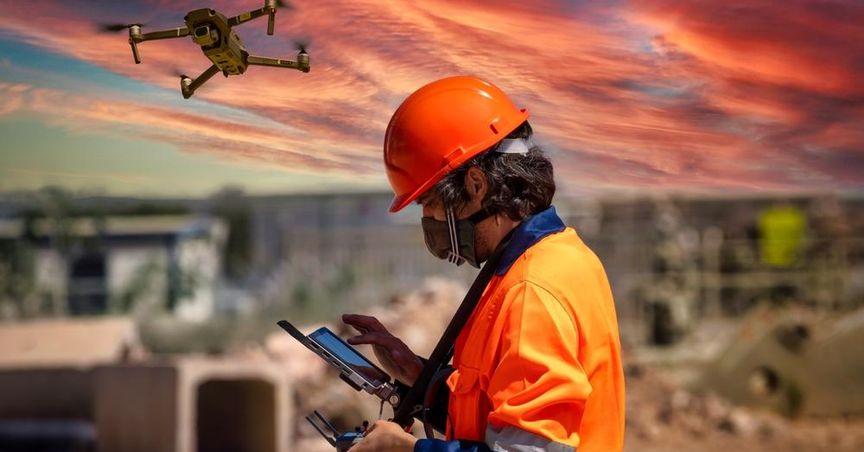
The aerospace and defence services sector continues to evolve through advancements in unmanned aerial systems and specialized training programs. Within this context, Volatus Aerospace operates as a provider of drone-based solutions and aviation services, with growing attention tied to its positioning in the S&P TSX Index environment. Activity in this sector reflects increasing demand for aerial data services, surveillance capabilities, and training support across commercial and government applications.
Contract Development and Strategic Engagement
Volatus Aerospace (TSX:FLT) recently entered into a multi-year agreement to deliver specialized training services to a government ministry associated with a North Atlantic defence alliance. This arrangement includes provisions for extension, indicating a structured engagement model aligned with long-term operational needs.
Training programs under such agreements typically involve technical instruction, operational procedures, and compliance frameworks relevant to drone deployment. These initiatives reflect the growing integration of unmanned systems within defence and security operations, where precision, coordination, and regulatory adherence are essential components.
The agreement underscores the company’s participation in a niche segment that combines aerospace technology with service-based delivery. This combination allows for diversified operational pathways, spanning training, equipment deployment, and data-driven applications.
Drone Technology and Service Capabilities
The company’s portfolio includes a range of drone platforms designed for industrial, commercial, and governmental use. These systems support applications such as infrastructure inspection, environmental monitoring, and aerial surveying. Advancements in drone design and payload capacity have expanded the scope of services, enabling more complex missions and broader operational coverage.
One notable aspect of development involves heavy-lift drone systems capable of carrying substantial payloads. These platforms are subject to evolving regulatory frameworks, which influence deployment timelines and operational permissions. Testing protocols and safety requirements form part of the development process, shaping how such technologies are introduced into active service.
Integration of drone technology with data analytics further enhances service offerings. Aerial data collection combined with processing capabilities allows for detailed mapping, monitoring, and reporting across various sectors. This integration reflects a broader trend within the aerospace industry toward data-centric service models.
Market Activity and Sector Positioning
Market attention surrounding Volatus Aerospace (TSX:FLT) has been influenced by recent developments, including contract announcements and operational updates. Movements in valuation metrics often align with these developments, as sector participants respond to changes in business activity and project visibility.
Within the aerospace and defence segment, companies engaged in drone services occupy a specialized niche. Their positioning depends on technological capabilities, regulatory compliance, and the ability to secure service-based agreements. The s&p tsx composite environment provides a framework where such companies are evaluated alongside broader market participants, reflecting varying stages of growth and operational maturity.
Comparisons within the sector often focus on service diversification and geographic reach. Companies with integrated service models, combining hardware, software, and training, may exhibit distinct operational characteristics compared to those focused solely on manufacturing or data services.
Regulatory Landscape and Industry Dynamics
The regulatory environment plays a significant role in shaping the deployment of drone technologies. Authorities establish guidelines governing airspace usage, safety standards, and operational permissions. These frameworks are particularly relevant for heavy-lift drones, which require additional oversight due to their size and capabilities.
Changes in regulatory conditions can influence the pace at which new technologies are adopted. The introduction of updated guidelines for advanced drone systems may enable broader application across industries, including logistics, emergency response, and defence operations. Compliance with these standards remains a fundamental requirement for operational continuity.
Industry dynamics also reflect collaboration between technology providers, government agencies, and commercial entities. Partnerships and contractual arrangements contribute to the expansion of drone applications, supporting a wide range of use cases from surveillance to infrastructure management.
Financial Trends and Operational Development
Financial performance within the aerospace services sector is closely linked to contract execution, service delivery, and project development. Revenue generation often depends on the successful completion of service agreements and the expansion of client relationships. At the same time, ongoing development efforts may influence expenditure patterns, particularly in areas related to research, testing, and regulatory compliance.
For companies like Volatus Aerospace (TSX:FLT), balancing development initiatives with operational activities remains a central aspect of financial structure. The transition of technologies from development phases to active deployment can affect overall performance metrics, reflecting shifts in cost allocation and service output.
The aerospace and drone services sector continues to evolve, driven by technological innovation and changing operational requirements. As demand for aerial solutions expands, companies engaged in this field navigate a complex environment shaped by regulatory frameworks, technological advancements, and sector-specific dynamics.
