
 AUS
AUS
 NZ
NZ
 UK
UK
 CA
CA
 USA
USA
 IND
IND


_02_06_2025_07_05_23_538703.jpg)



Highlights
- Canadian Pacific Kansas City operates a transnational freight rail network
- Institutional ownership activity reflects changing portfolio allocations
- Rail logistics infrastructure supports cross-border freight movement
Canadian Pacific Kansas City overview covers transportation network, sector placement, and S&P 60 TSX Index relevance alongside institutional ownership trends and operational structure within rail.
The transportation sector includes rail operators that connect industrial regions, ports, and manufacturing hubs through integrated logistics networks. Canadian Pacific Kansas City (TSX:CP) functions within this environment as a freight railroad spanning Canada, the United States, and Mexico, enabling continuous rail corridors across national boundaries. The company is associated with the S&P 60 TSX Index, a benchmark that represents major Canadian-listed enterprises across sectors, including transportation. Recent disclosures describe portfolio adjustments by institutional entities involving Canadian Pacific Kansas City, drawing attention to ownership distribution within the rail segment.
Transportation Network and Sector Role
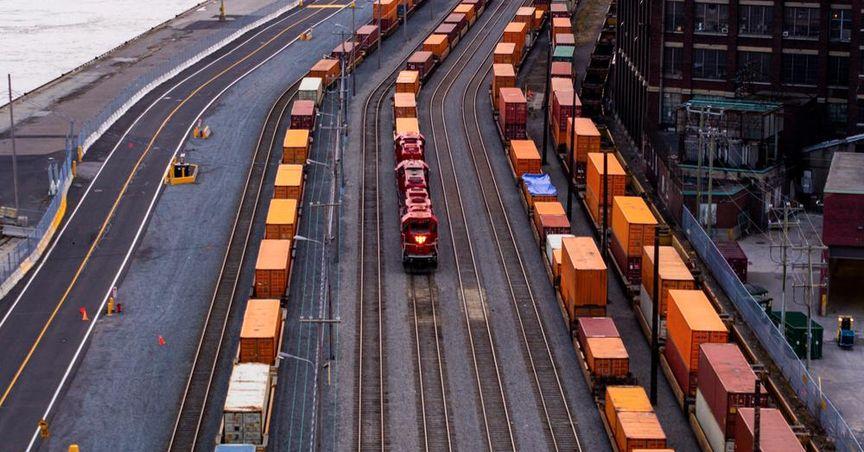
Canadian Pacific Kansas City (TSX:CP) operates a Class freight railroad designed to support large-scale cargo movement across North America. The rail system links industrial production zones with export gateways, facilitating shipment of commodities, manufactured goods, and intermodal freight. Rail transportation plays a foundational role in continental logistics by providing long-haul efficiency and connectivity between supply chain nodes.
Within the broader transportation landscape, rail carriers contribute to infrastructure resilience by maintaining fixed-route corridors capable of supporting high-capacity cargo flow. Canadian Pacific Kansas City integrates rail lines inherited through corporate combination into a continuous network, enabling streamlined routing between northern and southern markets. This structural configuration positions the company within a segment focused on freight continuity and logistical coordination.
Institutional Ownership Activity
Recent regulatory filings describe adjustments in share allocations by several institutional organizations with exposure to Canadian Pacific Kansas City (TSX:CP). Such filings document portfolio composition and reflect periodic rebalancing aligned with organizational mandates. Ownership disclosures form part of routine reporting requirements that provide transparency regarding market participation.
Institutional involvement in transportation companies often reflects the sector’s structural presence within diversified portfolios. Rail operators represent infrastructure-linked enterprises whose operations intersect with industrial production and trade flows. Changes in reported allocations illustrate evolving participation patterns without altering the operational structure of the rail network itself.
Rail Infrastructure and Cross-Border Connectivity
The integrated rail corridor managed by Canadian Pacific Kansas City (TSX:CP) enables freight movement across international borders through unified scheduling and routing frameworks. This configuration reduces interchange complexity by maintaining continuous rail service across jurisdictions. Cross-border rail systems support industries reliant on synchronized delivery timelines and large shipment volumes.
Rail infrastructure requires coordinated maintenance, signaling systems, and terminal facilities to sustain network performance. Canadian Pacific Kansas City maintains operational hubs that interface with ports, distribution centers, and manufacturing regions. Such infrastructure underpins cargo circulation within continental supply chains, reinforcing rail transportation as a central logistics channel.
Market Presence and Index Association
Companies represented within the s&p 60 index illustrate sector diversity across Canadian capital markets, including transportation, materials, and financial services. Association with this benchmark reflects scale and market participation within publicly traded environments. Canadian Pacific Kansas City operates alongside peer enterprises that contribute to industrial and logistical frameworks.
The S&P 60 TSX Index functions as a reference point for observing aggregate sector composition. Rail transportation remains a visible component due to its linkage with trade corridors and industrial distribution. Canadian Pacific Kansas City’s (TSX:CP) presence within this benchmark aligns with the transportation sector’s structural relevance to continental commerce.
Operational Structure and Logistics Services
Freight rail operations encompass scheduling coordination, cargo handling, and terminal logistics. Canadian Pacific Kansas City (TSX:CP) manages intermodal services that integrate rail with trucking and maritime connections, enabling cargo transfer between transportation modes. This interconnectivity supports diversified shipment requirements ranging from bulk commodities to containerized goods.
Operational planning within rail systems emphasizes network fluidity, equipment availability, and corridor capacity. Continuous rail lines spanning multiple jurisdictions enable consistent cargo routing, reducing reliance on fragmented handoffs. Canadian Pacific Kansas City maintains logistics frameworks designed to support industrial distribution channels and long-distance freight circulation.
Sector Dynamics and Industrial Linkages
Rail transportation intersects with manufacturing, agriculture, and resource distribution by providing high-capacity freight corridors. Industrial producers rely on rail connectivity to reach domestic and export destinations. Canadian Pacific Kansas City’s (TSX:CP) network contributes to these linkages by maintaining routes that align with production centers and trade gateways.
Transportation infrastructure evolves alongside supply chain requirements, incorporating signaling upgrades, terminal enhancements, and routing optimization. Rail operators coordinate with logistics partners to manage cargo flows that respond to industrial demand patterns. Canadian Pacific Kansas City functions within this ecosystem as a carrier supporting multi-sector freight movement.
