
 AUS
AUS
 NZ
NZ
 UK
UK
 CA
CA
 USA
USA
 IND
IND

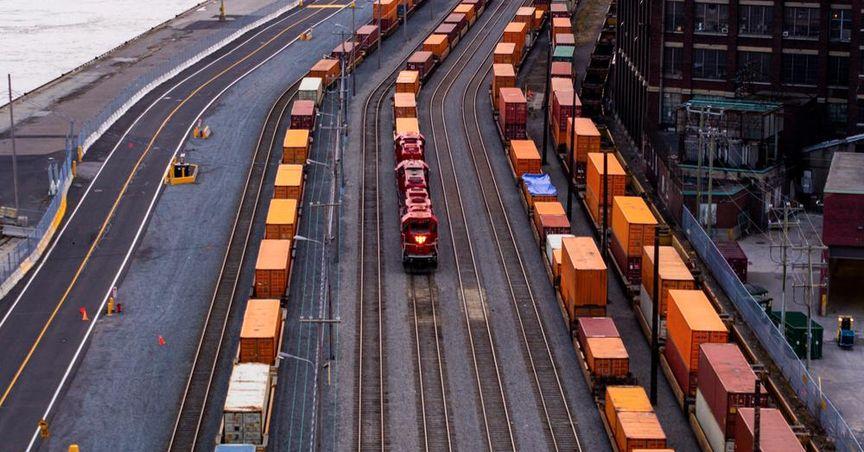





Highlights
- Canadian National Railway Company reached a new annual high, reinforcing attention on large transportation companies
- Rail network scale and freight diversification position the company prominently within the s&p tsx composite
- Margin strength, balance sheet leverage, and operational reach frame its valuation among Canada’s leading transportation firms
Canadian National Railway Company (TSX:CNR) recently reached a new annual trading high, highlighting renewed attention toward Canada’s transportation infrastructure sector. As one of the most significant rail operators in North America, the company plays a vital role in freight movement across Canada and the United States. This milestone comes as the company maintains steady operational momentum and strong financial metrics while remaining a prominent component of the s&p tsx composite, the benchmark tracking major publicly listed companies in Canada.
Continental Freight Network Expansion
Canadian National Railway operates one of the most extensive rail networks across North America, connecting ports, manufacturing centers, agricultural regions, and energy-producing areas. Its rail lines extend across Canada and into the United States, providing critical freight transportation for industries that depend on efficient long-distance logistics.
The company’s network supports movement of natural resources, industrial materials, agricultural goods, and finished products. This broad freight portfolio contributes to diversification in cargo volumes, allowing the railway to serve multiple sectors of the economy simultaneously.
Such operational reach enhances the company’s strategic importance within the s and p tsx index, where infrastructure-based corporations often form the backbone of national economic activity. Rail networks in particular are widely recognized as foundational logistics assets supporting trade and industrial production.
Freight Categories Supporting Logistics Diversity
Canadian National Railway transports a wide array of goods ranging from energy products and forest materials to consumer goods and agricultural commodities. This variety allows the company to maintain balanced freight flows throughout the year.
Industrial commodities often move through long-haul routes connecting mines, manufacturing hubs, and export terminals. Agricultural shipments typically originate from farming regions and travel toward coastal ports for international distribution. Consumer goods, on the other hand, move through intermodal logistics networks linking rail with trucking and maritime transport.
The integration of these freight categories enables the railway to operate a diversified logistics system capable of handling large volumes of cargo across North America. This operational flexibility reinforces the company’s relevance within major Canadian market benchmarks.
Financial Metrics And Operational Efficiency
Recent quarterly reporting highlighted strong earnings per share figures alongside significant revenue generated through freight transportation services. Net margin and return on equity levels reflect operational efficiency within the company’s rail network.
Railway companies often maintain higher margins compared with other transportation sectors due to network scale and infrastructure ownership. Once rail lines and terminals are established, incremental freight shipments can be handled with relatively stable operating costs.
Within the s&p tsx composite, transportation firms with strong margin structures are frequently evaluated as key contributors to overall benchmark performance. Canadian National Railway’s profitability metrics illustrate the effectiveness of its large-scale logistics platform.
Technical Performance And Market Momentum
The company’s share price recently traded above both medium-term and long-term moving averages. Sustained positioning above these technical indicators often signals constructive momentum in market activity.
Trading volume during the recent session indicated strong participation relative to typical liquidity levels. Large-cap companies listed on the Toronto Stock Exchange frequently experience increased engagement when price milestones occur, particularly when those milestones involve new annual highs.
Technical performance does not alter operational fundamentals, yet such developments can reinforce comparative strength among companies within major indices. Canadian National Railway’s price behavior reflects continued engagement with large-cap transportation stocks.
Capital Structure And Liquidity
The company’s balance sheet metrics illustrate a capital structure that incorporates moderate leverage typical of infrastructure-intensive businesses. Rail operators require substantial tracks, locomotives, and freight equipment to maintain service reliability.
Liquidity measures such as the current ratio and quick ratio highlight the company’s capacity to meet near-term obligations while maintaining operational continuity. Efficient working capital management remains essential for rail operators due to maintenance cycles and equipment procurement requirements.
Leverage also reflects long-term infrastructure financing strategies. Rail companies frequently utilize debt to fund network improvements and capacity expansion while generating stable cash flows from freight transportation services.
Strategic Role In North American Trade
Canadian National Railway Company (TSX:CNR) functions as a critical transportation link for North American commerce. By connecting ports on multiple coasts with inland industrial centers, the company supports international trade routes and domestic supply chains.
Freight transported across the network includes energy resources, construction materials, manufactured goods, and agricultural exports. These shipments play an essential role in economic activity throughout Canada and the United States.
The company’s rail corridors enable efficient movement of bulk commodities and containerized cargo, reducing reliance on highway transportation and contributing to broader supply chain resilience.
Competitive Position Among Rail Operators
North America’s rail industry is dominated by a limited number of large operators with extensive track networks. Canadian National Railway competes with other major freight rail companies while maintaining strong market share across key transportation corridors.
Competitive advantages often arise from network connectivity, operational efficiency, and intermodal logistics capabilities. Rail companies capable of linking major ports with inland distribution hubs tend to maintain stable freight demand across multiple industries.
Canadian National Railway’s presence across both Canadian and United States rail routes allows the company to serve cross-border supply chains. This geographic reach enhances its standing among leading transportation firms.
