
 AUS
AUS
 NZ
NZ
 UK
UK
 CA
CA
 USA
USA
 IND
IND






Highlights
- Earnings expectation update released through formal market disclosure channels
- Rail transportation network supports diversified freight movement
- Exchange reporting places activity within a major Canadian benchmark
Article explains Canadian National Railway earnings expectation disclosure, rail logistics structure, and benchmark framing tied to S&P TSX 60 index within standardized exchange reporting.
The rail transportation sector connects industrial regions, ports, and inland logistics corridors that sustain large-scale freight movement across North America. Within this industry, Canadian National Railway Company (TSX:CNR) operates an integrated rail system whose public disclosures align with the S&P TSX 60 Index , a benchmark commonly referenced when discussing major Canadian issuers. This s&p 60 index context frames earnings expectation communications and operational reporting as standardized components of exchange transparency across the s and p tsx 60 environment.
Earnings expectation update framework
Canadian National Railway Company (TSX:CNR) issued a market communication reflecting revised quarterly earnings expectations originally compiled by an external research provider. Such releases describe projected performance ranges and timing assumptions while emphasizing that figures represent forward-looking financial modeling rather than recorded operating results. The disclosure format follows exchange conventions designed to separate projected figures from finalized statements.
Expectation updates typically outline how prior projections were adjusted and clarify that figures remain subject to later confirmation through formal reporting. Documentation language focuses on factual presentation, including terminology that distinguishes estimated metrics from realized outcomes. Within the s and p 60 benchmark landscape, these communications form part of a broader reporting ecosystem that records evolving financial expectations without interpretive commentary.
Rail operations and freight composition
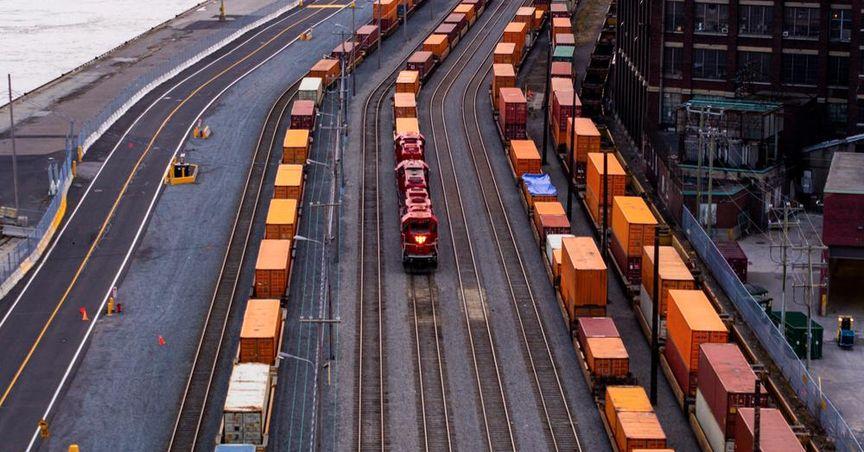
Canadian National Railway Company (TSX:CNR) manages a transcontinental rail network linking Canadian production zones with United States distribution corridors. Freight categories transported across this system include intermodal containers, forest products, agricultural shipments, energy materials, automotive cargo, and industrial commodities. Each cargo stream follows routing procedures that integrate yard sequencing, dispatch coordination, and terminal handling.
Rail scheduling platforms balance corridor capacity with cargo flow priorities to maintain consistent movement. Digital dispatch systems monitor train positioning and equipment allocation, supporting synchronized operations across interconnected routes. Intermodal interfaces connect rail lines with trucking and marine terminals, forming multimodal logistics chains that extend geographic reach. These operational structures illustrate how rail carriers coordinate infrastructure stewardship with cargo management.
Financial disclosure structure and exchange alignment
Canadian National Railway Company (TSX:CNR) maintains continuous disclosure practices that include periodic financial statements, operational summaries, and expectation communications distributed through exchange channels. Reporting frameworks emphasize standardized terminology, reconciled accounting presentation, and verification protocols intended to preserve clarity. Earnings expectation releases are categorized separately from finalized statements to ensure readers distinguish modeled projections from recorded figures.
Exchange alignment requires that communications follow established timing conventions and formatting standards. Aggregated reporting channels present synchronized updates so that stakeholders access uniform factual information. Reference to the S&P/TSX 60 Index provides contextual orientation, situating company disclosures within a recognized Canadian benchmark framework.
Infrastructure management and system coordination
Rail infrastructure management involves track inspection routines, signaling oversight, rolling stock maintenance, and terminal coordination. Canadian National Railway Company (TSX:CNR) deploys monitoring technologies that support asset reliability and operational continuity. Signaling networks regulate train spacing and routing, enabling orderly corridor movement across shared lines.
Terminal facilities oversee cargo transfer, container staging, and documentation workflows that link field operations with administrative oversight. Integrated data platforms track shipment status and equipment positioning, creating a unified operational environment. These systems demonstrate how rail carriers combine mechanical stewardship with information management to sustain network performance.
Earnings communication context
Earnings expectation communications associated with Canadian National Railway Company (TSX:CNR) are structured to present modeled projections alongside explanatory notes describing methodology and scope. Language within these releases focuses on descriptive reporting, clarifying that expectation figures do not represent finalized operating results. Such distinctions support transparency by outlining the nature of forward financial modeling within formal exchange documentation.
Placement of these communications within the broader s&p 60 index conversation provides contextual framing that connects company reporting with Canadian market benchmarks. This framework preserves factual integrity while situating disclosures in a recognizable exchange environment.
Freight connectivity and cross-border logistics
Rail corridors administered by Canadian National Railway Company (TSX:CNR) facilitate cross-border cargo flows linking Canadian industrial centers with United States markets. Documentation procedures, customs coordination, and terminal sequencing form part of cross-jurisdiction logistics. Freight categories move along dedicated routes optimized for cargo characteristics and equipment compatibility.
Seasonal demand patterns, infrastructure maintenance windows, and network capacity planning shape routing decisions. These operational dynamics highlight the structural complexity of continental rail transportation and the coordination required to sustain uninterrupted cargo movement.
