
 AUS
AUS
 NZ
NZ
 UK
UK
 CA
CA
 USA
USA
 IND
IND


_02_06_2025_07_05_23_538703.jpg)



Highlights
- Covers rail transportation operations and industrial services
- Explains network scope, logistics role, and sector positioning
- Describes index classification and infrastructure relevance
A factual overview of Canadian National Railway covering rail network operations, supply chain role, and classification within Canada’s industrial and transportation landscape.
Canadian National Railway operates within the rail transportation and industrial logistics sector, forming a core part of freight movement across North America. This sector supports supply chains for natural resources, manufactured goods, and consumer products, contributing to economic connectivity across regions represented within the S&P TSX Index. Rail transportation companies provide long haul logistics services through integrated networks that connect ports, industrial hubs, and inland markets. Canadian National Railway (TSX:CNR) aligns with this sector through an extensive rail system supporting cross border and domestic freight activity.
Rail Transportation and Industrial Services Scope
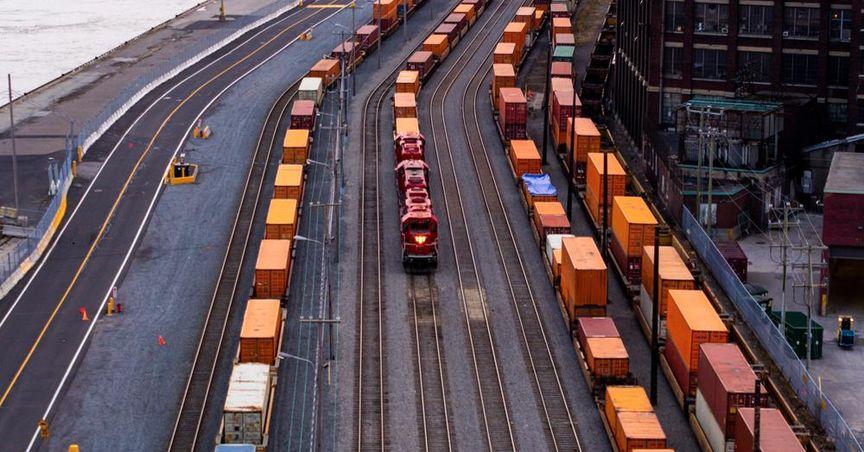
Canadian National Railway (TSX:CNR) delivers freight rail services across a broad geographic footprint spanning multiple regions of North America. Operations focus on the movement of bulk commodities, intermodal containers, and industrial products through a unified rail network. This infrastructure supports supply chains across agriculture, energy, forestry, automotive manufacturing, and consumer goods distribution.
Rail transportation emphasizes network efficiency and asset utilization rather than point to point delivery. Canadian National Railway integrates terminals, rail yards, and logistics services to support end to end freight movement. This operational structure reflects the essential role of rail systems within industrial transportation frameworks.
Network Infrastructure and Geographic Reach
The rail network operated by Canadian National Railway (TSX:CNR) connects coastal ports with inland production and consumption centers. This connectivity supports domestic trade flows as well as cross border freight movement between Canada and the United States. Rail corridors link manufacturing regions with export terminals, enabling large scale commodity transport.
Network design emphasizes interoperability and system resilience. Canadian National Railway maintains routes that traverse varied terrain and climate zones, requiring coordinated maintenance and operational planning. This infrastructure enables consistent service across long distances and diverse industrial regions.
Role Within Supply Chains
Rail transportation functions as a backbone for bulk freight movement within North American supply chains. Canadian National Railway (TSX:CNR) supports industries that rely on high capacity transport for raw materials and finished goods. These services reduce reliance on road transport for long distance freight, supporting logistical efficiency.
Intermodal services integrate rail transport with trucking and port operations. This integration allows containers to transition between transportation modes while maintaining continuity across the supply chain. Canadian National Railway structures its operations to support these interconnected logistics systems.
Sector Positioning and Index Context
Canadian National Railway (TSX:CNR) is classified within the industrials sector of Canadian equity markets. This sector includes transportation, infrastructure, and logistics providers that support economic activity across multiple industries. Rail operators represent a distinct segment within industrials due to capital intensive infrastructure and network based operations.
Within the S&P TSX Index, rail transportation companies reflect the importance of physical infrastructure to national commerce. Canadian National Railway aligns with this classification through its role in freight transportation and logistics services across North America.
Operational Model and Asset Management
Rail operations require coordinated management of rolling stock, track infrastructure, and scheduling systems. Canadian National Railway (TSX:CNR) applies an integrated operational model that aligns asset deployment with freight demand across its network. This model emphasizes system wide coordination rather than isolated route management.
Maintenance programs support network reliability and safety. Track inspection, equipment servicing, and infrastructure upgrades are structured as ongoing operational requirements. These activities ensure consistent rail service across varied operating conditions.
Environmental and Efficiency Considerations
Rail transportation is commonly associated with fuel efficiency advantages for bulk freight movement. Canadian National Railway (TSX:CNR) operates within an industry context that emphasizes efficient cargo transport over long distances. Operational practices focus on optimizing train length, routing, and scheduling to support resource efficiency.
Environmental considerations influence infrastructure planning and operational practices across the rail sector. Canadian National Railway integrates these considerations within broader operational frameworks rather than as standalone initiatives.
Technology and Operational Systems
Modern rail networks rely on advanced signaling, scheduling, and monitoring systems. Canadian National Railway (TSX:CNR) incorporates digital systems to manage traffic flow, asset tracking, and operational coordination across its network. These systems support real time visibility into freight movement and network performance.
Technology integration enhances safety, reliability, and coordination across rail operations. Canadian National Railway applies system based management to align infrastructure capacity with transportation demand.
Regulatory and Industry Environment
Rail transportation operates within a regulated environment shaped by safety standards, operational requirements, and cross border coordination. Canadian National Railway (TSX:CNR) functions within this framework through adherence to transportation regulations applicable across jurisdictions.
Industry standards influence equipment specifications, operational procedures, and reporting requirements. Canadian National Railway aligns its practices with these standards to support consistent operations across regions.
Economic Role and Market Relevance
Rail networks contribute to economic activity by enabling efficient movement of goods across long distances. Canadian National Railway (TSX:CNR) supports trade flows connecting production regions with domestic and international markets. This role reinforces the importance of rail infrastructure within industrial economies.
The rail sector interacts closely with commodity production, manufacturing output, and trade activity. Canadian National Railway operates within this interconnected economic environment through its transportation services.
