
 AUS
AUS
 NZ
NZ
 UK
UK
 CA
CA
 USA
USA
 IND
IND






Highlights
- Canadian National Railway is part of the freight rail and transportation infrastructure sector across North America
- A broad cost reduction program has been introduced to respond to softer freight volumes
- A new Chief Commercial Officer role has been added to strengthen commercial execution and network utilization
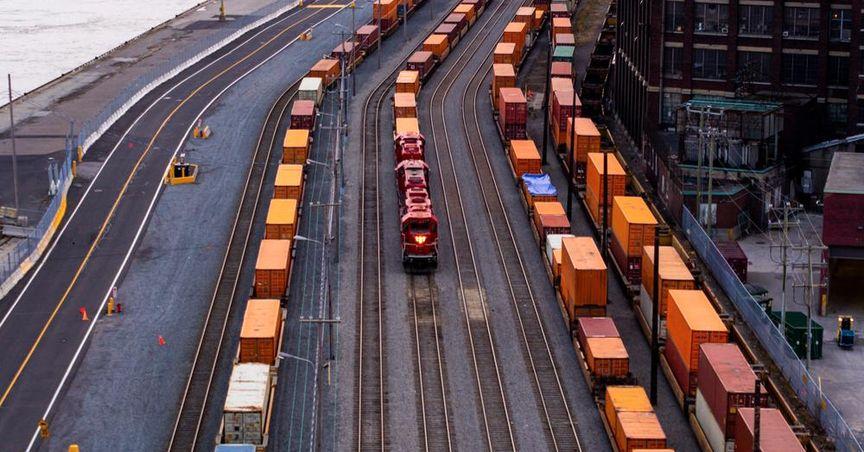
Canadian National Railway operates within the freight rail and transportation infrastructure sector, forming a key part of the supply chain system that supports trade, industrial movement.
Canadian National Railway (TSX:CNR) supports intermodal connectivity across Canada and the wider continent. Rail corridors play a central role in moving bulk commodities, manufactured goods, and consumer products efficiently over long distances, linking ports, inland terminals, and industrial hubs. In Canada’s equity landscape, benchmarks such as the s&p 500 tsx composite index are often used as broad market references, while rail operators are frequently viewed as key supply chain enablers tied to trade and freight activity.
The freight rail sector often reflects broader economic cycles, as shipment demand can soften when industrial output slows. Canadian National Railway’s continent-spanning network positions it as one of the most significant freight infrastructure operators in the country, with operations tied closely to domestic commerce and cross-border trade corridors.
Why Are Cost Actions Emerging?
Canadian National Railway (TSX:CNR) has launched a cost reduction program aimed at adjusting to freight recession conditions and softer shipment volumes. This initiative includes management reductions and lower capital spending plans for the coming period.
Such actions are designed to protect operational efficiency during times when freight demand is not as strong. Cost controls in rail transport can involve reviewing staffing structures, optimizing asset use, and ensuring spending remains aligned with volume conditions.
What Drives Efficiency Focus Now?
Freight rail operators typically balance high fixed infrastructure costs with variable shipment volumes. When volumes decline, maintaining margins depends on disciplined cost structures and careful resource allocation.
Canadian National Railway’s program reflects an effort to remain resilient during a freight downturn while continuing to support service reliability. The rail sector requires ongoing investment in track, terminals, and equipment, making spending discipline an important element of operational planning.
How Is Commercial Execution Changing?
A new Chief Commercial Officer has been installed at Canadian National Railway (TSX:CNR) with the aim of sharpening sales execution and improving the utilization of its rail and intermodal assets.
This role is expected to strengthen service mix, customer coordination, and network efficiency. In freight rail, commercial execution influences how effectively capacity is allocated, how service terms are set, and how customer relationships are managed across a wide range of freight categories, alongside broader market context such as the s&p composite index.
What Role Does Network Scale Play?
Canadian National Railway’s network spans key trade routes across Canada and into the United States, connecting ports, industrial hubs, and inland distribution centers. This scale provides the ability to serve multiple freight markets, including bulk commodities, automotive shipments, and intermodal container traffic.
Network breadth can provide resilience, since demand softness in one segment may be balanced by stability in another. Utilization improvements are often linked to better scheduling, asset deployment, and service consistency.
How Do Broader Market Links Matter?
Canadian National Railway operates within the wider Canadian equity environment, alongside benchmarks such as the TSX Composite Index and major large-cap groupings like the TSX 60.
These indices reflect broader market sentiment and sector performance across Canada. Rail operators often remain closely watched because they serve as indicators of trade activity and industrial momentum.
How Does Capital Discipline Support Stability?
Railway companies typically follow disciplined approaches to capital allocation, balancing shareholder distributions with the need to maintain infrastructure quality. Canadian National Railway’s (TSX:CNR) decision to trim capital spending plans aligns with efforts to remain prudent during softer freight conditions.
Capital discipline can involve prioritizing essential maintenance while deferring less urgent expansion projects until shipment volumes improve. Such measures are common in cyclical transportation industries.
What Challenges Remain For Rail Operators?
The freight rail sector continues to face demand sensitivity tied to economic activity. Softer industrial production, weaker commodity cycles, or reduced consumer demand can weigh on shipment levels.
Canadian National Railway (TSX:CNR) continues to be discussed in relation to board oversight and senior pay arrangements, alongside the need for steady operating execution during uneven earnings performance. This context sits within the broader Canadian market backdrop reflected by the s&p tsx composite index.
