
 AUS
AUS
 NZ
NZ
 UK
UK
 CA
CA
 USA
USA
 IND
IND







Highlights
- Kane Biotech presented clinical data related to its revyve® wound care platform at the WCET–NSWOCC 2026 Joint Congress in Vancouver.
- revyve Antimicrobial Wound Gel and related products hold U.S. FDA 510(k) clearance.
- The company showcased a case study involving a high-risk diabetic foot ulcer patient treated with revyve®.
- The case study explored wound healing progression through biofilm management, moisture balance and infection control.
- Kane Biotech shares have gained approximately17% over the past week.
Kane Biotech Inc. (TSX-V:KNE) stepped into the global spotlight on wound care innovation as clinicians, researchers and healthcare specialists gathered in Vancouver for the World Council of Enterostomal Therapists and Nurses Specialized in Wound, Ostomy and Continence Canada (WCET–NSWOCC) 2026 Joint Congress. Against a growing industry focus on chronic wound management and biofilm-related complications, the company used the event to present clinical observations linked to its revyve® wound care platform.
The presentation centred on a complex diabetic foot ulcer case study, highlighting how clinicians used revyve® in treating a high-risk patient facing multiple barriers to healing. The participation placed Kane Biotech among exhibitors and presenters discussing evolving approaches to wound, ostomy and continence care.
Investor interest has also been building around the company, with its shares gaining approximately 17% to CAD 0.035 over the past week, as of May 13, 2026.
Congress Puts Spotlight on Wound Care Innovation
The WCET–NSWOCC Joint Congress, held from April 24 to April 28, 2026, brought together wound care professionals and specialists from multiple regions. Kane Biotech participated as both an exhibitor and presenter, focusing on clinician education surrounding the revyve® product family.
The company noted that revyve Antimicrobial Wound Gel forms part of a wound care platform designed to address biofilms and wound bacteria. Biofilms remain a significant issue in chronic wound management and are often associated with antibiotic resistance and delayed healing outcomes.
revyve Antimicrobial Wound Gel, revyve Antimicrobial Wound Gel Spray and revyve Antimicrobial Skin and Wound Cleanser have all received U.S. FDA 510(k) clearance. In addition, the wound gel and wound gel spray products are approved by Health Canada.
Focus on High-Risk Diabetic Foot Ulcers
The featured case study explored treatment outcomes in a 52-year-old male patient living with diabetes and cognitive impairment. According to the presentation, the patient had experienced a chronic diabetic foot ulcer since November 2024.
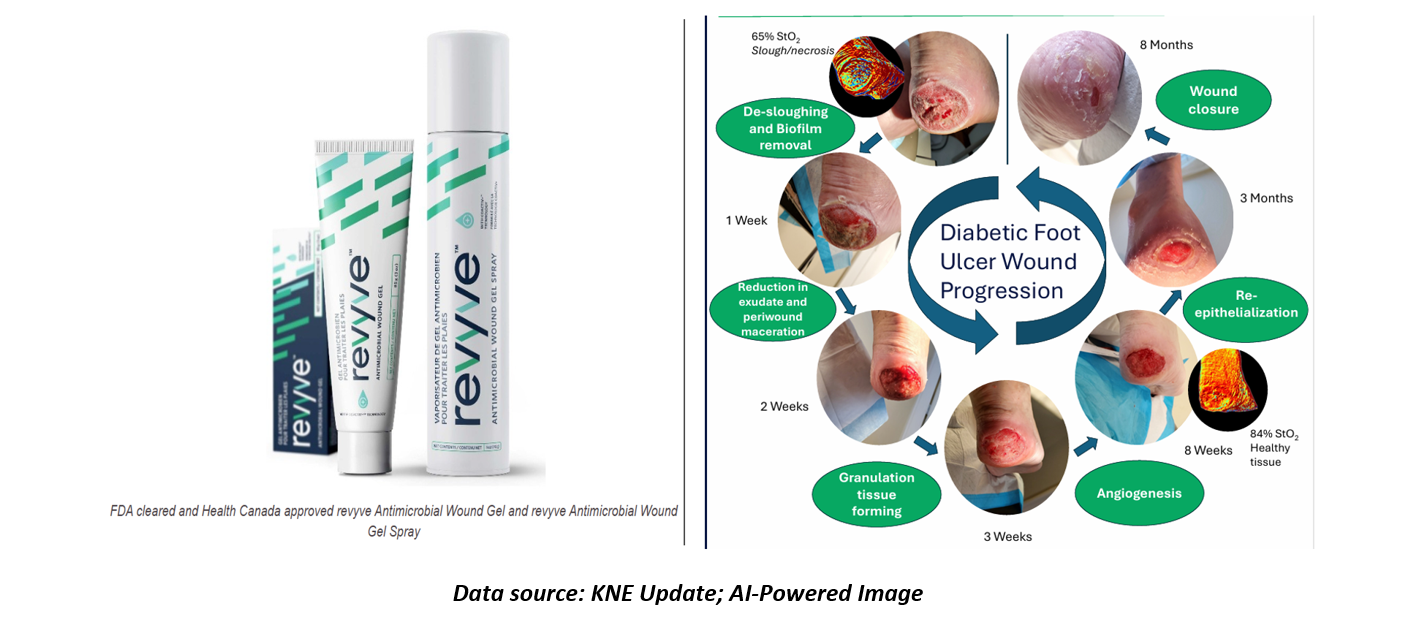
Clinicians described the wound as full-thickness, with necrotic tissue, slough, rolled edges and signs of deep infection. The patient faced additional complications including malnutrition, recurrent falls and inconsistent offloading practices linked to financial and cognitive barriers.
The study noted that previous wound management approaches had included composite dressings, hydrogels, silver-based products, methylene blue, gentian violet and collagen-based treatments, with limited improvement observed before revyve® was introduced.
Wound Environment Rebalancing
The presentation focused on whether re-balancing the wound environment could help restore a healing trajectory in difficult cases.
According to the case study, clinicians used revyve® to support multiple treatment objectives under the DIME framework. These included debridement, infection and inflammation management, moisture balance and wound edge support.
The study highlighted several intended functions linked to the thermo-reversible antimicrobial wound gel, including biofilm management, reduction of bioburden and protease activity, moisture control through poloxamer scaffolding, and support for keratinocyte migration.
Clinical observations presented at the congress also referenced increased angiogenesis and improved tissue oxygenation during treatment progression.
Case Study Outcomes and Future Potential
The conclusions presented during the congress described progressive closure of the chronic diabetic foot ulcer over the treatment period despite persistent external risk factors affecting the patient.
According to the study findings, revyve® supported autolytic debridement while helping manage slough, necrosis and biofilm presence. The case presentation also noted improved tissue oxygenation measurements using MIMOSA imaging technology.
Researchers involved in the study suggested that restoring balance in the wound environment may help re-initiate healing progression in high-risk diabetic foot ulcer cases where traditional interventions have produced limited results.
The presentation concluded that the observations support further clinical evaluation of revyve® in complex wound care settings and high-risk patient populations.
Expanding Commercial Visibility
Kane Biotech’s participation in the international congress also reflected the company’s broader commercialisation efforts around wound care technologies targeting biofilm disruption.
As healthcare systems continue evaluating approaches to chronic wounds and diabetic foot ulcers, companies operating in this segment remain focused on clinical validation, regulatory pathways and clinician awareness.
For Kane Biotech, the WCET–NSWOCC presentation provided an opportunity to place its revyve® platform before a specialised audience involved in wound management decision-making across community, acute care and clinical settings.
