
 AUS
AUS
 NZ
NZ
 UK
UK
 CA
CA
 USA
USA
 IND
IND






Highlights
- S&P TSX Composite Index exhibits sector-specific movements amid corporate updates.
- Mining and energy companies report notable drill and exploration developments.
- Market activity underscores evolving investor focus on uranium and vanadium projects.
The S&P TSX Composite Index continues to provide a comprehensive snapshot of Canada’s equity market, capturing trends across multiple sectors from mining to energy and technology. Recent developments in uranium and vanadium mining projects, particularly from Anfield Energy Inc. (TSX.V:AEC), have added a layer of momentum to market observations. As investors monitor sector performance, early drill results and resource confirmations are influencing broader market sentiment, highlighting the interplay between corporate activity and index movement.
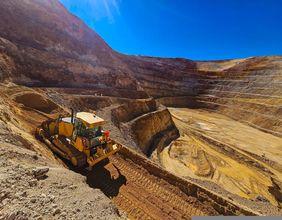
Anfield Energy, a uranium and vanadium exploration company operating in Montrose County, Colorado, recently reported encouraging outcomes from its JD-7 mine drill program. These results, coupled with other sector updates, have contributed to the shifting landscape within the S&P TSX Composite Index.
What are the top rising trends this week?
In the past week, the S&P TSX Composite Index reflected mixed sectoral performance. Energy and mining sectors demonstrated heightened activity, largely driven by new drilling results and exploration updates. Uranium and vanadium projects have captured market attention, especially as companies like Anfield Energy (TSX.V:AEC) complete initial drilling phases.
Air rotary and split barrel core drilling techniques have confirmed mineralization across multiple sandstone-hosted deposits, reinforcing the growing importance of sustainable resource exploration in influencing investor interest. Mining companies reporting substantial Grade Thickness (GT) values suggest a potential for increased output, supporting sectoral resilience.
The technology and financial sectors, while relatively stable, also reflect the broader index dynamics as capital flows adjust based on sector-specific news. Market indicators suggest that resource-rich regions, particularly in North America, remain critical for near-term portfolio performance.
Which companies experienced notable movements?
Anfield Energy Inc. (TSX.V:AEC) – Specializing in uranium and vanadium exploration, Anfield Energy completed 12 out of 20 planned drill holes at its JD-7 mine in Colorado. Significant intercepts included 17 ft grading 5,190 ppm eU3O8, with a peak of 14,850 ppm at 153.5 ft, and 19 ft grading 2,380 ppm eU3O8 with a peak of 9,240 ppm at 170 ft. Gamma ray logging results confirmed elevated uranium mineralization across multiple zones, aligning with historical data.
Other TSX-listed mining companies, such as Freeport McMoRan (TSX:FCX), continue to report operational updates in copper and gold mining, reflecting broader resource market dynamics. High-grade intercepts and ongoing exploration programs drive interest across both domestic and international equity channels.
Energy sector firms have also displayed minor volatility based on commodity price fluctuations and production reports. Tracking these corporate developments is essential to understanding S&P TSX Composite Index movements, as individual company performance aggregates to influence broader market sentiment.
How are market sentiments influencing sector direction?
Market sentiment currently exhibits a cautious optimism, with investors analyzing drilling results, resource confirmations, and commodity prices. Uranium and vanadium exploration updates, particularly from Anfield Energy, have reinforced confidence in resource potential while highlighting areas for long-term development.
Sector-specific sentiment is also influenced by operational efficiency and exploration methodology. Air rotary and core drilling techniques provide more precise resource data, allowing companies to refine extraction and development strategies. As such, mining and energy sectors respond dynamically to new information, with impacts on both individual stock performance and overall index movement.
The S&P TSX Composite Index serves as a reflection of these sentiments, capturing investor reactions to tangible corporate milestones and resource developments.
What are the implications of drill program outcomes?
The JD-7 mine confirmation drill program demonstrates a systematic approach to evaluating uranium and vanadium resources. Early results indicate zones of high Grade Thickness, supporting resource validation across the open pit mine. This information is critical for future development plans and operational efficiency.
Completion of all 20 drill holes will provide a comprehensive dataset, aiding resource modeling, mine planning, and long-term operational strategy. Companies like Anfield Energy are positioning their projects for integration into hub-and-spoke models, such as operations centered around the Shootaring Canyon Mill in Utah, optimizing both logistics and production potential.
For the broader S&P TSX Composite Index, these updates can influence investor allocation, sector rotation, and overall market evaluation.
How do drilling methods affect market perception?
Drilling methods, including air rotary and split barrel core, offer distinct advantages in precision and geological understanding. Air rotary drilling allows rapid coverage of extensive areas, while core drilling provides accurate sampling of mineralized zones.
Investors often interpret results from such methodologies as indicators of operational rigor and resource reliability. Higher Grade Thickness results suggest stronger resource potential, which can translate into positive sector sentiment and enhanced index performance.
By contrast, lower GT values in peripheral zones help companies refine resource boundaries, enhancing transparency and future operational planning. This measured approach fosters market confidence and aligns with evolving trends in mining investments.
Which other sectors are interacting with index movements?
While mining and energy are leading trends, technology and financial sectors also contribute to S&P TSX Composite Index shifts. Technology firms responding to hardware and software innovations impact investor sentiment, while financial services reflect macroeconomic trends, such as interest rate adjustments and credit availability.
The interplay between these sectors ensures that the index provides a holistic perspective on market health. For instance, capital inflows into mining may coincide with stable performance in financial services, balancing overall index stability.
Conclusion and Outlook
The S&P TSX Composite Index remains a key barometer for Canadian equity market performance. Updates from companies like Anfield Energy (TSX.V:AEC) underscore the ongoing relevance of mining and energy developments in shaping index dynamics. As drilling programs progress and resource data is validated, sector-specific movements will continue to inform investor focus, market sentiment, and overall index behavior.
