
 AUS
AUS
 NZ
NZ
 UK
UK
 CA
CA
 USA
USA
 IND
IND






At a time when Elon Musk, the billionaire CEO of Tesla, is busy admiring cryptocurrencies (in fact, a new digital currency, Elongate, is named after him), his rivals in traditional market are launching new electric models in Canada. Mercedes and Volkswagen, both Germany-based automobile manufacturers, are eying a share in growing zero-emission vehicles (ZEV) market of Canada.
Canada’s ZEV statistics
Although electric vehicles are yet to match up to the traditional fossil-fuel burning cars in terms of sales, 2020 was a good year for ZEV makers.
Statistics Canada, government’s agency tasked with producing data, has reported that a total of 18,771 ZEVs were registered in the country in third quarter of 2020 alone. The best part is ZEVs’ share was over 3 per cent in overall new vehicles registration in Q1, Q2, and Q3. In fact, 2020 was the best year ever in terms of share of ZEVs in total car sales in Canada despite the pandemic-induced downturn.
Over two-third of all ZEVs sold in Q3 were battery EVs, while one-third were plug-in hybrids.
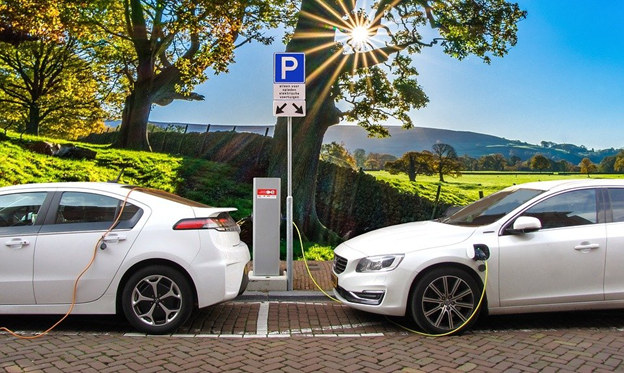
Image: Pixabay
Mercedes EQS enters Canada’s ZEV space
The automaker promises a 700 kilometres range with its debutant electric vehicle in Canadian market. Notably, luxury automakers, including Audi and Porsche, already have their presence in the market. Tesla remains a formidable player too. EQS is set to be the first all-electric model by Mercedes to be sold in Canada.
The buzz has it that EQS is the electric-equivalent of the company’s flagship S-class. In terms of range, EQS is said to post superior figures than Taycan (Porsche), and e-tron (Audi). It has a 108 kWh battery that can be charged for a 280 kilometres range in 15 minutes. 0-100 km/h and recharging from 10 to 80 per cent figures are impressive as well.
Volkswagen drives in its ID.4
ID.4 will be company’s debutant long-range vehicle in the Canadian market. It will directly rival Tesla, the current dominant player in long-range ZEV space.
Volkswagen has made its intention clear to ramp up production of its electric models by having multiple plants across Europe. The company will also be diverting funds to strengthen its charging infrastructure. ID.4 has a 400 kilometres range, and its battery can be recharged to 80 per cent in 40 minutes.
Heightened competition in Canada’s ZEV space will be an interesting watch. The government in its Budget 2021 has claimed an investment of C$376.4 million since 2016 in charging and refueling stations. It also talks of measures in upcoming years to ‘facilitate the development of the charging network’.
These multiple factors will see an increasing share of ZEVs in overall car sales in Canada.
