
 AUS
AUS
 NZ
NZ
 UK
UK
 CA
CA
 USA
USA
 IND
IND






Highlights
- Lithium Americas (TSX:LAC) surged after a major U.S. government-linked equity stake deal.
- Technology-driven gains and lithium demand spotlight mining and energy industries.
- Broader market attention turns to AI trends, sector resilience, and fiscal conditions.
The S&P Composite Index has been under close watch as Canadian equities react to both domestic corporate developments and global economic themes. Among the week’s notable movements, Lithium Americas (TSX:LAC) captured market attention after finalizing an agreement with the U.S. Department of Energy, granting both liquidity support and debt deferrals tied to its Nevada-based Thacker Pass project. The development arrived at a time when investor focus is divided between resource-driven industries and technology-related growth stories. Canadian sectors such as mining, energy, and financial services remained in sharp focus as global signals shaped sentiment across industries.
What are the top rising trends this week?
The week has been defined by an interplay of government policy actions, resource demand signals, and corporate balance sheet repositioning. Several prominent developments shaped market momentum:
-
Resource-backed growth stories – Lithium markets maintained attention as global energy transition targets created renewed demand outlooks for electric vehicle supply chains. The participation of the U.S. Department of Energy in a North American lithium project reinforced this momentum.
-
Technology and AI narratives – Broader equity benchmarks extended gains as artificial intelligence remained central to valuation conversations. While some economists voiced caution about asset valuations, technology-related expectations continued to underpin positive earnings outlooks.
-
Macro and fiscal environment shifts – Global policy headlines, ranging from inflation management to government spending debates, added layers of complexity for equities. U.S. fiscal discussions, including the government shutdown narrative, highlighted the link between policy uncertainty and cross-border market behavior.
Taken together, these elements illustrate a market where sector-specific catalysts and international economic currents converge to define weekly performance.
Which companies experienced notable movements?
Lithium Americas (TSX:LAC)
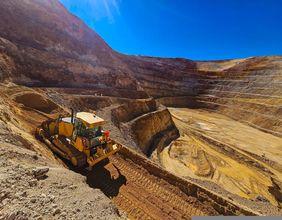
Vancouver-based Lithium Americas operates in the mining and resources sector with a focus on lithium production, a critical component for electric vehicle batteries and renewable energy storage. The company’s shares rallied after announcing a deal with the U.S. Department of Energy involving equity stakes in both Lithium Americas itself and its Thacker Pass joint venture with General Motors in Nevada. The agreement provided approximately US$435 million in advance funding while allowing the deferral of nearly US$182 million in debt obligations. This liquidity boost supported near-term operational goals but raised questions over shareholder dilution, as analysts noted the equity exchange terms.
Barrick Gold (TSX:ABX)
Barrick Gold is among the world’s leading gold mining companies with diversified assets across multiple continents. The company remained on the radar as precious metals performance reflected ongoing concerns about inflation management and monetary policy direction. Gold prices exhibited resilience, offering stability in a market shaped by both commodity demand and financial volatility.
Bank of Montreal (TSX:BMO)
Bank of Montreal is a key Canadian banking institution offering financial services across North America. The stock was part of broader discussions around financial sector exposure to policy-driven risks, including interest rate fluctuations and regulatory adjustments. As fiscal narratives in the United States evolved, Canadian banks were viewed through the lens of their cross-border exposure and long-term stability.
Constellation Software (TSX:CSU)
Constellation Software, a Toronto-based enterprise software firm, experienced volatility during the week amid broader discussions about valuation levels in technology-oriented sectors. The company’s activity reflected the balancing act between high growth visibility and market caution tied to broader equity levels.
These companies together represent the diversity of industries influencing Canadian equities—ranging from mining to technology to financial services—all of which are intricately linked to international developments.
How are market sentiments shaping industry direction?
Market sentiment throughout the week was anchored in both optimism and caution. Resource-driven optimism emerged from government partnerships with lithium producers, while broader caution surfaced through discussions of valuation excesses.
-
Mining and energy sentiment – Confidence in long-term demand for lithium and gold underpinned sectoral strength. The strategic involvement of U.S. authorities in a Canadian lithium operation was perceived as a signal of resource security priorities.
-
Technology sector views – Discussions of artificial intelligence adoption and long-term software demand supported technology-related equities, although some voices emphasized caution over extended valuations.
-
Financial institutions – While Canadian banks showed resilience, sentiment was moderated by ongoing concerns about cross-border fiscal management and rate cycle implications.
The balance of optimism and restraint reflects a market that values growth catalysts but remains cautious about sustainability under complex global conditions.
What role do global developments play?
International policy and macroeconomic themes continued to shape Canadian market direction.
-
United States fiscal environment – Conversations around government shutdown risks highlighted the impact of political uncertainty on financial markets. With trade and policy ties between the U.S. and Canada deeply integrated, Canadian equities reflected ripple effects from these debates.
-
Artificial intelligence expansion – As the S&P 500 moved past new highs, technology-driven optimism remained central to global market narratives. Canadian firms, particularly those in software and service industries, benefited indirectly from this sentiment.
-
Commodity security and supply chains – The lithium agreement between Lithium Americas and the U.S. Department of Energy emphasized the role of natural resources in international energy security planning. Global partnerships underscored the importance of Canadian companies in shaping future-oriented industries.
