
 AUS
AUS
 NZ
NZ
 UK
UK
 CA
CA
 USA
USA
 IND
IND






Highlights
- Ero Copper is a Canada-listed base metals producer with operations centred in Brazil and exposure to copper, gold, and silver.
- Recent trading has featured sharp moves, reflecting shifting sentiment around operational execution and commodity-linked valuation methods.
- Different valuation frameworks can point to materially different outcomes, depending on assumptions around output levels, and long-run metal benchmarks.
Ero Copper continues to be evaluated through multiple valuation lenses, with the gap between narrative approaches and discounted valuation methods highlighting how strongly assumptions can shape interpretation.
Ero Copper Corp (TSX:ERO) operates in Canada’s materials sector, producing copper with additional gold and silver by-products from Brazil-based assets. As a Canada-listed miner, it operates in a segment where market sentiment can shift quickly, influenced by operational updates, commodity trends, and overall market direction for metals producers, including broader movements reflected through the TSX Smallcap Index.
What Drives Recent Trading Swings?
Ero Copper has recently seen notable short-term volatility, with alternating sessions of weakness and strength shaping its near-term chart. Such movement is often linked to shifting expectations around operating performance, combined with broad-based moves across metals equities that track copper sentiment.
Copper-focused miners commonly experience higher share movement than diversified industrial companies, since valuation is strongly influenced by commodity benchmarks and operational delivery. For Ero Copper, that sensitivity is amplified by the company’s mix of copper output and by-product exposure to gold and silver, as well as the geographic focus on Brazil.
How Does Sector Position Matter?
Materials sector companies tied to copper often trade as a blend of industrial demand sentiment and supply-side execution. When copper markets tighten, producers can benefit from stronger revenue assumptions, while periods of uncertainty can compress valuation multiples even if operating metrics remain stable.
Ero Copper’s asset mix gives it strong exposure to copper output alongside meaningful gold and silver by-products, which can broaden the commodity base of its operations while also adding more factors that influence how the company is viewed in the market, since copper benchmarks often shape the core valuation narrative and precious metals trends can influence by-product contribution and operating metrics; for broader Canadian market context, the s&p composite index is a commonly referenced benchmark when comparing materials-sector names against overall equity performance.
Which Assets Support Operational Footing?
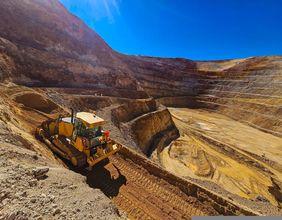
Ero Copper’s (TSX:ERO) operations are based in Brazil, where copper production is supported by established mining infrastructure and regional mining experience. The company’s production profile includes copper concentrate output and by-products from gold and silver, which can support unit-cost dynamics depending on realised credits and operating conditions.
Operational delivery has been closely watched following production guidance adjustments in prior periods. When guidance changes occur, market participants often revisit unit-cost expectations, throughput assumptions, and the implied long-run valuation embedded in the share level.
Why Does Brazil Exposure Matter?
Brazil exposure can shape valuation through operational, regulatory, and macroeconomic channels. Currency movement can influence reported results and unit metrics, while local permitting processes and government decisions can affect timing and project progression. In addition, logistics and energy cost structures can play an important role for miners operating within the country.
For Ero Copper, Brazil-specific factors are commonly discussed alongside mine-level execution, especially when the market is weighing whether operational consistency has stabilised. This context often informs how valuation frameworks are applied, particularly when comparing narrative-based valuation models and discounted valuation approaches.
What Is A Narrative Fair Value?
A narrative fair value approach is built around a clear storyline that links operating assumptions, margin expectations, and a selected earnings multiple, often supported by peer comparisons and base-case views on production and cost structure; in a Canada context, this framing is sometimes referenced alongside broader benchmarks such as the s&p tsx composite index, which can influence sector sentiment and valuation multiples across materials companies.
In Ero Copper’s case, a narrative valuation can indicate the shares trade around a fair value level, depending on assumptions used for copper benchmarks, mine performance, and the terminal multiple applied. Because this method is heavily assumption-driven, changes in operational confidence can quickly shift the implied valuation range.
How Does Discounted Valuation Differ?
A discounted valuation model, often framed as a method, uses projected operating results and discounts them back to a present value using a required rate of return. The output can diverge significantly from narrative valuation, especially when the model assumes stronger long-term production stability, improved operating efficiency, or favourable commodity benchmarks over time.
For Ero Copper (TSX:ERO), discounted valuation can deliver a meaningfully higher implied value compared with narrative approaches, depending on model inputs. When this occurs, the gap often reflects differences in assumptions around production growth, sustaining costs, and how quickly project improvements translate into stronger free-flow generation.
Why Do Valuations Conflict?
When different valuation frameworks produce conflicting results, the key drivers are usually input sensitivity and the treatment of uncertainty. Narrative valuation often incorporates conservative multiples during periods of operational inconsistency, while discounted valuation may reflect a longer-term view of operational normalisation.
For Ero Copper, divergence can be tied to the assumed durability of output levels and the cost trajectory. If a model assumes operational execution improves and remains steady, discounted valuation outcomes can rise sharply. If a narrative approach emphasises recent guidance changes and applies a lower multiple, the implied value can sit closer to the current trading level.
Which Inputs Matter Most?
For a copper producer, the most influential valuation drivers typically include production volumes, operating cost levels, sustaining capital requirements, and the long-term copper benchmark used in forecasts. Even modest shifts in these inputs can materially change implied valuation ranges, particularly in models that extend across long time horizons, as assumptions compound year after year and affect both operating strength and overall value interpretation S and P tsx index.
In addition, by-product credits from gold and silver can materially affect unit economics. When by-product contribution is strong, it can offset a portion of operating costs. When by-product contribution softens, headline unit costs can rise, changing both narrative and discounted valuation outcomes.
How Do Guidance Changes Affect Models?
Production guidance adjustments tend to reshape valuation discussions because they affect confidence in near-term delivery. For Ero Copper (TSX:ERO), repeated changes to guidance have been a notable point of focus. Such revisions can affect expectations around throughput, grade performance, and operational stability at key sites.
Models built on stable operating assumptions may need recalibration when guidance shifts occur. In narrative valuation, this can result in a compressed earnings multiple or more conservative margin assumptions. In discounted valuation, it can lead to reduced near-term production expectations or higher sustaining capital assumptions.
Part Three: Market Benchmarks, Index Context, And Common Search Queries
How Do Index Links Help?
Index context can be useful when reviewing sector-wide sentiment and the broader Canadian equity landscape. For readers tracking Canadian market benchmarks, these references support comparison against wider market moves rather than company-specific movement alone.
Relevant Canadian index references include TSX Composite Index, s&p tsx composite index, S and P tsx index, s&p composite index, and TSX Smallcap Index. These links are included for index navigation and market benchmark context.
What Are Common Market Questions?
A frequent discussion point around Ero Copper centres on whether the current trading level reflects operational execution concerns or whether valuation models are applying overly conservative assumptions. This debate often intensifies following sharp share movement, particularly when commodity prices remain firm while operational headlines change.
Another recurring topic is how market participants should interpret valuation gaps between narrative fair value approaches and discounted valuation methods. The divergence highlights how sensitive copper equity valuation can be to inputs such as production stability, cost control, and long-run copper benchmarks, especially for a Brazil-focused operator.
Ero Copper (TSX:ERO) remains a closely watched copper name among Canada-listed miners due to its commodity mix and operational footprint. Ero Copper is also frequently compared against broader Canadian benchmarks such as the TSX Composite Index and TSX Smallcap Index, given its sector exposure and market sensitivity.
