
 AUS
AUS
 NZ
NZ
 UK
UK
 CA
CA
 USA
USA
 IND
IND






Highlights
- Mantoverde labour action has led to a gradual scale-down in site activity and reduced metal
- Recent market attention has increased as operational continuity becomes a central theme
- Valuation narratives differ, with one framework leaning on stronger earnings and production stability
Capstone Mining Corp is a Canadian-listed copper producer in the metals and mining sector, and the Mantoverde strike has sharpened attention on operational continuity, valuation narratives.
Capstone Mining Corp (TSX:CS) operates in the metals and mining sector, with copper production forming the core of its operating profile. Sector performance is often shaped by global copper demand, energy and logistics conditions, site-level reliability, and the ability to manage large-scale development work while maintaining steady output across producing assets. Broader Canadian equity sentiment is often tracked through the s&p tsx composite index, which reflects overall market direction and can influence sector visibility and trading activity across mining-linked stocks.
What Happened At Mantoverde?
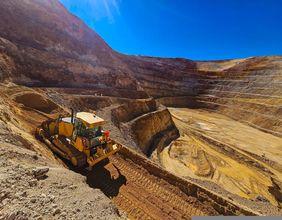
Labour action began at the Mantoverde Mine in Chile after Union action escalated into a strike. The company communicated that site activities were reduced gradually, and operational throughput moved materially below typical capacity. This matters because Mantoverde is a key asset in Capstone Mining operating base, and any sustained disruption can affect concentrate volumes, shipping schedules, and processing cadence.
The situation at Mantoverde is not simply a short-term site headline. It touches multiple layers of operations, including workforce availability, contractor access, equipment run-time, and the sequencing of maintenance and development work. In mining operations, even a brief interruption can create knock-on effects in ore movement plans and plant feed consistency, particularly when mines are balancing multiple ore sources or blending requirements.
For Capstone Mining (TSX:CS), the strike places added focus on labour relations and operational resilience. Site continuity often affects how the broader market interprets near-term delivery reliability, especially when the company is also progressing other major initiatives.
Why Does Production Curtailment Matter?
Lower production levels influence more than shipment volumes. Reduced throughput changes unit cost dynamics, affects concentrate scheduling, and can impact contract performance in off-take and transport arrangements. Mines are typically engineered around throughput targets that align with fixed-cost absorption, maintenance cycles, and optimized metallurgical recovery performance. When output falls below the expected run-rate, per-tonne cost structures often shift, and operational efficiency can be harder to maintain.
From a corporate perspective, any notable disruption increases attention on quarterly operating metrics, site commentary, and operational disclosures. It also raises the importance of communication around workforce engagement, safety continuity, and readiness to return to normal production.
Capstone Mining has drawn attention because Mantoverde is not an isolated exploration-stage project. It is a producing asset with real operational weight, and changes there can influence consolidated production visibility.
How Has Market Sentiment Shifted?
The stock has experienced a choppy stretch recently, with sharp daily movements occurring alongside strong longer-term momentum. Short-term volatility often reflects uncertainty tied to operational events, while longer-term trends tend to reflect broader confidence in execution and the company’s asset quality.
Market participants frequently compare operational headlines with valuation narratives. A strike event can act as a stress test for optimistic assumptions embedded in valuation frameworks, especially those leaning on expanding margins, improved metallurgical performance, or sustained high utilization rates.
Alongside this, broader market direction can play a role. Canadian mining equities often move with sector sentiment and index-linked positioning. For general index context, readers sometimes track the TSX Composite Index as a reference point for Canadian equity conditions, while also following the S and P tsx index as a quick way to monitor broad market tone.
What Valuation Narrative Is Popular?
One widely followed valuation narrative has framed Capstone Mining as undervalued relative to a fair value estimate. That narrative leans heavily on stronger earnings growth expectations and expanding margins tied to operational improvements and execution across the asset base.
However, valuation narratives are only as stable as their key assumptions. When a producing mine faces workforce disruption, the implied operational smoothness inside some models can become a focal point. Any valuation framework that relies on sustained throughput, tight cost control, and uninterrupted delivery can look different when real-world constraints affect production.
Capstone Mining (TSX:CS) sits at the centre of this discussion because it has both operating assets and ongoing development requirements. This combination can make valuation perspectives diverge sharply depending on how conservatively or aggressively key inputs are set.
What Does The P E View Indicate?
A separate valuation lens focuses on earnings multiples, including the P E ratio. Under that view, Capstone Mining trades at a multiple that is somewhat above a referenced fair ratio and above the broader Canadian metals and mining average, while remaining below a peer multiple cited in some comparisons.
This framing creates an important contrast: a narrative model may indicate undervaluation based on forward assumptions, while a multiple-based view may look less generous when compared to sector baselines. When operational friction appears, the multiple lens often becomes more prominent because it ties valuation closer to reported earnings rather than projected operational improvements.
For Capstone Mining (TSX:CS), this discussion occurs at the same time as the company faces both operational disruption at Mantoverde and the broader requirements tied to development work at Santo Domingo. Multiple-based comparisons can therefore be interpreted through both operational stability and capital intensity.
How Does Santo Domingo Factor?
Santo Domingo is frequently referenced as a major development driver within the company’s longer-range strategy. Large-scale mine builds typically involve complex engineering and procurement cycles, contractor coordination, permitting and regulatory requirements, and staged construction milestones.
Even without using speculative language, it is factual that major mine development involves meaningful funding needs, long lead-times, and execution pressure. These factors can influence how valuation narratives are constructed, since development projects often shift the balance between near-term operational performance and long-term asset expansion.
For Capstone Mining the presence of a significant development pathway can shape how the market weighs operational disruptions. When a company is simultaneously managing a producing mine disruption and advancing a major development plan, attention often increases on operational discipline, sequencing, and clarity of priorities.
How Do Copper Market Drivers Help?
Copper fundamentals remain tied to industrial demand, electrification infrastructure, grid upgrades, and manufacturing activity, along with supply-side disruptions and grade trends across producing regions. For Canadian-listed producers, market interpretation also includes currency impacts, transport routes, and the competitiveness of cost structures relative to global peers.
While copper demand themes can support sector attention, company-level valuation often returns to asset reliability, operating performance, and the credibility of development timelines. In this context, Mantoverde’s labour action becomes meaningful not because it changes copper’s global role, but because it influences one company’s operational consistency.
To place broader market context around Canadian equity sentiment, some readers follow references such as the s&p tsx composite index or the s&p 500 tsx composite index when tracking broad market direction and sector rotation patterns.
What Operational Metrics Are Watched?
Operational reporting in mining typically centres on ore mined and processed, metallurgical recovery rates, concentrate produced, payable metal delivered, and unit cost measures. During a labour disruption, additional attention often falls on workforce availability, plant utilization, maintenance scheduling, and safety performance.
When a mine is operating below standard capacity, the reliability of guidance language and site commentary becomes more important. Market participants tend to watch for clarity around ramp-back conditions, workforce discussions, and any operational constraints that remain after labour issues are resolved.
Capstone Mining (TSX:CS) can therefore remain in focus not only because of the labour action itself, but because operational updates during such periods often shape confidence in production continuity across the rest of the year.
How Do Narratives Differ Today?
Valuation narratives can diverge sharply when different assumptions are used. A model emphasizing operational improvements may assign more weight to stronger production stability and margin expansion, while another framework may centre on current earnings multiples and sector comparisons.
At the same time, real pressure points remain in view, including Mantoverde’s labour disruption and the funding intensity tied to Santo Domingo. These elements can challenge the smoothness assumed by optimistic models without requiring speculative conclusions. They simply highlight that valuation inputs can change meaningfully when operational conditions shift.
Capstone Mining remains an example of how a single operational event can bring attention to valuation assumptions already under debate, especially when the company is also associated with large-scale development planning.
