
 AUS
AUS
 NZ
NZ
 UK
UK
 CA
CA
 USA
USA
 IND
IND

.png)
_10_04_2024_16_38_50_427275.jpg)




BetaPro S&P 500 -2x Daily Bear ETF (TSX:HSD) has been gaining investors' attention, making it one of the top trending entities in Canada. Let us take a closer look at this exchange-traded fund (ETF) to explore its recent performance.
BetaPro S&P 500 -2x Daily Bear ETF’s (TSX:HSD) performance
The HSD ETF, which tracks the S&P 500 Index, has declined by 53.6 per cent in the past year and by 26.5 per cent year-to-date (YTD). The ETF's present 52-week high of C$ 18.4 was recorded nearly a year ago, on June 29, 2020, while its 52-week low of C$ 8.07 came last week, on June 25, 2021.
This ETF seems to be on a downward trajectory, having closed at C$ 8.085 on Friday, June 25.
What is an inverse ETF?
Before we define ‘inverse ETF’, let us break this term – inverse and ETF. An ETF is a basket of securities trading on a stock exchange. It tracks a particular index, and its share prices fluctuate through the days based on its trading, much like a stock.
If an ETF is tracking the Toronto Stock Exchange Composite Index, investors hope for the index to make gains. However, this is not the case when it comes to inverse ETFs.
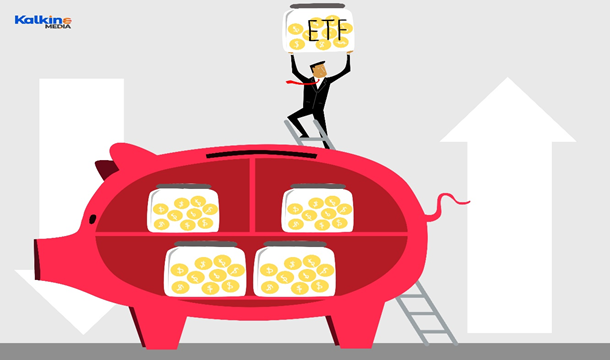
Copyright © 2021 Kalkine Media
An inverse ETF makes gains when the performance of the index it is tracking dips. For example, if the TSX Composite Index dips, an inverse ETF will make gains. It can be built by compiling derivatives like futures contracts and swaps on indexes.
An inverse ETF is also called a 'Bear ETF' because a market is said to be bearish when prices are declining, and this ETF makes its gains on the back of this dip.
How does an inverse ETF work?
Generally, an inverse ETF invests in futures contracts, an agreement of two concerned parties to buy or sell an asset or security at a fixed time and a predetermined price. The ETF manager places a bet that the market will dip, and supposedly if it dips by two per cent, then the ETF will rise by two per cent.
Future contracts are traded daily, so an inverse ETF is always likely a short-term investment.
The above constitutes a preliminary view and any interest in stocks should be evaluated further from investment point of view.
