
 AUS
AUS
 NZ
NZ
 UK
UK
 CA
CA
 USA
USA
 IND
IND






Highlights
Coverage of a metals and mining company operating across international jurisdictions
Overview of operational focus, assets, and sector positioning within Canadian markets
Contextual reference to broader Canadian equity benchmarks and market environment
The metals and mining sector forms a foundational part of the Canadian equity ecosystem, encompassing companies engaged in exploration, development, and production of mineral resources across domestic and international regions. Within this sector, Steppe Gold Ltd. (STPGF) operates as a precious metals company with activities extending beyond Canada, reflecting the global nature of resource development. The company’s presence aligns with broader movements observed across the Canadian market, where resource-linked businesses continue to attract attention due to their established role in industrial supply chains and infrastructure development.
Company Background and Sector Positioning
Steppe Gold Ltd. operates in the metals and mining segment, with a focus on precious metals such as gold and related mineral assets. The company maintains operational interests in regions known for established mining frameworks, including Mongolia and Peru. These jurisdictions have long-standing histories of mineral extraction, supported by geological endowments and regulatory structures designed to manage exploration and production activities.
Within the Canadian market, companies in the mining sector are commonly listed across senior and venture exchanges, contributing to the diversity of issuers represented in the broader equity landscape. Steppe Gold’s inclusion within this environment reflects the sector’s international orientation, where Canadian-listed entities often manage projects located across multiple continents. This structure allows such companies to draw on Canadian capital markets while engaging in resource development abroad.
The metals and mining sector is traditionally associated with operational complexity, encompassing exploration programs, feasibility assessments, mine construction, and ongoing production. Steppe Gold’s activities are positioned within this continuum, with an emphasis on advancing and operating precious metal projects. The company’s corporate structure and reporting practices align with standards expected of Canadian-listed mining entities, ensuring transparency in operational updates and financial disclosures.
Operational Footprint and Asset Focus
The company’s operational footprint spans multiple geographic regions, primarily centered on precious metal assets. Mongolia represents a significant area of activity, recognized globally for its mineral-rich geology and established mining corridors. Peru, another focal region, is similarly regarded for its extensive mining heritage and contribution to global metal supply.
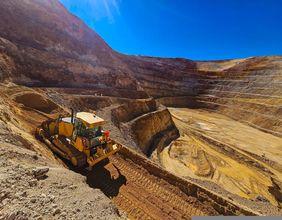
Operations in these regions typically involve a combination of open-pit and conventional mining methodologies, depending on ore characteristics and project design. While specific technical details vary by site, the overarching objective remains consistent: the extraction and processing of mineralized material to produce saleable metals. This operational focus situates Steppe Gold among peers that emphasize production alongside project development, rather than remaining solely exploration-oriented.
Revenue generation within the metals and mining sector is closely tied to production output and operational efficiency. Companies such as Steppe Gold derive income through the sale of produced metals, which are then integrated into global commodity markets. These markets function independently of any single issuer, with pricing mechanisms established through international exchanges and commercial transactions.
In the context of Canadian-listed mining companies, international operations are commonplace. This global reach underscores the interconnected nature of the sector, where expertise, capital, and technical resources flow across borders. Steppe Gold’s asset base reflects this dynamic, positioning the company within a network of globally active mining enterprises listed in Canada.
Financial Structure and Corporate Characteristics
The financial structure of a mining company encompasses capital allocation toward exploration, development, and operational activities. Steppe Gold’s corporate profile reflects a balance between maintaining active operations and supporting ongoing project advancement. Financial health assessments published by independent platforms often evaluate such companies based on balance sheet metrics, cash flow characteristics, and operational sustainability, offering a standardized view of corporate standing without implying future outcomes.
Within Canadian markets, mining companies with established operations often attract attention due to their tangible asset base and ongoing revenue streams. Steppe Gold’s classification within this group highlights its progression beyond early-stage exploration. The company’s reporting framework adheres to regulatory requirements applicable to Canadian issuers, including periodic disclosures and audited financial statements.
Corporate governance is another defining aspect of publicly listed mining companies. Boards and management teams are typically composed of individuals with industry experience spanning geology, engineering, finance, and project management. This governance structure supports oversight of complex operations and alignment with shareholder interests, while maintaining compliance with exchange regulations.
The presence of mining companies with sizable market valuations contributes to the overall composition of Canadian equity benchmarks. These entities form part of the broader narrative surrounding resource development and capital markets in Canada, intersecting with indices that track sectoral and market-wide movements.
Canadian Market Context and Index References
The Canadian equity market is characterized by a strong representation of resource-focused companies, reflecting the country’s natural endowments and historical development. Indices tracking Canadian equities often feature significant weightings from the metals and mining sector, alongside financial services and energy. References to the provide context for how such sectors contribute to overall market activity without attributing specific movements to individual issuers.
Market participants frequently observe index-level information to understand broader trends across Canadian equities. These indices aggregate the performance of listed companies, offering a snapshot of market conditions influenced by macroeconomic factors, commodity markets, and corporate developments. Mining companies like Steppe Gold form part of this aggregated view, representing the resource segment within the index composition.
The relationship between individual companies and market indices is structural rather than directional. Inclusion within an index reflects eligibility criteria such as listing status and market representation, rather than any implication regarding future performance. As such, references to Canadian indices serve to situate companies within the broader market framework, highlighting their role in the national equity ecosystem.
Within this environment, sector-focused discussions often emphasize operational presence, asset diversity, and regulatory alignment. Steppe Gold’s positioning within the Canadian-listed mining cohort illustrates how internationally active resource companies integrate into domestic capital markets while operating across global jurisdictions.
