
 AUS
AUS
 NZ
NZ
 UK
UK
 CA
CA
 USA
USA
 IND
IND






Highlights
-
Energy stocks support upward momentum on the s&p tsx composite index.
-
Financial and materials sectors play a pivotal role in daily fluctuations.
-
Canadian market trends show divergence from U.S. counterparts.
The Canadian equity market consists of several benchmarks representing various industries and market caps. Prominently, the S&P/TSX Composite Index (TSE:TXCX) functions as the principal indicator of Canadian equities. It includes key sectors such as energy, financials, materials, industrials, and technology. This comprehensive index reflects the performance of a diversified group of domestic companies. In contrast with other major global indices, the S&P/TSX Composite often tracks sector-specific momentum, especially within oil and commodity-related segments.
s&p tsx composite Index Sees Gains Amid Oil Price Support
The s&p tsx composite posted gains in recent sessions, driven by advances in the energy sector. Oil-linked equities registered upward movement as crude prices rebounded. This translated into positive sentiment across integrated energy firms and exploration companies listed on the exchange.
While Canadian equities advanced, U.S. indices experienced mixed results. This divergence highlights a distinctive market behavior where commodity pricing impacts domestic equities more significantly. The performance of upstream and downstream energy companies remains critical to broader index activity.
Financial Stocks Influence Broader Market Fluctuations
The financial sector holds a substantial weighting in the TSX index and frequently drives aggregate movements. Recent sessions showed relatively neutral activity in banks and insurance firms. However, steady earnings and margin adjustments contribute to stability within this category.
Financial stocks listed under (TSE:RY), (TSE:TD), and (TSE:BNS) exhibit sensitivity to interest rate shifts. Despite unchanged rates from the central bank, market expectations around monetary policy continue to affect share price behavior. While fluctuations remain moderate, capital deployment trends and loan growth metrics influence short-term changes in valuation.
Materials and Mining Stocks Show Volatility
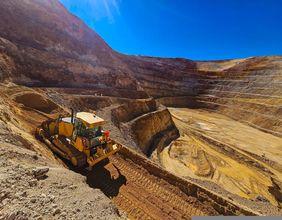
The materials sector displayed mixed signals across gold, base metals, and fertilizers. Companies involved in exploration and production of natural resources saw price swings due to global demand shifts. The index reflects the performance of firms such as (TSE:ABX) and (TSE:TECK), both of which are responsive to commodity pricing and geopolitical factors.
Uncertainty in international trade dynamics, coupled with shifting supply chain costs, created price pressure across metals. While demand remains supported in some sub-sectors, overall volatility continues to define the trajectory of TSX materials-related listings.
Technology and Industrials Trade Flat to Lower
Technology firms contributed to subdued index activity, with mixed earnings results limiting upward momentum. Canadian-listed software and hardware companies showed marginal declines following cautious forward outlooks and flat product demand.
Industrial stocks traded with minimal change, particularly in logistics, construction, and transportation. Supply chain normalization and infrastructure planning supported baseline performance, but weak international demand capped growth. Activity in names such as (TSE:CNR) and (TSE:CP) helped anchor the sector’s position on the broader index.
Interest Rate Decision Maintains Market Stability
The Bank of Canada’s latest announcement confirmed the key interest rate holding steady at 2.75 per cent. This development maintained relative equilibrium across interest-sensitive sectors such as real estate, financials, and utilities. Canadian market participants responded with muted movement, reflecting confidence in the ongoing monetary stance.
Expectations around future adjustments remain part of the narrative, but current levels support short-term equilibrium. The consistent rate path contributes to less pronounced volatility, especially within sectors exposed to borrowing costs and capital expenditure trends.
FAQs: Canadian Dividend Stocks and Yield-Focused Topics
-
What are the major dividend-paying sectors in the TSX?
Energy, financials, and utilities are among the top dividend-paying sectors on the TSX. -
Do TSX energy stocks typically offer high yields?
Yes, many TSX-listed energy companies maintain dividend payouts supported by strong cash flows. -
How often are dividends paid by Canadian companies?
Most Canadian dividend stocks distribute payouts quarterly, though some follow a monthly schedule. -
Which TSX index tracks high-yield stocks?
The S&P/TSX Canadian Dividend Aristocrats Index includes companies with a consistent dividend growth history. -
Do financial stocks on the TSX maintain stable dividends?
Yes, large Canadian banks have historically maintained stable dividend policies even in volatile markets.
