
 AUS
AUS
 NZ
NZ
 UK
UK
 CA
CA
 USA
USA
 IND
IND






Highlights
Canada’s gold segment continues to serve as a foundation for national resource activity, shaped by deep geological structures and multi-regional operations.
Established producers oversee extraction systems, on-site facilities, and exploration schedules across several jurisdictions in North America and abroad.
The gold landscape supports engineering advances, regional development, and extensive industrial networks linked to the broader Canadian market.
Overview of major Canadian gold miners on the TSX, outlining mining networks, geological settings, operational structures, and the broader role of gold within national markets.
The Canadian gold environment holds a major position within the mining sphere, reinforced by enterprises such as Agnico Eagle Mines (TSX:AEM), Barrick Gold Corporation (TSX:ABX), and Yamana Gold (TSX:YRI). These organisations operate within a sector that remains prominently represented on the tsx index and tsx index today, reflecting the long-standing integration of mining within the Canadian economic structure. Extraction networks across the country span northern territories, western provinces, and international mineral belts, forming one of the most extensive resource frameworks in North America.
Across Canada, geological systems contain multiple formations shaped by volcanic activity, tectonic patterns, and ancient greenstone belts. These structures form the basis of many long-operating gold districts that continue to attract engineering teams, geoscience specialists, and equipment manufacturers. Within these districts, enterprises maintain a mix of underground tunnels, open-pit layouts, mill complexes, waste-management facilities, and haulage systems designed to support sustained extraction.
Over several decades, strategic integration of technology has enhanced operational safety and efficiency. Digital mapping tools refine orebody interpretation, automated drilling improves precision, and monitoring platforms support ventilation adjustments and equipment scheduling. Processing facilities also incorporate complex metallurgical circuits capable of managing ore variability across multi-zone deposits.
Environmental frameworks shape nearly every phase of mining activity. In numerous Canadian jurisdictions, enterprises coordinate reclamation models, water-treatment systems, and wildlife-protection measures. Many projects operate under regional oversight requirements that promote transparency and reduce ecological impact. These standards influence tailings design, vegetation planning, and land rehabilitation that begins early in project cycles and continues after production ends.
Supply networks supporting Canadian mining include transport contractors, steel manufacturers, survey teams, explosives specialists, engineering consultants, and fabrication centres. This ecosystem forms one of the largest industrial clusters in the country, enabling continuous innovation in geoscience, metallurgy, and resource logistics.
Within this framework, long-established producers contribute significantly to the structure and recognition of the gold segment. Their operations across Canada and international regions highlight the diversity of extraction environments, from Arctic climates to mountainous terrain and tropical geological belts.
Agnico Eagle Mines and Its Extensive Canadian and International Footprint
Agnico Eagle Mines (TSX:AEM) maintains a long history within Canada’s gold ecosystem, overseeing a broad portfolio of extraction sites, development projects, and milling facilities. Among the most notable aspects of the organisation is its strong presence in northern regions, including territories such as Nunavut, where remote climates require advanced logistical planning. Winter-specific operations often involve specialised transport routes, insulated equipment layouts, and power systems capable of functioning in extremely low temperatures.
In Quebec, long-standing projects operate within mineral belts known for complex geological layering. These regions often contain narrow high-grade veins, wider disseminated zones, and deep structures that demand detailed geological modelling. Underground networks rely on engineered supports, ventilation circuits, and backfill strategies suited to orebody geometry.
Processing teams within Agnico Eagle manage multi-stage circuits including crushing, grinding, flotation, and leaching depending on ore characteristics. Facilities are frequently built with expansion potential, allowing mill throughput to adjust as additional zones become active. Metallurgical specialists coordinate testing programs to maintain recovery consistency across changing ore blends.
A significant characteristic of Agnico Eagle’s operations is long-term collaboration with northern communities. Training initiatives, employment pathways, and service agreements support regional development while aligning operations with cultural expectations. This cooperative framework extends across multiple regions, emphasising communication, skill development, and shared planning.
Environmental planning remains central to the company’s development strategy. Tailings storage facilities incorporate engineered liners, containment structures, and geotechnical monitoring. Water systems utilise filtration units, recycling frameworks, and runoff-control structures aligned with regional standards. Rehabilitation models include soil placement, native species planting, and long-term ecological observation.
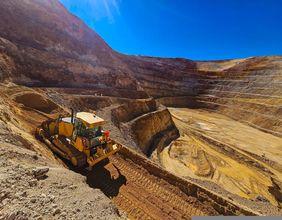
International operations managed by Agnico Eagle span several geological environments, each requiring distinct engineering methods. Open-pit layouts prioritise slope control and material flow sequencing, while underground mines rely on stoping systems, ore-pass networks, and shaft infrastructure. Coordination among cross-border engineering teams allows for continuous adaptation of site procedures and technology adoption.
With its combination of northern operations, long-lived mines, processing hubs, and cross-regional collaboration, Agnico Eagle Mines represents a major pillar of Canada’s gold landscape.
Barrick Gold Corporation and Its Multi-Regional Mining Network
Barrick Gold Corporation (TSX:ABX) operates within one of the most globally dispersed mining networks in the world, sustaining an extensive presence across Africa, the Middle East, the Americas, and other regions. The company’s Canadian corporate roots remain strongly connected to national mining identity, while its project portfolio spans a wide variety of geological systems.
International mines under Barrick’s oversight include both open-pit and underground structures. Open-pit regions often feature broad ore zones requiring heavy-equipment fleets, wide haul roads, and bench-sequencing designs. Underground environments incorporate deep shafts, long-hole stoping layouts, and reinforcement systems designed for rock-mass stability.
Processing technology plays a major role in Barrick’s operational identity. Many international sites contain sulphide-rich ore requiring complex metallurgical handling. Plants may include pressure-oxidation units, autoclaves, flotation circuits, and carbon-in-pulp systems. Each facility integrates sampling laboratories and metallurgical test units to evaluate mineral composition and refine circuit settings.
Barrick places strong emphasis on regional collaboration. Across multiple countries, operations work with government partners, local suppliers, technical colleges, and community groups to support workforce development and infrastructure planning. Local procurement programs encourage on-site economic participation, while training initiatives enhance technical capacity.
Land and environmental management remain integral elements of Barrick’s global strategy. Tailings systems incorporate monitoring wells, engineered dams, and water-management channels. Wildland preservation programs, heritage-site protections, and ecological studies contribute to broader oversight obligations.
Barrick’s international copper assets further broaden the organisational footprint. Copper extraction often involves large-scale concentrator plants, pipeline systems, and multi-stage ore-handling infrastructure. These components contribute to the organisation’s diversified global presence.
With its extensive multinational operations, Barrick Gold Corporation continues to demonstrate how long-standing mining groups coordinate cross-border engineering, environmental systems, and organisational planning across varied geological settings.
