
 AUS
AUS
 NZ
NZ
 UK
UK
 CA
CA
 USA
USA
 IND
IND

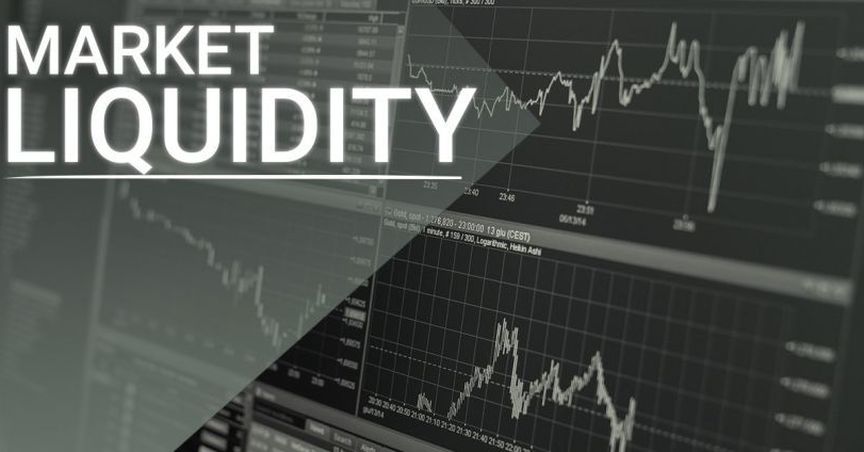


Market refers to a platform that enables buyers and sellers to conduct a transaction for a specific good or service for facilitating an exchange between them. In equity parlance, stocks are being transacted.
Liquidity refers to the level at which an asset or security can be easily traded in the market without having a significant impact on the price of that asset.
Market liquidity refers to the degree to which the market allows assets to be bought and sold at stable prices. Cash being the most liquid asset followed by stock, receivables, etc.; real estate, fine art, and collectibles are all highly illiquid.
A liquid market has a mild trade-off meaning selling the stock or security quickly will not reduce the price by a huge amount but in a relatively illiquid market, selling the stock or security fast will lead to a cut down in the price, which may sometimes be huge in terms of impact. Liquidity is measured based on three parameters:
- the trade volume relative to shares outstanding,
- the bid-ask spread, or
- transactions costs of trading
Example:
If a person is willing to buy a security A (letâs say) that costs $100, cash is the asset with which he or she can easily obtain the security. There is a high volume of buyers and sellers available in the market for the sale/ purchase of the security making it a highly liquid asset. But if that person does not have cash but he has another asset (letâs say a piece of rare art) with a low volume of market participants increasing the difference in the price quoted by the buyer and seller (also referred to spread), it will make the piece of art a less liquid asset. The cost is estimated to be around $90 and is expected by the person to appreciate to $100 soon. She or he will have to sell that piece of art first and then use the cash received from selling that asset to purchase the security A. It may be fine for him or her if there is no time restriction and the person can wait for some time to buy security A, but it may become difficult for the person if he or she doesnât have time (if he or she anticipates the price of security A to rising to $120-$130 within a few days). He or she might have to struggle to find the buyer for the art at the current price of $90, subject to available market for that art, which may take a lot of time.
The above example depicts the market of that piece of art to be illiquid whereas the market of the security A to be highly liquid. If there is a high volume of trade not being dominated by selling in the market, the offer price, i.e., bid price will be reasonably close to the selling price, i.e., ask price. In this case, the investors will not have to give up a considerable amount of profits for a quick sale. But if the spread between the bid and ask prices increases, the market becomes illiquid, the investor might have to suffer a huge loss. Markets for real estate are highly illiquid because of low volumes and high prices leading to higher spread.
Thus, the market liquidity scenario varies with type of asset at question and sets the premise for transactions accordingly.
Disclaimer
This website is a service of Kalkine Media Pty. Ltd. A.C.N. 629 651 672. The website has been prepared for informational purposes only and is not intended to be used as a complete source of information on any particular company. Kalkine Media does not in any way endorse or recommend individuals, products or services that may be discussed on this site. Our publications are NOT a solicitation or recommendation to buy, sell or hold. We are neither licensed nor qualified to provide investment advice.
