
 AUS
AUS
 NZ
NZ
 UK
UK
 CA
CA
 USA
USA
 IND
IND







About Mutual Funds/ Managed Funds:
Mutual Funds, which refer to one type of managed funds, refers to the pool of money collected from individual investors. This pool of money is then allocated by the professional fund managers into various asset classes like shares, bonds, property as well as infrastructure assets.
Those investors who do not have knowledge about the market or the stocks in which he/she should invest in order to derive a better returns in the future, opt for mutual funds. For such investors, a mutual fund is the best option as it is relatively easier to invest in such an asset class. Mutual fund investment provides investors with an entry to an array of underlying assets & leads them to diversify their investments across multiple asset classes & market sectors.
How Mutual Fund works?
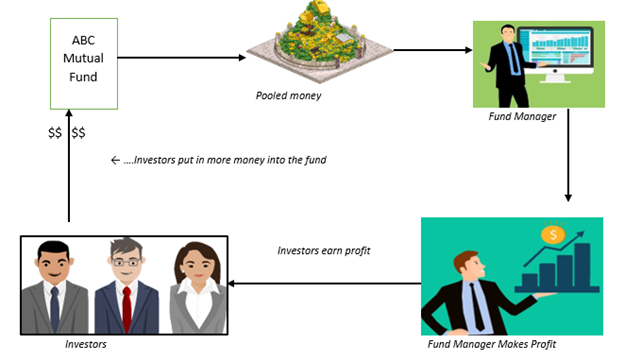
Let’s consider that you are interested in investing in a mutual fund ABC. There are various other investors in the market, just like you who are also interested in investing in the same fund. Now the money accumulated from various investors in the market, known as pooled resources, is assigned to the fund manager who buys or sells assets on behalf of investors according to the investment mandate of that particular fund.
Type of Mutual Funds/ Managed funds:
In Australia, there are two types of mutual funds/managed funds:
- Single asset managed funds
- Mixed asset or multi-sector managed funds
Let’s discuss them separately:
Single asset funds:
Single asset managed funds are those managed funds that invest in single asset class like shares, property or bonds. Funds under this category are:
- Cash funds: Under cash funds, the pooled amount is invested in a very low-risk, short-term investments. These may also consist of short-term money market deposits, bank bills & short-term government bonds.
- Fixed interest or bond funds: The amount is generally invested in low-risk investments and may also include government bonds, bank bills, or mortgage-backed securities. Some funds under this category include investment in corporate bonds and can have a greater risk.
- Mortgage funds: Under mortgage funds, the pooled amount is invested in property loans. Some funds under this category are of high risk and the level of risk is based on the class of borrowers as well as the objective of the mortgage loan.
- Property funds: As the name suggests, under property funds the amount is invested in commercial property, residential property or growth property. In case an investor wants to withdraw the amount from the fund in a short notice, then it may not be that easy. Further, the investor is not assured of a ballpark percentage interest or rate of return.
- Share (equity) funds: Share funds invest in listed organisations in Australia, abroad or both and have the potential for providing higher returns to investors. But at the same time, this fund also has a higher risk.
- Alternative investment funds: These include hedge funds & those funds which invest in private equity, commodities as well as derivatives. These funds inherently possess higher degree of risks. Thus, it is generally advised to take expert financial guidance before investing in these funds.
Mixed asset or multi-sector managed funds
Mixed asset or multi-sector managed funds are those funds that invest in a range of investments and are labelled depending on the types of investments that make up the greater part of the fund portfolio. These are:
- Growth Funds: In growth funds, 85% of the fund is invested in stocks and property and the remaining 15% in cash or fixed interest-bearing assets.
- Balanced Funds: In Balanced funds, 70% of the fund is invested in stocks and property and the remaining in cash or fixed interest investments.
- Conservative Funds: In conservative funds, 30% of the fund is invested in stocks and property and the remaining 70% in cash or fixed interest assets.
- Cash: In cash, 100% of the fund is invested in cash or cash equivalents, which comprise of short-term money market deposits, government bonds as well as bank bills.
After knowing about various types of managed funds, the next consideration which comes into the picture is how to invest in them?
Below are six golden rules that will help an investor make an informed decision about investing in mutual funds:
- Preparation of an investment plan. An investor, before making an investment, should set his/her financial goals, the duration of investment and the degree of risk which he/she is comfortable with.
- Do your homework on various managed funds like unlisted managed funds, listed investment companies, exchange traded funds (ETF) and hedge funds.
- It’s very important to read about the nature of the product, investment mandate and other disclosures regarding the fund as it provides all information about the fund that is crucial for an investor to know and compare it with equivalent funds available in the market.
- Compare the performance of the managed funds short-listed depending on their long-term performance, risks of the funds, fund management fees and entry/exit loads in order to derive a clear picture about the potential returns from the fund.
- Distribute your fund across various fund managers and fund types which invest in different asset classes. This enables investors to diversify their investments and reduce risks specific to any asset class.
- In case of any confusion, it is always better to take advice from any licensed financial advisor.
