
 AUS
AUS
 NZ
NZ
 UK
UK
 CA
CA
 USA
USA
 IND
IND


.jpg)


Highlights
- International activity reaches a milestone.
- Both operating divisions regain momentum.
- Valuation expectations remain under debate.
Stronger quarterly execution, expanding international activity, and balanced divisional growth support renewed valuation discussion, while industry cyclicality, project timing, and regional uncertainty remain central considerations for future performance.
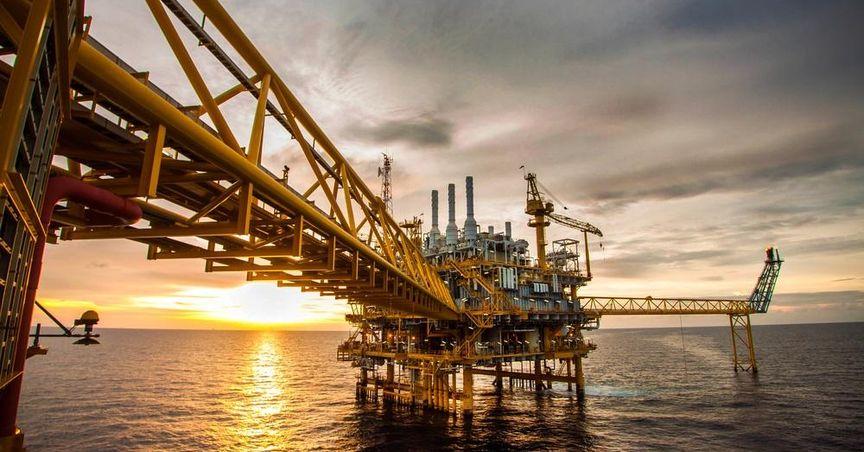
Halliburton (NYSE:HAL) has returned to market focus after stronger quarterly earnings highlighted improving operational momentum across its global business. The oilfield services specialist also remains an important constituent of the NYSE Composite, where attention is shifting toward whether durable international demand and disciplined execution can support a broader valuation reassessment. Although recent market momentum has cooled, the latest financial update suggests that the underlying business may be progressing more steadily than the share-price movement implies.
Quarterly Earnings Exceed Expectations
Halliburton is a global provider of drilling, evaluation, completion, production, and reservoir management services for oil and natural gas producers. Its latest quarterly performance exceeded market expectations as both major operating divisions delivered sequential revenue improvement.
The result matters because oilfield service companies depend heavily on customer spending, drilling activity, project timing, and commodity conditions. Improvement across both divisions suggests that the quarter was not supported by a single product line or temporary contract. Instead, activity strengthened across a wider part of the companys service portfolio.
This broader operating progress may provide greater resilience if activity differs across geographic markets. It also signals that customers continue prioritizing technologies and services capable of improving well productivity, lowering development costs, and supporting more efficient energy production.
International Operations Reach New Heights
International revenue reached its strongest second-quarter level in more than a decade, reinforcing the importance of overseas markets within Halliburtons business model. Energy producers across the Middle East, Latin America, Africa, and parts of Asia continue developing large projects that often require advanced drilling systems, completion tools, digital capabilities, and long-term technical support.
International projects generally involve longer planning cycles than many shorter-duration land programs. That can provide greater revenue visibility when major developments advance as scheduled. Halliburtons global footprint, technical expertise, and established customer relationships position the company to participate in these complex programs.
The international milestone also reduces the companys dependence on any single operating region. Greater geographic balance can help offset softer activity in one market with stronger project execution elsewhere, although political changes, contract delays, and local operating conditions remain important uncertainties.
Both Divisions Build Momentum
Halliburton operates through two central divisions covering completion and production services alongside drilling and evaluation services. Sequential improvement across both businesses points to stronger demand for the companys integrated capabilities.
Completion and production services support well stimulation, cementing, intervention, and production enhancement. Drilling and evaluation services provide drilling systems, wireline tools, testing solutions, project management, and software designed to improve decision-making throughout the life of a reservoir.
Growth across these divisions indicates that customers are spending across multiple stages of field development. This creates opportunities for Halliburton to deepen commercial relationships by combining equipment, engineering expertise, digital tools, and field services.
The companys role as an energy-services provider also connects its performance to broader infrastructure development. Large oil and natural gas projects require extensive logistics, processing systems, pipelines, and supporting facilities, giving Halliburton indirect exposure to the Infra real estate theme without changing its core operational identity.
Valuation Gap Draws Attention
The latest earnings have renewed discussion around whether Halliburtons market valuation fully reflects its earnings capacity, global positioning, and cash-generation profile. One valuation approach indicates that the current market level remains meaningfully below an estimated fair value.
Such estimates depend on assumptions regarding future revenue growth, profitability, capital spending, cash flow, and long-term energy stock demand. A favorable estimate may therefore reflect expectations that international activity will remain firm while operating discipline supports margins.
However, valuation models should not be viewed as fixed outcomes. Changes in customer budgets, project schedules, commodity markets, inflation, or geopolitical conditions can significantly affect future results. The apparent valuation gap is therefore best understood as evidence of differing expectations rather than a guaranteed market adjustment.
Risks Remain Closely Watched
Despite the encouraging quarterly performance, Halliburton continues operating in a cyclical industry. Exploration and production companies can revise spending plans rapidly when energy prices weaken or economic uncertainty increases.
North American activity may also remain uneven as producers emphasize capital discipline and operational efficiency. International projects can provide stability, but they may face permitting delays, political disruption, payment risks, and complicated supply chains.
Competition represents another consideration. Oilfield service providers must continually improve technology, reduce costs, and demonstrate measurable value to customers. Halliburtons ability to protect profitability while funding innovation will remain central to the longer-term outlook.
Earnings Strength Shapes Outlook
Halliburton (NYSE:HAL) latest results present a business supported by improving divisional activity, record-setting international performance, and broad demand for advanced energy services. These strengths offer a constructive operating foundation even as recent market momentum remains mixed.
The next phase will depend on whether the company can sustain international progress, navigate softer regional conditions, protect margins, and convert project activity into dependable cash flow. Successful execution across those priorities could strengthen the case for a valuation reassessment.
For now, the earnings update suggests that operational momentum remains stronger than recent market movements alone might indicate. That contrast places Halliburton firmly within the ongoing debate over how global energy-service businesses should be valued during an evolving industry cycle.
