
 AUS
AUS
 NZ
NZ
 UK
UK
 CA
CA
 USA
USA
 IND
IND


_02_06_2025_07_05_23_538703.jpg)


Summary
- There are more than 2100 Exchange Traded Funds (ETF) in market.
- ETFs present the combination of mutual fund and stocks.
- There are active and passive ETFs with different expense ratio.
Where to invest money in the stock market? That’s a big question that every beginner in the market faces. With limited knowledge of the field, mutual funds come as a safe choice, but the easy access to information nowadays also makes stocks an attractive investment destination. However, one cannot ignore the risks involved in the stock market even with the readily available information.
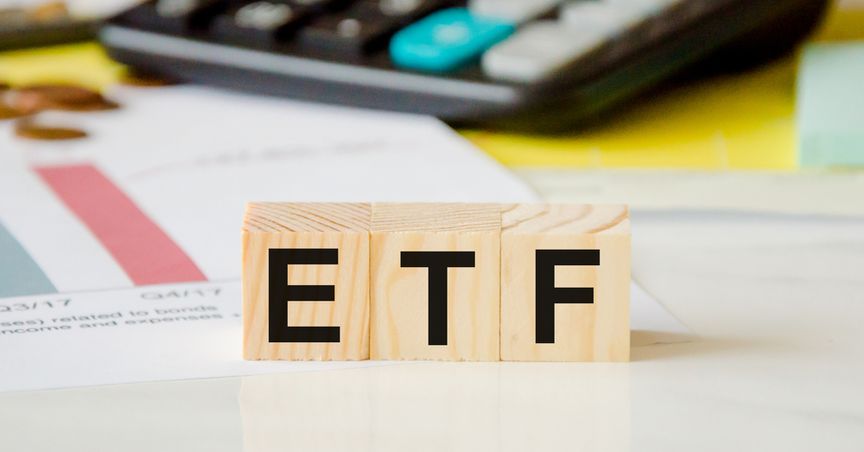
When mutual funds and stocks combine in the stock market, they create an Exchange Traded Fund or ETF. ETFs can easily be confused with mutual funds because it is an old product in new packaging. Mutual funds have been in existence in the US market for decades. However, ETFs are comparatively new. ETF and Mutual funds look similar, but they offer different features and benefits.

Source: Pixabay.
Also Read: 5 hot marijuana stocks to watch
Where mutual funds have a higher expense ratio, ETFs charge a lower fee for investing money and sometimes with no commission. In addition, while mutual funds fix their units price at the end of the business day, ETFs offer whole-day trading, which means price changes throughout the day.
There are more than 2100 ETFs in the market.
These have variety now and are attracting investors and eventually picking up the market. It is comparatively a safe choice for a beginner.
What is ETF?
An exchange-traded fund (ETF) is an investment product in line with Mutual funds. As the name suggests, it is traded on the stock exchange. ETF can be described as a basket of stocks, commodities, or other securities. ETF is a pool of securities traded like stocks on the stock exchange and mostly have a standard to compete with.
Also Read: Top 7 battery stocks to explore
How do they work?
ETF issuer evaluates the universe of stocks and other securities, builds a basket of them, and applies on the stock exchange with a unique ticker. Thus, an investor can trade ETFs just like stocks. ETFs can be traded on intraday mode too.
Is it a good investment for beginners?
When a beginner wants to invest money in the stock market, ETF could be an appropriate choice. There are many reasons for choosing an ETF over stock for beginners. These are managed actively or passively by the issuer. When managed passively, they track against any stock indices, such as the S&P 500 index. For active ETF management, there are fund managers who work with an aim to get ETF to perform better than the market.
Also Read: Planet Labs (PL): All you need to know about $2.8B SPAC deal

Source: Pixabay.
Also Read: What are top 10 technology stocks?
Benefits of investing in ETFs
The first benefit of ETF is that it is by nature diversified even when it is index-based or sector-based, or of any other kind.
The low fee is another benefit of ETFs. ETFs expense ratio is less in comparison with mutual funds. These are bought and sold in the exchange just like stocks and sometimes have no commission for trading.
ETFs are more liquid when compared to mutual funds. Mutual funds are bought for a fixed amount of money, and units come in fractions. In ETFs, units are bought, and money is paid infractions. In addition, while mutual fund transaction is executed at a price determined at the end of the day, ETFs are traded the whole day at different prices like stocks.
Also Read: Top 10 high-yield dividend stocks under US$50
ETF could be active or passive. It is a choice of the investor to invest in index ETFs which are passive managed, which means a particular ETF will have all the stocks existing in a stock index such as S&P 500 or popular Dow Jones Industrial Average. On the other hand, active ETFs are managed by portfolio managers using a hands-on approach like mutual funds.
Though an investor gets the share from the ETF basket and not directly holds the company's stock, the dividend is given to the investor with an option to withdraw in cash or reinvest.
How to invest?
For making an ETF investment, investors need to open a trading account and choose one ETF as per the investment goal and make the investment.
Final words
It is hard to find one suitable stock to put all the money in it. Simultaneously it is precarious too.
An ETF, a small investor with even US$ 100, can invest money and enjoy the benefit of a diversified portfolio, which is impossible to achieve if invests separately in stocks.
Though ETF is a comparatively less risky mode of investment in the stock market, people are either unaware of its working or prefer mutual funds because of comfort with the latter, the old entrant. However, it is imperative to say that on the one hand, ETF has all the diversification features of mutual funds and at the same time provides ease of trading in a click, just like stocks.
Also Read: 10 rising mid-cap stocks to watch in July
With time, ETFs are expanding their segments range and are present in variety now. Besides stocks, there are commodities, bonds, currencies, real estate, sectoral, and many other ETFs available for the investors to choose from. As in ETF, there are many, and not one size fits all, so an investor should evaluate wisely before investing.
Please note: The above constitutes a preliminary view, and any interest in stocks/cryptocurrencies should be evaluated further from an investment point of view.
