
 AUS
AUS
 NZ
NZ
 UK
UK
 CA
CA
 USA
USA
 IND
IND




Summary
- Many of the companies are concentrating on procuring or investing in renewable energy, such as wind and solar power, while others emphasis on efficiently producing their goods and services.
- Unilever has recently been in the limelight after the company pledged to drop fossil fuels from its cleaning products by 2030 to reduce carbon emissions
- The consumer goods giant would be investing €1bn (£890 million, $1.2 billion) in the effort to remove fossil fuels from its cleaning products
While national leaders have been slow to follow up on reducing greenhouse gas emissions that warm the atmosphere and contribute to climate change, numerous organisations have made genuine commitments to address their own activities. Companies in various sectors such as the oil and gas, electricity generation, automotive, and financial sectors are demonstrating that acting on climate is good for the earth and smart business strategy.
Each of these diverse businesses has focused on executing strategies to reduce emissions in its operations or supply chains. Many of them concentrate on procuring or investing in renewable energy, such as wind and solar power, while others emphasis on efficiently producing their goods and services. Many companies have set emission reduction targets, most targeting between 2020 or 2030, but several with mid-century goals. For instance, Microsoft has pledged to reduce operational emissions by 75 per cent by 2030 but has been operating as 100 per cent carbon neutral since 2012. Microsoft is decreasing its emissions by putting an internal price on carbon and reinvesting those dollars into clean power, energy efficiency projects, and carbon offset projects.
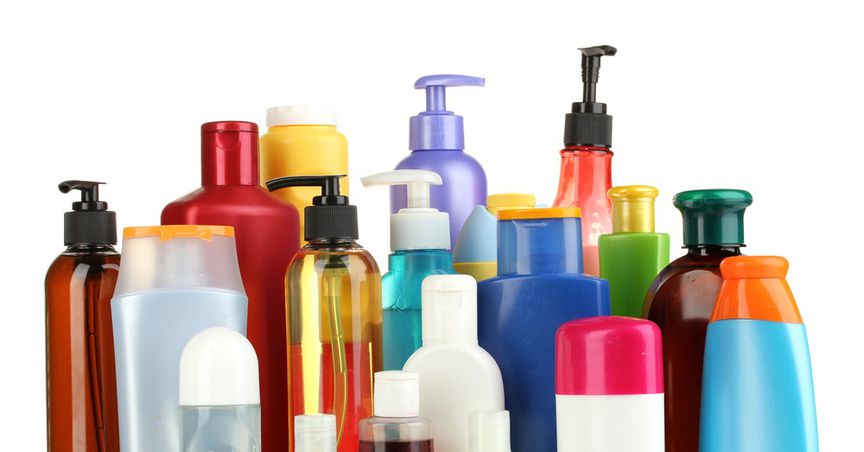
Unilever Plc has recently been in the limelight after the company pledged to drop fossil fuels from its cleaning products by 2030 to reduce carbon emissions. The consumer goods giant said it would be investing €1bn (£890 million, $1.2 billion) in the effort. The company would be replacing petrochemicals contained in its products with ingredients made from plants, and marine sources like algae. The best-selling cleaning brands of the company include Omo, Cif, Sunlight and Domestos. It has been reported by the company that the chemicals used in its cleaning and laundry products make up 46 per cent of its overall carbon footprint. Replacing them with more sustainable ingredients will help in reducing that footprint by up to 20 per cent.
The announcement was made after the home care products produced by the company saw a surge in demand, in the middle of the global pandemic, which prompted more consumers in buying cleaning products as they spend more time indoors.
According to Peter Ter Kulve, Unilever's president of its home care division, the company has witnessed an unprecedented demand for the cleaning products in recent months, and is incredibly proud to play their part, helping in keeping people safe in the fight against Covid-19. He also added that the company cannot be distracted from the environmental crises that our world, and our home, is facing, i.e., pollution, destruction of natural habitats, and climate emergency. It is the home to all, and everyone has a responsibility to protect it.
Financial Update of Unilever
As per the half-yearly results released on 23 July 2020, the Company demonstrated the resilience of the business as underlying operating profit (excluding currency) increased 3.8 per cent year-on-year, despite the slight decrease in turnover. Subsequently, underlying earnings per share shown growth of 6.4 per cent year-on-year, and it maintained a stable quarterly dividend of €0.4104 per share. During the period, the Company completed the acquisition of the Horlicks brand from GSK, which would strengthen the nutrition business. It also announced plans to unify the Group legal structure under a single parent company.
During the first half of 2020, Unilever PLC has shown continuous improvement in operational excellence and agility to adapt the unprecedented fluctuations in demand. Moreover, the unification of the Group’s legal structure will strengthen the strategic future. For the remainder of FY20, the Company will continue to deliver cash, and absolute profit with volume led competitive growth to maximise the shareholder value.
Stock Performance
Unilever PLC (LON:ULVR) stock traded at GBX 4,532.00 on 2 September 2020, at 3:41 PM, up by 2.40 per cent from its previous close of GBX 4,426.00. It was having a market capitalisation (Mcap) of £51,719.17 million. The volume traded at the time of reporting was 681,272. The company recorded a positive return on the price of 1.82 per cent on a YTD (Year to Date) basis.
Steps to Reduce Emissions
After an organisation or association's ozone harming substance radiating exercises have been recognised and determined, the subsequent stage is to implement reduction measures. Simple initiatives can really have a major effect without essentially requiring a big investment and many actions actually of advantage to the primary concern. Some steps that can be helpful for everyone in reducing the carbon emission are:
Energy
- Having an energy consumption audit
- Committing to a renewable energy target
Transport
- Allowing remote working
- Subsidising public transportation
- Promoting the use of video conferencing instead of business trips
- Undertaking carpooling initiatives for members living in the same neighbourhoods
Management
- Adopting an environmental management system
- Giving the office an energy upgrade
- Encouraging digital files and signatures and avoiding the use of paper
Other Companies Contributing to the Carbon Emission Reduction
BP PLC
BP PLC had set a target to reduce its carbon footprints to net-zero by 2050 in February 2020, which is supposed to be done by cutting the emission of greenhouse gases produced by the UK every year. The company’s objective to achieve the net-zero target is a right move in the direction to save the society as well as the business of BP.
Stock Performance
BP PLC (LON: BP.) stock was trading at GBX 259.45 on 2 September 2020, at 3:43 PM, down by 0.02 per cent from its previous close of GBX 259.70. It was having a market capitalisation (Mcap) of £52,637.77 million. The volume traded at the time of reporting was 20,833,113. The company recorded a negative return on the price of 45.99 per cent on a YTD (Year to Date) basis.
Royal Dutch Shell PLC
Royal Dutch Shell Plc is a British-Dutch oil and gas company which has embarked upon a journey to turn itself into a net-zero carbon company by the year 2050. The company is preparing to sell more green energy to support the reduction of carbon emission, in order to achieve its objective.
Stock Performance
Royal Dutch Shell Plc (LON:RDSA) stock was trading at GBX 1,078.60 on 2 September 2020, at 3:49 PM, down by 0.59 per cent from its previous close of GBX 1,085.00. It was having a market capitalisation (Mcap) of £44,498.45 million. The volume traded at the time of reporting was 2,816,126. The company recorded a negative return on the price of 51.92 per cent on a YTD (Year to Date) basis.
J Sainsbury PLC
The largest supermarket operators in the United Kingdom, J Sainsbury PLC has announced earlier this year that it has pledged £1 billion in spending to make itself carbon neutral by 2040.
Stock Performance
J Sainsbury PLC (LON:SBRY) stock traded at GBX 181.55 on 2 September 2020, at 3:53 PM, up by 1.34 per cent from its previous close of GBX 179.15. It was having a market capitalisation (Mcap) of £3,983.14 million. The volume traded at the time of reporting was 3,632,321. The company recorded a negative return on the price of 22.81 per cent on a YTD (Year to Date) basis.
Tesco PLC
Tesco Plc is a leading supermarket chain which is aiming to eliminate shrink-wrapped multipacks of tinned food in its effort to attain carbon neutrality by 2050.
Stock Performance
Tesco PLC (LON:TSCO) stock was trading at GBX 217.80 on 2 September 2020, at 3:55 PM, up by 1.49 per cent from its previous close of GBX 214.60. It was having a market capitalisation (Mcap) of £21,016.84 million. The volume traded at the time of reporting was 11,977,396. The company recorded a negative return on the price of 16.11 per cent on a YTD (Year to Date) basis.
