
 AUS
AUS
 NZ
NZ
 UK
UK
 CA
CA
 USA
USA
 IND
IND





Highlights
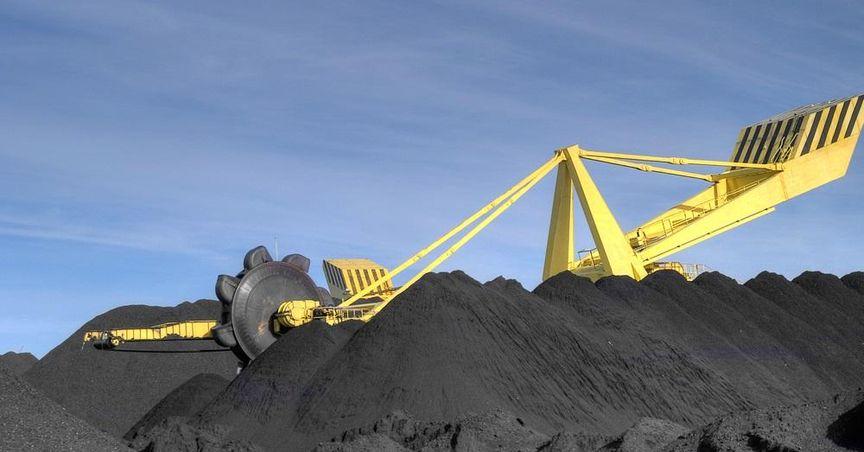
Mining shares, alongside defence, have dominated UK market leadership this year as gold raced to record highs.
Fresnillo and Endeavour Mining stand out as among the biggest year-to-date winners on the London market.
Central bank buying, haven demand and supply discipline underpin a rally that has redrawn the FTSE leaderboard.
If you had asked most London market watchers at the start of the year which sectors would carry the FTSE 100, few would have placed the miners at the top of the list. Yet that is precisely what has happened. Alongside defence contractors, metals and mining shares have provided the backbone of UK market leadership this year, with precious metals producers delivering gains that have transformed portfolios and redrawn the index leaderboard. Even after this week's sharp pullback in gold, the scale of the move demands explanation — and the explanation says a great deal about where the global economy stands.
This is a story with several interlocking chapters: a gold price that smashed record after record, a silver market that ran even hotter at times, central banks hoarding bullion at a historic pace, and a geopolitical landscape — from Middle East tension to great-power rivalry — that has kept haven demand simmering. Layer on disciplined supply from the producers themselves, and the conditions for an extraordinary re-rating were in place.
Who are the standout winners?
Two names tower over the conversation. Fresnillo (LSE:FRES), the Mexico-based group that ranks among the world's leading primary silver producers and also operates significant gold mines, has delivered one of the most remarkable share price runs in the entire London market. Its earnings have exploded as metal prices climbed far faster than its costs, widening margins dramatically and turning the company into a cash-generation machine. The shares have multiplied in value over the rally, making Fresnillo a totem of the precious metals trade.
Endeavour Mining (LSE:EDV) is the other headline act. As one of the largest gold producers in West Africa, with cornerstone operations in Côte d'Ivoire and Senegal, it offers investors a combination that has proved irresistible in this environment: substantial production, comparatively low costs, organic growth projects and powerful free cash flow at prevailing gold prices. Analysts have noted that it lagged Fresnillo at times on a relative basis, but its trajectory this year still places it firmly among the FTSE's elite performers.
Beyond the headline pair, the rally has lifted a broad cast. Hochschild Mining (LSE:HOC) has benefited from its silver and gold output in the Americas, Pan African Resources (LSE:PAF) has ridden the gold price with its South African operations, and a long tail of AIM-quoted explorers and junior producers, such as Caledonia Mining (AIM:CMCL) with its Zimbabwean gold production, has drawn renewed speculative interest as generalist money returned to the sector.
What has been driving the gold price higher?
The most powerful force has been official-sector demand. Central banks, particularly in emerging economies, have been accumulating gold at a relentless pace as they diversify reserves away from traditional currencies. This is structural rather than speculative buying — it does not chase price and it rarely sells — and it has put a persistent floor under the market.
On top of that sits the macro picture. Concerns about government debt levels, currency debasement and the long-run credibility of fiscal policy in major economies have pushed institutional and retail investors alike towards hard assets. Expectations around interest rates matter too: gold pays no income, so anticipated easing in monetary policy reduces the cost of holding it. And then there is geopolitics. The Middle East crisis, with its fragile ceasefire and ever-present risk of escalation, has reinforced gold's role as the asset of last resort when headlines turn dark.
Why do mining shares amplify the metal's moves?
Mining equities are, in effect, a leveraged expression of the commodity. A producer's costs are relatively fixed, so when the metal price rises, the increase flows almost entirely through to profit. That operational gearing explains why shares in Fresnillo and Endeavour Mining have risen far more dramatically than gold itself — and equally why they fall harder when the metal retreats, as this week's session demonstrated. Investors in the sector accept that volatility as the price of admission.
There is also a valuation dimension. For much of the past decade, gold miners traded at depressed multiples, scarred by memories of undisciplined spending in previous cycles. This time, managements have largely held the line on capital discipline, returning cash through dividends and buybacks rather than chasing growth at any price. That restraint has persuaded the market to re-rate the sector, compounding the effect of higher metal prices.
Metals and mining stocks form part of the basic materials sector within the UK market classification system. The London Stock Exchange hosts one of the world's deepest mining benches, ranging from globally diversified majors such as Rio Tinto (LSE:RIO), Glencore (LSE:GLEN) and Anglo American (LSE:AAL) to precious metals specialists and copper producers like Antofagasta (LSE:ANTO). The largest names are heavyweight constituents of the FTSE 100, mid-tier producers populate the FTSE 250, and a wide universe of exploration and development companies is quoted on AIM. The category is defined by its exposure to global commodity cycles, foreign exchange movements and political risk in producing jurisdictions, making it among the most internationally driven segments of the UK equity market.
Can the leadership last?
That is the question hanging over the sector after this week's pullback. Bears point to stretched positioning, the risk that a durable Middle East peace drains haven demand, and the possibility that sticky inflation keeps interest rates higher for longer, raising the opportunity cost of holding bullion. Bulls counter that the structural pillars — central bank accumulation, fiscal anxiety, geopolitical fragmentation — remain firmly intact, and that miners continue to mint cash even at prices well below recent peaks.
History suggests precious metals cycles rarely end quietly; they tend to overshoot in both directions. What is clear is that the mining sector has reasserted itself at the heart of the London market after years in the wilderness, and that the fortunes of the FTSE this year cannot be told without it. Whether the next chapter is consolidation or continuation, the miners have already ensured this will be remembered as their year.
