
 AUS
AUS
 NZ
NZ
 UK
UK
 CA
CA
 USA
USA
 IND
IND





Highlights
Diversified miners are among the key contributors as London's senior index trades near record territory.
Rio Tinto (LSE:RIO), Glencore (LSE:GLEN), Anglo American (LSE:AAL) and Antofagasta (LSE:ANTO) headline the sector's heavyweight contingent.
Reports of an Iran–Israel ceasefire have brightened risk appetite while metals demand tied to AI and the energy transition supports the longer-term story.
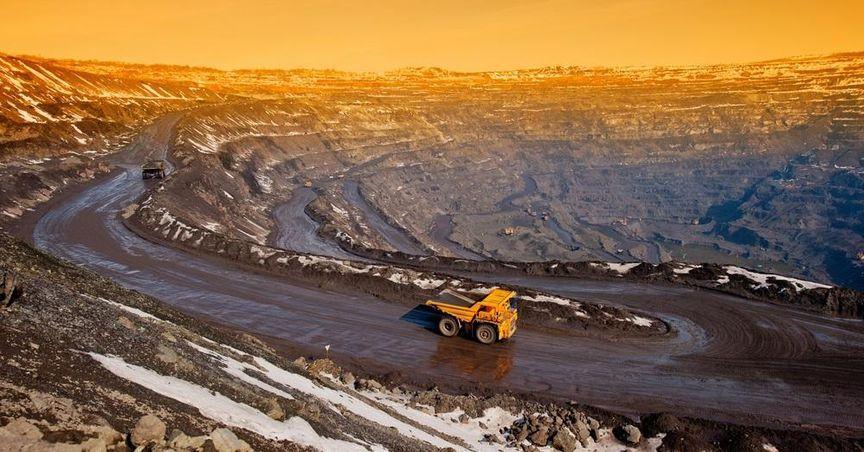
London's mining heavyweights are once again doing what they do best: setting the market's direction. With the senior benchmark trading near record territory and the mid-cap index reaching its strongest levels in months, resources stocks have been at the heart of the advance. Reports of a ceasefire between Iran and Israel have lifted risk appetite across the board, and few sectors respond to improving global sentiment as directly as the diversified miners. Rio Tinto (LSE:RIO), Glencore (LSE:GLEN), Anglo American (LSE:AAL) and Antofagasta (LSE:ANTO) all sit squarely in the spotlight.
Why Are Miners Leading the London Market?
Mining shares are, in essence, a geared expression of confidence in the global economy. When investors believe demand for copper, iron ore, aluminium and other industrial inputs will strengthen, the companies that produce those materials are among the most immediate beneficiaries. The reported easing of tensions in the Middle East has removed a layer of anxiety from markets, encouraging a rotation towards cyclical sectors, and London's resources complex has been an obvious destination for that renewed appetite.
There is also a structural undercurrent that distinguishes the present rally from a simple relief bounce. The investment boom surrounding artificial intelligence and the energy transition has created a durable source of demand for the metals that wire data centres, electrify transport and expand power grids. That theme has been building for some time, but it has gained fresh urgency as the scale of planned infrastructure spending becomes clearer, giving the diversified miners a narrative that extends well beyond the day's headlines.
Which Heavyweights Are Setting the Pace?
Rio Tinto (LSE:RIO) brings the broadest canvas, spanning iron ore in Australia, copper in the Americas and Mongolia, aluminium operations and a growing presence in battery materials. Its sheer index weight means that when Rio moves, the FTSE 100 feels it. Glencore (LSE:GLEN) combines large-scale mining with a global commodities marketing business, a hybrid model that gives it exposure both to metal prices and to the trading opportunities created by volatile markets.
Anglo American (LSE:AAL) has been reshaping itself around copper and other future-facing commodities, a strategic pivot that has drawn intense market interest as the company simplifies its portfolio. Antofagasta (LSE:ANTO), the Chilean copper specialist, offers the purest large-cap route into the red metal on the London market, and its fortunes are tightly bound to the electrification story that underpins so much of the sector's current appeal. Together, these names form the engine room of London's resources complex.
How Do Ceasefire Reports Feed Into the Rally?
Geopolitical risk acts like a tax on cyclical assets: it widens discount rates, clouds demand forecasts and pushes capital towards havens. Reports of an Iran–Israel ceasefire have, at least for now, lightened that burden. Energy market nerves have calmed, global growth assumptions feel less fragile, and investors have been more willing to fund positions in economically sensitive sectors. Miners, whose earnings rise and fall with world trade and construction, are natural early movers in that environment.
The interplay with precious metals adds nuance. Gold has remained near record highs despite the improvement in sentiment, which means the diversified groups with precious metals exposure, and the dedicated gold producers alongside them, have not had to surrender their own tailwind for the cyclical names to advance. The result is a rare session in which almost every corner of the mining sector has found a reason to climb, broadening the sector's contribution to the wider market's strength.
What Makes the Demand Story Different This Time?
Commodity rallies often rest on a single pillar, whether a supply shock or a burst of stimulus. The current episode is notable for the breadth of its foundations. Data centre construction tied to artificial intelligence requires copper on a scale that has surprised even seasoned forecasters, while grid expansion, renewable generation and electric transport add further layers of structural demand. On the supply side, years of cautious investment have left project pipelines thin, and new mines take many years to permit and build.
For the London-listed majors, this combination translates into a strategic premium on existing production and brownfield growth. Companies with established copper assets, such as Antofagasta (LSE:ANTO) and Anglo American (LSE:AAL), find themselves holding precisely what the market believes will be scarce. Meanwhile, the diversified breadth of Rio Tinto (LSE:RIO) and Glencore (LSE:GLEN) allows them to participate across multiple demand channels at once, from construction staples to transition metals.
The companies discussed here belong to the basic materials grouping of the UK market, classified within the industrial metals and mining segment under the industry classification framework used across London-listed equities. Rio Tinto (LSE:RIO), Glencore (LSE:GLEN), Anglo American (LSE:AAL) and Antofagasta (LSE:ANTO) are all Main Market constituents of the FTSE 100, making the index among the most resources-heavy senior benchmarks in developed markets and a popular reference point for global mining exposure.
What Could Sustain or Stall the Advance?
The durability of the rally depends on several moving parts. The reported ceasefire must hold for risk appetite to remain buoyant, and economic data from major metals consumers, particularly China, will continue to shape demand expectations. Currency movements matter too, since a softer pound flatters the translated earnings of miners that operate and price in dollars, a dynamic that has often amplified the sector's influence on the London market.
Company-level execution remains the other decisive variable. Production guidance, cost control and capital discipline will determine which of the heavyweights converts a friendly backdrop into superior performance. Portfolio reshaping across the sector, from copper-focused strategies to potential combinations, adds a corporate-activity dimension that keeps the group firmly in the headlines. For now, the miners are leading London's charge, and the market is watching closely to see how far they can carry it.
