
 AUS
AUS
 NZ
NZ
 UK
UK
 CA
CA
 USA
USA
 IND
IND

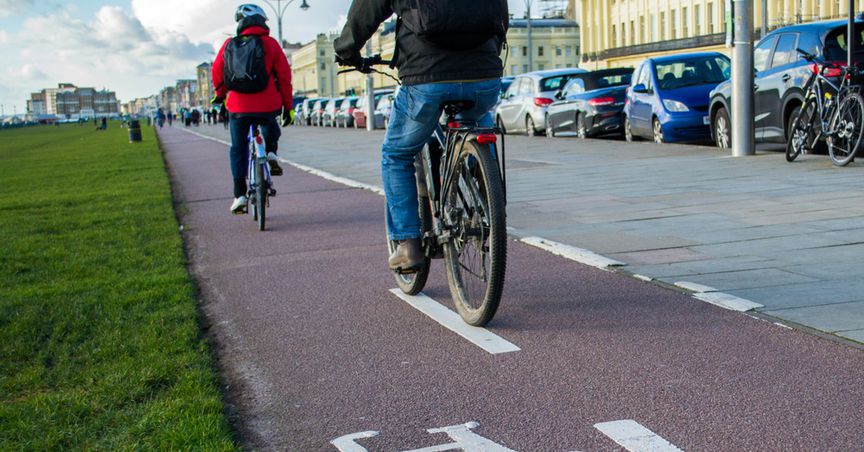





Since last week, when United Kingdom has finally decided to open up the economy and allow people to go back to work, several have been contemplating how they would commute to work while avoiding crowded trains and city buses. It now seems that several people would be going back to the human powered bikes to beat the virus infection blues; no petrol, no carbon emissions, and above all getting the time to exercise to maintain a good health in bonus.
Prime Minister Boris Johnson also described these times as the ‘golden age of cycling’ which provides the opportunity to maintain the air clean and healthy that in turn would keep Britons fit. The government has also announced a £2 billion package for ‘Active Travel’ initiative that includes human powered travel activities like cycling and walking. It has been estimated that around 14 million will take up cycling in the next few days to go to work or other such essential activities across one of the most industrialized countries in the world.
The outbreak of the pandemic has brought about a sea change in the way people perceive life in the United Kingdom with many people now looking to move out of London to country side locations, wherein they can work from home at the similar level of productivity and at the same time enjoy a higher quality of life in relatively safe environment. Moreover, the change in Britons’ lifestyle to adopt the environment-friendly commutation methods would require a significant amount of infrastructure development in the country that has the potential to accommodate so many cyclists at once. Towards this objective, city councils in several cities have already started working to construct cycle parking bays and extra lane space on roads meant only for cyclists.
The need for all this arose because last week the British government decided to open up the economy after seven weeks of lockdown in a phased manner. The government intends that only those industries should reopen where people need to render their services in person like factories and other such places while maintaining strict social distancing protocols. However, one of the many factors that continued to baffle the country was how to commute from home to the place of work. The option of everyone using their personal motor vehicle was there but imagining the situation where every individual who otherwise used to take public transport looks frightening for the country’s traffic condition. It is in this regard that the idea of cycling has been conceived. The foundation of the idea is based on the communities’ belief that states that in open space there is considerably lesser chance of the virus infecting anyone over the same distance compared to the closed confined spaces of a bus or a tube train.
Also, on the economic front this new movement could bring economic benefit to the country which had been one of the largest consumers of crude oil in Europe. The NHS has estimated that the country would save upto £17 billion over a period of 20 years if they cycle three kilometers a day or walk one kilometers a day, besides the health benefits and longevity that they might gain out of it.
The country is already plagued with a myriad of health issues related to the lifestyle Britons are used to. Under these circumstances, if more people opt to cycling it would lead to an increase in general productivity of the country. This is also an opportunity for people to bring about a change in their lives that they have been planning for a long time. The hectic programmed lives that most of the people lead today gives them a little scope to try new and different things, making life monotonous that easily translates into a loss of the productivity levels. Cycling, thus, could give them the much needed push to gain back what has been unknowingly lost in the urban rat race.
Moreover, given the pace of virus spread, it is highly unlikely that the UK government would lift up the lockdown in one go, allowing the public transports to start. The social distancing measures being recommended by the government could, therefore, be the bottleneck for the people to commute to their workplace. In such a scenario, cycling could possibly make the Britons’ life much more easier without any need to commute through the public transport and at the same time maintaining strict social distancing measures in place. Further, these social distancing measures while intended to protect the people are in line with the country’s objective to bring back its economy to its full potential at the shortest possible time.
Other major cities in the world who are the major economic centres are also deeply battered with economy struggling through the historical level of downturns. All their people also need to be immediately put back to work at the earliest if they have to ensure their economies come back up and running shortly. In this regard, this old human invention of cycling could go a long way in ensuring that people bring back the global prosperity at the earliest.
