
 AUS
AUS
 NZ
NZ
 UK
UK
 CA
CA
 USA
USA
 IND
IND






Summary
- Global warming refers to the long-term warming of Earth's climate system because of human actions.
- Gandhi advocated principles of co-operation instead of competition, moral responsibility, and mutually interdependent working at the world level.
- NZ has significantly strengthened its collaboration with stakeholders, and engagement with Maori communities on environmental policies, walking on Gandhi's footsteps.
Environment sustainability has been a hot topic as the importance of climate change persists to grow across the world. Environment sustainability is concerned with maintaining and protecting natural resources without threatening the ability for the future generations to fulfil their needs. Natural resources are limited and vital for human survival. Unlawfully raiding and over-exploitation of natural resources for development can result in serious environmental hazards. The interdependence of nations and the international trade in natural resources have made their demand and sustainable management a global challenge.
ALSO READ: Climate Change, Reduced Engine Cost, High Subsidy – Throttles The EV Industry
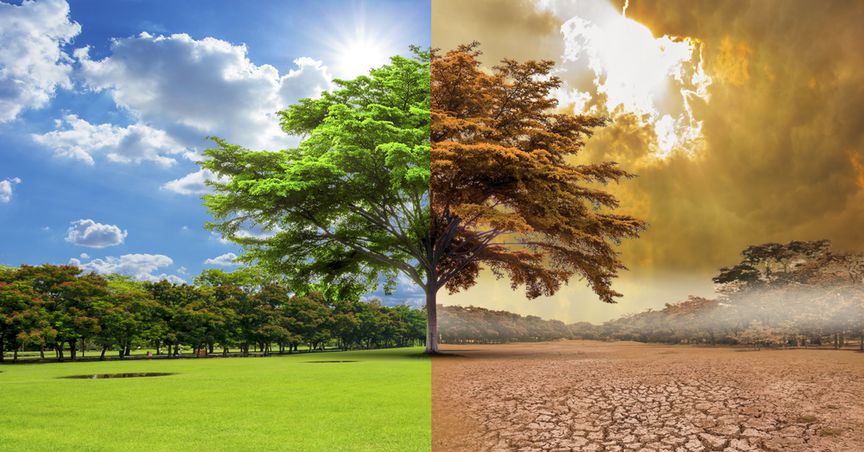
Since pre-industrial period (between 1850-1900), human actions have increased Earth’s global average temperature by approximately 1 degree Celsius and is growing by 0.2 degrees Celsius per decade.
The glaciers are melting, cloud forests are disappearing, sea levels are increasing, as well as wildlife is struggling to keep up.
Global warming is the long-term warming of Earth's climate system because of human actions, mainly the combustion of fossil fuels, which raises heat-trapping greenhouse gas levels in Earth’s atmosphere.
Countries are well aware of the rising temperatures and are engaged in a fight against global warming. One country that has been taking proactive steps to fight global warming is New Zealand.
NZ Enjoys Reputation of a Green and Clean Country
The natural environment of NZ provides many benefits. Access to unsullied deserts and good air quality enhances the quality of life for the people of New Zealand. Notably, beautiful landscapes attract numerous travellers from around the world. The natural environment of NZ offers the basis for the country’s exports of dairy, meat, wool, fruit, vegetables, fish as well as wood.
DO READ: Scan Through Tourism Space: Ten Things that you might have missed
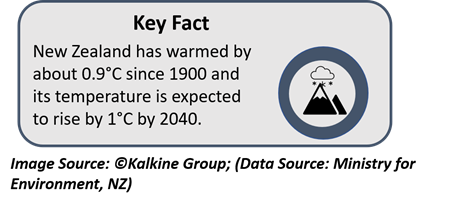
NZ's share of global greenhouse gas (GHG) emissions remains small compared to other countries. As per the Ministry for the Environment of NZ report (April 2018) on Greenhouse Gas Inventory, NZ's gross emissions are approximately only 0.17% of the world's gross emissions. NZ targets net zero emissions of all greenhouse gases other than biogenic methane by the year 2050, as per the Ministry.
Environmental Governance And Sustainability in NZ
Businesses in NZ have been incorporating collaborative approaches to the environment, moving on the footsteps of Gandhian philosophy.
PLEASE READ: Government Provides Help for primary sector for Future Droughts
Below are some of the steps taken by NZ for environment governance as given in the OECD Environmental Performance Reviews NZ 2017 report:
- NZ has adopted cooperative attitudes to environmental management such as the Land and Water Forum.
- The public can be a part in designing the primary and secondary legislation as well as in district and regional planning.
- NZ has improved collection, management as well as publication of the environmental information.
NZ Companies Taking Up Sustainability Initiatives
Coronavirus unquestionably had a substantial effect not only on the profitability and financial position of the companies, but also on ESG strategies.
GOOD READ: How is climate change impacting the way NZ businesses operate?
In the annual report, The a2 Milk Company Limited (NZX: ATM) stated that access to natural resources as well as thriving agricultural sector is fundamental to its business. The company recognises that climate change as well as pressures on agricultural and food systems present systemic challenge. The company is committed towards finding unique and high impact solutions across the value chain. While the total emissions have increased, that is because of the high growth business. Despite this, the company recognises the need to make more tangible efforts in order to reduce direct as well as indirect emissions over the span of time.
Rio Tinto has recently announced changes in executive committee. After publication on August 24, 2020 of Board Review of Cultural Heritage Management, undertaken in response to destruction of the Juukan rockshelters in the month of May 2020, Rio Tinto’s Board has engaged with traditional owners, indigenous leaders as well as some other stakeholders. J-S Jacques would be stepping down from the role as an executive director as well as chief executive of the group. Chris Salisbury would be stepping down as Chief Executive, Iron Ore and would leave Rio Tinto on December 31, 2020.
Simone Niven would be stepping down from the position of Group Executive, Corporate Relations, and would be leaving on December 31, 2020. To enhance Board engagement in Australia, Simon McKeon, non-executive director, has been appointed as Senior Independent Director, Rio Tinto Limited. This Board role would be complementing the present Senior Independent Director role, which would continue to be performed by Sam Laidlaw for Rio Tinto plc.
PLEASE READ: Rio Tinto Identifies Shortfall in Internal Heritage Management
