
 AUS
AUS
 NZ
NZ
 UK
UK
 CA
CA
 USA
USA
 IND
IND





Highlights
- Lithium Americas continues advancing its flagship lithium development project.
- Price-to-book valuation remains below broader mining industry averages.
- Project execution remains a key focus for market participants.
Lithium Americas has recently experienced share weakness, drawing attention to its below-book valuation, flagship Thacker Pass project, and ongoing progress within the evolving global lithium industry.
The lithium industry continues to play an important role in the global supply chain supporting electric vehicles, battery storage systems, and renewable energy technologies. As demand for battery materials evolves alongside changing market conditions, companies involved in lithium development continue attracting attention for both their project progress and financial positioning.
Lithium Americas (TSX:LAC), a Canadian-listed lithium development company, has recently experienced notable share weakness, bringing renewed attention to its valuation metrics and long-term development strategy. While market sentiment has softened in recent weeks, the company's asset base and flagship project continue to remain central to discussions surrounding its business.
For readers tracking broader Canadian markets, the TSX Smallcap Index provides insight into companies operating across mining, financials, technology, energy, and industrial sectors.
Share Performance Reflects Changing Sentiment
Lithium Americas has experienced a significant decline over the past month, reflecting cautious sentiment surrounding the company's upcoming financial results and broader expectations for its development activities.
Movements in lithium-related equities have often been influenced by changes in commodity prices, financing conditions, project timelines, and expectations surrounding battery material demand. As a pre-production developer, Lithium Americas is particularly sensitive to updates regarding project milestones and operational execution.
Although recent trading has been challenging, the company's longer-term performance presents a more balanced picture compared with the sharper decline recorded over the past several weeks.
Understanding the Price-to-Book Ratio
One valuation measure receiving increased attention is the company's price-to-book ratio.
The price-to-book, or P/B, ratio compares a company's market valuation with the value of its net assets recorded on the balance sheet. For resource developers, this measure is commonly used because tangible assets, mineral properties, and development projects represent a significant portion of corporate value.
Lithium Americas (TSX:LAC) currently trades at a price-to-book multiple below one, indicating that the market value of the company is below the carrying value of its net assets.
Compared with many companies operating within Canada's mining sector, this valuation stands at a noticeable discount, highlighting a significant difference between market expectations and reported asset values.
Why Asset-Based Valuation Matters
Mining and resource development companies often require substantial investment before production begins.
Exploration programs, engineering studies, permitting, infrastructure development, and construction contribute to building long-term asset value long before commercial production starts.
Because earnings may remain negative during development stages, asset-based valuation measures frequently become more relevant than earnings-based metrics when assessing companies within this phase of their business lifecycle.
Lithium Americas falls into this category, with its valuation increasingly being discussed through the lens of its project assets rather than current profitability.
Thacker Pass Remains a Strategic Project
The company's flagship Thacker Pass lithium project continues to represent the centrepiece of its development strategy.
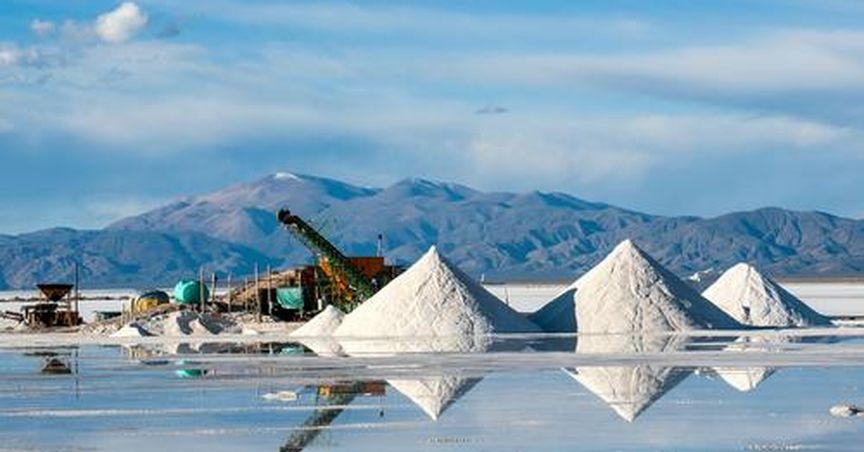
Located in Nevada, the project is widely recognised as one of the larger known lithium resources in North America and has attracted industry attention because of its strategic importance for regional battery material supply.
Development of a large-scale mining project involves multiple stages, including engineering, construction, financing, permitting, and operational planning. Progress across these areas will continue shaping how the market evaluates the company's long-term business prospects.
Development Challenges Continue
Large mining developments typically involve considerable operational complexity.
Construction schedules, capital expenditure management, regulatory approvals, labour availability, and supply chain coordination all influence project execution.
For Lithium Americas, successful advancement of Thacker Pass remains one of the most closely followed aspects of its corporate progress.
As with many development-stage mining companies, execution remains an important consideration alongside valuation metrics.
Financial Performance Still Reflects Development Stage
Lithium Americas (TSX:LAC) continues operating as a development-focused business rather than a mature producing miner.
As a result, financial statements continue reflecting expenditures associated with project advancement instead of revenue generated through commercial production.
This stage of corporate development often produces accounting losses while companies invest heavily in preparing major projects for future operations.
Accordingly, financial performance should be viewed within the broader context of project development rather than traditional operating profitability.
Lithium Market Continues to Evolve
Global lithium markets have experienced significant changes over recent years.
Battery manufacturing continues expanding across multiple regions, while producers and developers adjust to evolving supply-demand dynamics and changing commodity market conditions.
These industry developments influence valuations across the lithium sector, particularly for companies progressing large-scale projects toward production.
Market sentiment can therefore shift quickly as participants respond to commodity pricing, policy developments, technological advancements, and project-specific announcements.
Canadian Mining Sector Remains Diverse
Canada continues to maintain one of the world's most diversified mining industries, spanning precious metals, base metals, uranium, potash, lithium, rare earth elements, and industrial minerals.
Companies operating across these sectors contribute to resource development both domestically and internationally while supporting technological and industrial supply chains.
Readers following developments across the mining industry may also explore TSX Metal & Mining Stocks for broader sector updates.
Valuation and Execution Both Matter
While Lithium Americas' current price-to-book ratio may indicate that the market is assigning a discount relative to its recorded assets, valuation represents only one part of the broader picture.
Progress on project construction, financial performance, operational milestones, and industry conditions will continue influencing how the company is assessed over time.
Development-stage resource companies are often evaluated using a combination of asset quality, project advancement, financing capability, and execution against planned milestones.
