
 AUS
AUS
 NZ
NZ
 UK
UK
 CA
CA
 USA
USA
 IND
IND

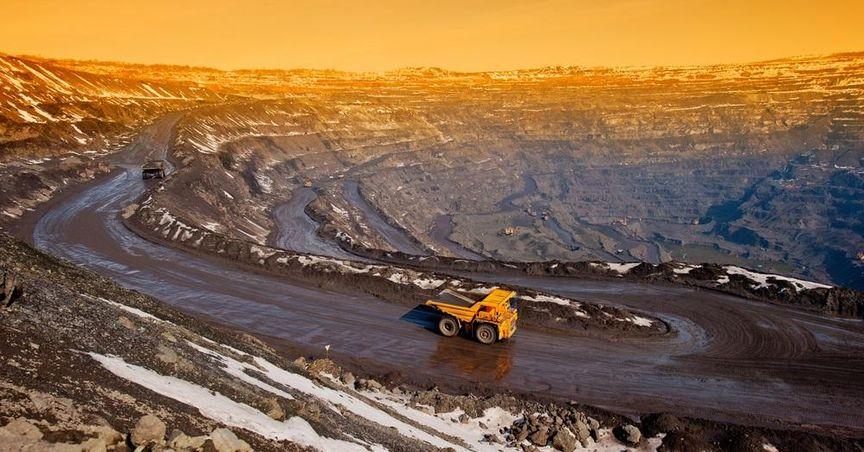





Rainbow Rare Earths Ltd, a company operating in the metals and mining sector, has announced an upgrade to the resource at its Phalaborwa project, resulting in a 15% increase in the total resource estimate. This enhancement extends the project's expected life by an additional two years, bringing it to a total of 16 years. The company has now reported total measured, indicated, and inferred resources of 35 million tonnes at a grade of 0.44% Total Rare Earth Oxides (TREO), with a near doubling of the material now classified as measured.
Resource Composition and Upgrades
The Phalaborwa resource contains a variety of light and heavy rare earth elements, with neodymium (Nd) and praseodymium (Pr) representing 29% of the total TREO. The heavy rare earth elements dysprosium (Dy) and terbium (Tb) make up 1% and 0.3% of the resource, respectively. The resource also includes elements from the SEG group (samarium, europium, and gadolinium) along with lanthanum (La) and cerium (Ce).
Rainbow Rare Earths Ltd (OTC:RBWRF) has highlighted that the resource's in-situ metal oxide value is estimated at approximately US$3.7 billion based on current spot prices for a TREO basket. This valuation is derived using a 0.2% TREO cut-off grade, and the company has indicated that the increase in resource size adds significant intrinsic value to the project.
Project Longevity and Economic Implications
The resource upgrade at Phalaborwa extends the project's operational lifespan to 16 years, compared to the previous estimate of 14 years, based on anticipated production rates. Rainbow Rare Earths' Chief Executive George Bennett emphasized the project's unique value, noting that unlike typical hard rock mining projects, the Phalaborwa resource is situated at the surface within phosphogypsum stacks, which allows for more straightforward processing of the entire 35 million tonnes of material.
Bennett pointed out that the four most economically significant rare earth elements—neodymium, praseodymium, dysprosium, and terbium—comprise over 30% of the TREO basket by volume at Phalaborwa and account for 96% of its value. These elements are deemed critical for the global transition to green energy, as they are essential in the manufacturing of permanent magnets used in electric vehicles and wind turbines.
Focus on Recoverable Elements
In addition to the primary rare earth elements, the upgraded resource at Phalaborwa includes several less common elements such as samarium, europium, gadolinium, lanthanum, and cerium. Rainbow Rare Earths has noted that these elements, while not currently factored into the project's economic projections, offer additional potential for future value. The company intends to fully exploit the phosphogypsum stacks to maximize the extraction of rare earth elements, thereby enhancing the overall project value.
Rainbow Rare Earths' strategic focus on these high-demand materials aligns with broader market trends towards sustainable energy solutions. As global demand for rare earth elements continues to grow, particularly in the context of electric vehicle and renewable energy production, the upgraded resource at Phalaborwa positions the company to capitalize on these evolving market dynamics.
