
 AUS
AUS
 NZ
NZ
 UK
UK
 CA
CA
 USA
USA
 IND
IND





Highlights
- Cement sector developments highlight sustainability progress and governance discussions
- Bond issuance and environmental actions shape corporate positioning in Argentina
- Valuation debate emerges as market activity focuses on revenue multiples
The cement and building materials sector plays a central role in infrastructure expansion, housing construction, and large scale public works across many regions. Companies operating within this industry often balance operational efficiency.
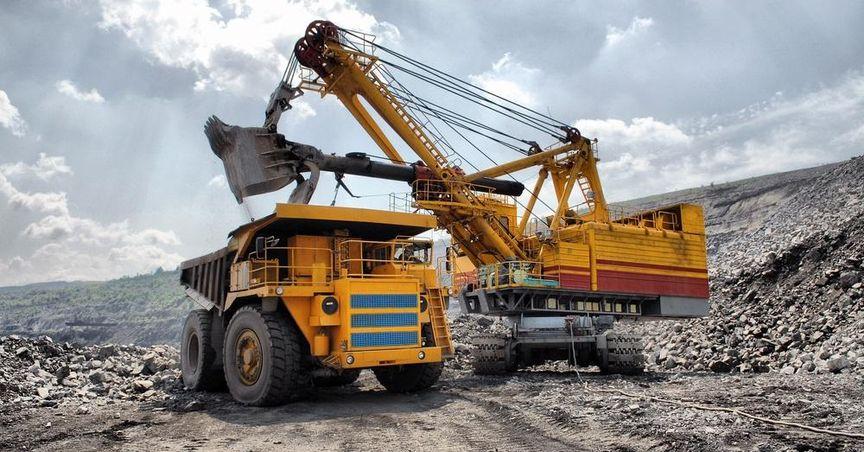
Loma Negra Compañía Industrial Argentina Sociedad Anónima (NYSE:LOMA) operates across Argentina’s broader materials space, with a strong presence in cement production, concrete manufacturing, and aggregates distribution. Its business remains closely linked to construction activity throughout the country, supported by infrastructure works, residential projects, and industrial development. The company also sits within the wider materials segment that includes metal and mining related activity, placing it within a broader industrial framework tied to core building and resource based sectors.
Corporate developments have recently placed the company in renewed focus within the building materials space. Governance updates, sustainability initiatives, and financing developments have collectively drawn attention to the organisation’s operational direction and structural positioning. These developments highlight how cement manufacturers increasingly integrate environmental strategies and financial planning alongside core industrial production.
Share Movement Market Attention
Recent activity surrounding has coincided with noticeable movement in its share value within public markets. Shorter term trading activity reflects shifting sentiment as market participants evaluate operational performance, corporate announcements, and broader industry conditions. Movements in share value often occur when new information related to corporate governance, environmental commitments, or financing decisions becomes publicly available.
While shorter term activity has shown fluctuations, longer horizon performance reflects a broader trajectory shaped by industrial demand and operational expansion. Cement producers frequently experience cyclical market behaviour due to construction activity patterns, which depend on economic conditions, infrastructure spending, and regional development priorities. As a result, share performance in this sector often reflects both immediate developments and structural industry drivers.
Governance Meeting Environmental Focus
A recent board gathering scheduled discussions around the organisation’s upcoming shareholders meeting, with sustainability reporting forming a central theme of the agenda. Corporate governance structures within major industrial firms typically require regular shareholder gatherings where company leadership outlines operational updates, environmental initiatives, and strategic developments.
For (NYSE:LOMA), the meeting discussion highlighted sustainability progress achieved during recent operational cycles. Environmental reporting has become increasingly significant within the cement sector due to the energy intensive nature of cement production. Cement manufacturing involves kiln heating, raw material processing, and extensive logistics networks, all of which contribute to greenhouse gas emissions. As a result, environmental transparency and emission reduction initiatives have become integral components of industry reporting.
Corporate documentation indicates measurable progress in reducing carbon dioxide equivalent emissions relative to previous operating periods. Environmental improvements may arise from several operational measures including energy efficiency upgrades, alternative fuel integration, improved kiln technology, and enhanced supply chain management. Such changes demonstrate how heavy industry companies increasingly integrate environmental performance into long term operational frameworks.
Environmental Progress Operational Changes
Environmental initiatives within the cement industry frequently focus on improving efficiency throughout the production process. Cement kilns require extremely high temperatures, making energy consumption a defining feature of operational planning. Many manufacturers therefore pursue energy optimisation strategies such as modern kiln design, heat recovery systems, and alternative fuel usage.
The environmental updates highlighted in the governance discussion illustrate broader trends across global building materials companies. Producers increasingly adopt sustainability reporting frameworks that outline emission reduction strategies, resource efficiency improvements, and community engagement initiatives. These frameworks also reflect increasing regulatory expectations and environmental accountability within industrial sectors.
Within this context, has communicated progress related to emission reduction across its production facilities. Environmental improvements can include operational adjustments in clinker production, improved energy sourcing, and enhanced monitoring of emissions throughout manufacturing stages. Such measures demonstrate the operational complexity involved in balancing industrial output with environmental responsibility.
Financing Strategy Structural Changes
Alongside environmental updates, corporate attention has also focused on a new bond issuance associated with the organisation. Bond placements often serve as a mechanism for industrial companies to secure funding for operational development, infrastructure upgrades, or general corporate purposes. Within heavy industry sectors such as cement manufacturing, financing activities may support plant modernization, transportation networks, or efficiency improvements.
The company recently introduced a new class of bond instrument connected to its financing strategy. Such financial instruments typically form part of a broader capital structure designed to support long term operational needs. Bond issuance allows companies to access institutional funding sources while maintaining flexibility across operational planning.
Corporate financing structures often evolve alongside operational developments. As companies expand facilities, upgrade production technology, or enhance logistics networks, additional funding arrangements may be introduced to support these initiatives. For a large cement manufacturer, financing structures can play a significant role in maintaining stable production capabilities and responding to changing construction demand.
Revenue Multiple Industry Comparison
Market observers frequently examine valuation metrics when assessing companies within the building materials sector. One commonly referenced metric compares a company’s market valuation relative to its revenue generation. This ratio reflects how market participants value each unit of company revenue relative to comparable organisations.
Within the cement and building materials segment, revenue multiples often vary depending on regional demand, operational scale, and efficiency levels. Companies operating in regions experiencing infrastructure expansion may exhibit different valuation patterns compared with firms operating in slower growth construction markets.
For (NYSE:LOMA), the revenue multiple associated with its market valuation has been compared with both industry averages and direct peer companies. Comparisons across peer groups provide insight into how market participants evaluate relative positioning within the sector. Differences in valuation metrics may reflect varying perceptions related to operational stability, geographic exposure, and production scale.
Industry Comparisons Valuation Discussion
When examining cement producers across global markets, revenue multiples can vary widely. Peer companies operating within the same industry may exhibit higher or lower valuation ratios depending on factors such as operational footprint, logistics infrastructure, and regional construction activity. In many cases, valuation discussions highlight differences between peer group comparisons and broader industry averages.
Within the context of comparisons between peer companies and the wider basic materials sector have produced differing interpretations of valuation levels. Peer group analysis reflects similarities in operational structure and industrial focus, whereas broader sector comparisons include a wider range of materials companies with varying business models.
The cement industry remains closely linked to infrastructure development and construction demand. Consequently, valuation discussions often incorporate perspectives related to economic conditions, urban development activity, and government infrastructure programmes. These structural factors shape how companies within the sector are evaluated across public markets.
Discounted Model Market Discussion
Another perspective within valuation discussions involves models based on projected operational performance and financial flows. Discounted valuation frameworks analyse estimated operating performance across extended time horizons while incorporating assumptions related to revenue generation and operational efficiency.
In discussions surrounding (NYSE:LOMA), comparisons have emerged between revenue multiple valuation perspectives and discounted valuation frameworks. Such comparisons illustrate how different analytical approaches may produce varying interpretations regarding company valuation. While revenue multiples focus on market valuation relative to current revenue, discounted frameworks incorporate assumptions about longer term operational performance.
These contrasting valuation approaches illustrate the complexity involved in evaluating industrial companies within cyclical sectors. Cement producers operate within environments influenced by infrastructure development patterns, construction demand fluctuations, and industrial production cycles. As a result, valuation interpretations may differ depending on analytical methodology and underlying assumptions.
Construction Sector Demand Drivers
Demand for cement products is closely linked to infrastructure expansion, residential construction, and industrial development. In many regions, public infrastructure projects such as highways, bridges, and urban transit networks generate substantial demand for cement and aggregates. Residential housing developments and commercial construction also contribute to steady demand within the sector.
Argentina’s construction activity is shaped by urban expansion, transport upgrades, and large scale infrastructure work, all of which support steady demand for building materials. Cement producers supply core materials used in foundations, road networks, commercial structures, and industrial projects. This operating environment also connects closely with the broader metals and mining value chain, where raw material extraction and industrial processing support construction related manufacturing and supply networks. In this setting, companies such as (NYSE:LOMA) remain closely tied to national infrastructure development and essential construction supply channels.
Operational logistics represent another defining characteristic of the cement sector. Cement is typically produced at manufacturing plants located near raw material sources, after which it is transported through distribution networks to construction sites. Efficient transportation systems and supply chain management therefore play a vital role in maintaining stable product availability across regional markets.
